iAspirants
Current AffairsPrelims PYQsUPSC CSE SyllabusUPSC CSE StrategyBlogsPricing
Login
iAspirants

Your AI-powered companion for UPSC preparation.

Quick Links

  • Home
  • About Us
  • Current Affairs
  • Prelims PYQs
  • UPSC CSE Syllabus
  • UPSC CSE Strategy
  • Blogs

Company

  • Pricing
  • FAQs
  • Contact Us
  • Login

Legal

  • Privacy Policy
  • Terms & Conditions
  • Return Policy

© 2025 iAspirants, Inc. All rights reserved.

  1. Blogs
  2. History

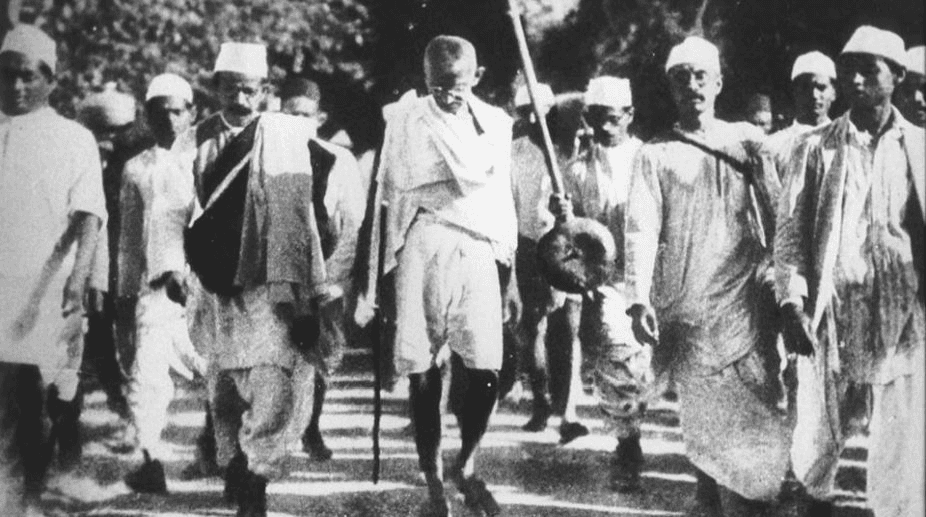
84th Anniversary of Quit India Movement

Published on: 07-Aug-2026

Share this post

84th Anniversary of Quit India Movement

Article Summary

Exam-Focused Notes on the 84th Anniversary of the Quit India Movement

Historical Significance:

  • Date of Commemoration: August 9, 2026, marks the 84th anniversary of the Quit India Movement.
  • Initiation: Launched on August 9, 1942, under the leadership of Mahatma Gandhi.
  • Key Phrase: "Do or Die" (करो या मरो) which motivated millions to unite for India's freedom against colonial rule.

Impact on Freedom Struggle:

  • The movement was a pivotal moment in India's struggle for independence, providing decisive momentum to the freedom movement.
  • It showcased the extraordinary courage, determination, and commitment of Indian freedom fighters amid severe repression and hardships.

Constitutional Context:

  • Constitutional Articles & Rights: The movement is reflective of the fundamental rights to freedom of speech and expression, as well as the right to assemble peacefully, enshrined in Articles 19(1)(a) and 19(1)(b) of the Indian Constitution.
  • The ideals of unity, sacrifice, and patriotism from the movement continue to inspire national values and duties as outlined in the Constitution.

Tribute to Freedom Fighters:

  • Emphasis on paying homage to those who participated in the Quit India Movement and made sacrifices for the nation’s freedom.
  • Recognition of their contributions reinforces the importance of collective national identity and commitment to building a stronger and inclusive India.

Themes of Unity and Patriotism:

  • The speech underscored the themes of patriotism, unity, sacrifice, and dedication to the nation.
  • Encouragement for all members of the house to honor the freedom fighters by standing in silence, symbolizing respect and remembrance.

Current Relevance:

  • The ideals from the Quit India Movement remain relevant in contemporary India as symbols of resilience in the face of challenges to national integrity and freedom.
  • The movement serves as a reminder of the importance of collective effort in nation-building and the continuous struggle for justice and equality.

Conclusion:

  • The 84th anniversary serves not just as a historical reflection but also as a motivational call for current and future generations to uphold the values of freedom, unity, and dedication to the country.

Key Terms & Concepts

Quit India MovementMajor event in independence struggle
Mahatma GandhiLeader of the movement
August 9, 1942Start date of the movement
1947Year of India's independence
National MovementStrengthened by sacrifices

Mind Map for UPSC Civil Services Revision

Turn UPSC Civil Services Current Affairs Into Exam-Ready Notes

Reading History current affairs is half the work. Revise them with ready-made notes and test what actually stuck.

  • Daily UPSC Civil Services current affairs analysis
  • Revision notes, mind maps & MCQs
  • Prelims mock tests with instant results

Related UPSC Civil Services Current Affairs Articles

New Plant Checklist in Agasthyamalai
Biodiversity22-Sep-2026

New Plant Checklist in Agasthyamalai

Summary of Key Facts and Findings on Agasthyamalai Biosphere Reserve (ABR)

Biodiversity Data:

  • Species Composition:
    • Total documented species: 3,261
    • Sub-species: 26
    • Varieties: 28
  • Genera: 1,139
  • Families: 190
  • Endemism:
    • Total endemic taxa: 1,018 (31.2% of species)
    • Steno-endemic taxa (specialized habitats): 245
  • Floral Wealth:

    • Dominant Families:
      • Fabaceae: 349 taxa
      • Rubiaceae: 194 taxa
      • Poaceae: 193 taxa
      • Orchidaceae: 168 taxa
    • Biogeographic Affinity:
      • Shared taxa with Sri Lanka: 347
      • Taxa displaying affinity with tropical American flora: 102

    Importance of the ABR:

    • Recognized as a significant center of angiosperm diversity and endemism in the Indian subcontinent.
    • The area has high levels of species richness and is ecologically fragile, requiring targeted conservation strategies.

    Ecological Context:

    • Geographic Location: Spread across Keralam and Tamil Nadu, part of the Western Ghats.
    • Conservation Threats: Facing challenges from habitat fragmentation, climate change, biological invasions, and ecological degradation.

    Research Context:

    • The work by Jawaharlal Nehru Tropical Botanic Garden and Research Institute (JNTBGRI) addresses inconsistencies in previous documentation related to taxonomy and distributions.
    • Recommendations for conservation initiatives include:
      • Ecological restoration
      • Ex situ conservation
      • Long-term surveillance
      • Community-based initiatives

    Future Research Directions:

    • Suggested blending classical taxonomy with modern genetic studies such as:
      • Molecular phylogenetics
      • Phylogenomics
      • Population genetics
      • Ecological niche modelling
    • Aim to enhance understanding of evolutionary history, diversification, and climate vulnerability of endemic lineages.

    Significance:

    • The checklist serves as an essential resource for reaffirming the global significance of the Western Ghats' biodiversity and establishes a baseline for conservation strategies in response to anthropogenic challenges.

    This documentation plays a critical role in guiding future research and conservation efforts in biodiversity hotspots like the ABR, contributing to global efforts in environmental preservation.

    Uniform Civil Code and its History
    Polity and Governance20-Sep-2026

    Uniform Civil Code and its History

    Key Points on the Uniform Civil Code (UCC)

    Background and Historical Context

    • The Uniform Civil Code (UCC) has been a core agenda of the BJP.
    • Union Home Minister Amit Shah announced plans to enact UCC in 21 NDA-ruled states by 2029.
    • Historically, UCC was not consistently included in BJP or BJS election manifestos.
    • RSS's second sarsanghchalak, MS Golwalkar (1972), expressed reservations about mandatory UCC, advocating for diversity in personal laws.

    Constitutional Reference

    • The UCC relates to the need for unification of personal laws across religions, potentially reflecting Article 44 of the Directive Principles of State Policy (DPSPs) of the Indian Constitution which calls for a UCC to be provided in the state.

    Timeline of UCC Advocacy

    • UCC advocacy gained momentum post-Shah Bano case (1985), marking a shift towards making UCC a priority.
    • The BJP under LK Advani in the mid-1980s made UCC, abrogation of Article 370, and Ram temple issues central to its agenda.
    • The 1989 BJP manifesto proposed a commission to draft UCC. Subsequent manifestos in 1991, 1996, 2004, 2009, 2014, 2019, and 2024 reiterated commitments to UCC.

    Challenges in Implementation

    • Scheduled Tribes (over 8.6% of India’s population) have customs that complicate UCC implementation.
    • Disputes center on marriage laws, succession, and definitions of tribal identities, which vary significantly.
    • The implementation of UCC has seen exclusions, as evidenced by Uttarakhand's decision to not include Scheduled Tribes in recent laws.

    Current Government Position

    • Amit Shah's commitment to UCC aims to fulfill long-standing promises, particularly post-Ram temple and Article 370 abrogation.
    • The ruling BJP may seek to establish a coherent legislative approach to the UCC to leave its prior commitments realized.

    Comparative Overview

    • Historical opposition to UCC has evolved, indicating shifts in both societal attitudes and political strategies concerning personal laws.
    • The opposition and support have often reflected broader societal and political challenges, impacting consensus around the formulation of a UCC.

    Societal Implications

    • Introduction of UCC could impact diverse communities and the nature of personal laws across religions.
    • The focus on “unity in diversity” remains a contentious point reflecting India's complex socio-cultural fabric.

    Conclusion

    The UCC remains a significant and contentious issue in Indian politics, reflecting historical shifts in ideology, constitutional principles, and socio-legal frameworks. The unfolding discussions and policy proposals indicate a complex negotiation between India's diverse communities and the central government's legislative objectives.

    Pygmy Hog Population Increases in Assam
    Biodiversity18-Sep-2026

    Pygmy Hog Population Increases in Assam

    Pygmy Hog Conservation Summary

    • Species Overview: The pygmy hog (Porcula salvania) is the world’s smallest and rarest wild pig, standing about 25 cm tall and weighing up to 9.7 kg. It is endemic to grasslands in Assam, India.

    • Conservation Status: The population has increased from 6 individuals in 1996 to 194 due to a targeted captive breeding program conducted in Assam.

    • Goals: Assam Chief Minister Himanta Biswa Sarma announced a target to raise the population to 300 pygmy hogs by 2040 to ensure its sustainability in the wild.

    • Conservation History:

      • Initiation: Conservation efforts began in 1971 by British naturalist Gerald Durrell and his trust.
      • Pygmy Hog Conservation Programme (PHCP): Collaborative effort between the Durrell Wildlife Conservation Trust (UK), Assam Forest Department, Wild Pig Specialist Group (IUCN), and Ministry of Environment, Forest and Climate Change.
    • Implementation Partners: The program is implemented by Assam-based organizations Aaranyak and Ecosystems India.

    • Breeding and Reintroduction:

      • Initial capture of 6 pygmy hogs for breeding occurred in the Bansbari range of Manas National Park.
      • Captive breeding facility established on the outskirts of Guwahati.
      • First reintroductions to the wild took place in 2008.
      • Current populations are reported in Sonai-Rupai Wildlife Sanctuary, Bornadi Wildlife Sanctuary, Orang National Park, and Manas National Park.
    • Significance: The recovery of the pygmy hog population is viewed as a success story in wildlife conservation, reflecting the effectiveness of long-term dedicated efforts and collaboration among various organizations.

    • Environmental Conservation Policies: This initiative aligns with India's broader objectives under various environmental conservation policies and commitments to biodiversity preservation, highlighting the role of biodiversity in maintaining ecological balance.

    This summary encapsulates the essential facts, statistics, and collaborative efforts in the conservation of the pygmy hog in Assam, reflecting the intersection of species recovery, community involvement, and policy implications.