iAspirants
Activists Highlight Yamuna Pollution Crisis
Published on:
Share this post
Article Summary
Exam-Focused Notes on 'Cockroach Janata Party' and Yamuna Pollution
1. Background:
- The 'Cockroach Janata Party' (CJP) is a satirical movement aimed at raising awareness about social issues, particularly environmental concerns, such as pollution in the Yamuna River.
- Initiated by Abhijeet Dipke, a Boston University graduate, the movement encourages youth participation in political discourse.
2. Key Individual:
- Deepak Sharma, a part-time 'kathavachak' (traditional storyteller) and social activist from Uttar Pradesh, has adopted the cockroach persona to highlight Yamuna pollution and has formed a local chapter of CJP.
3. Objectives of CJP:
- To address official apathy towards environmental issues.
- To mobilize youth and create a platform for voicing concerns regarding governance and environmental policies.
4. Yamuna Pollution Data:
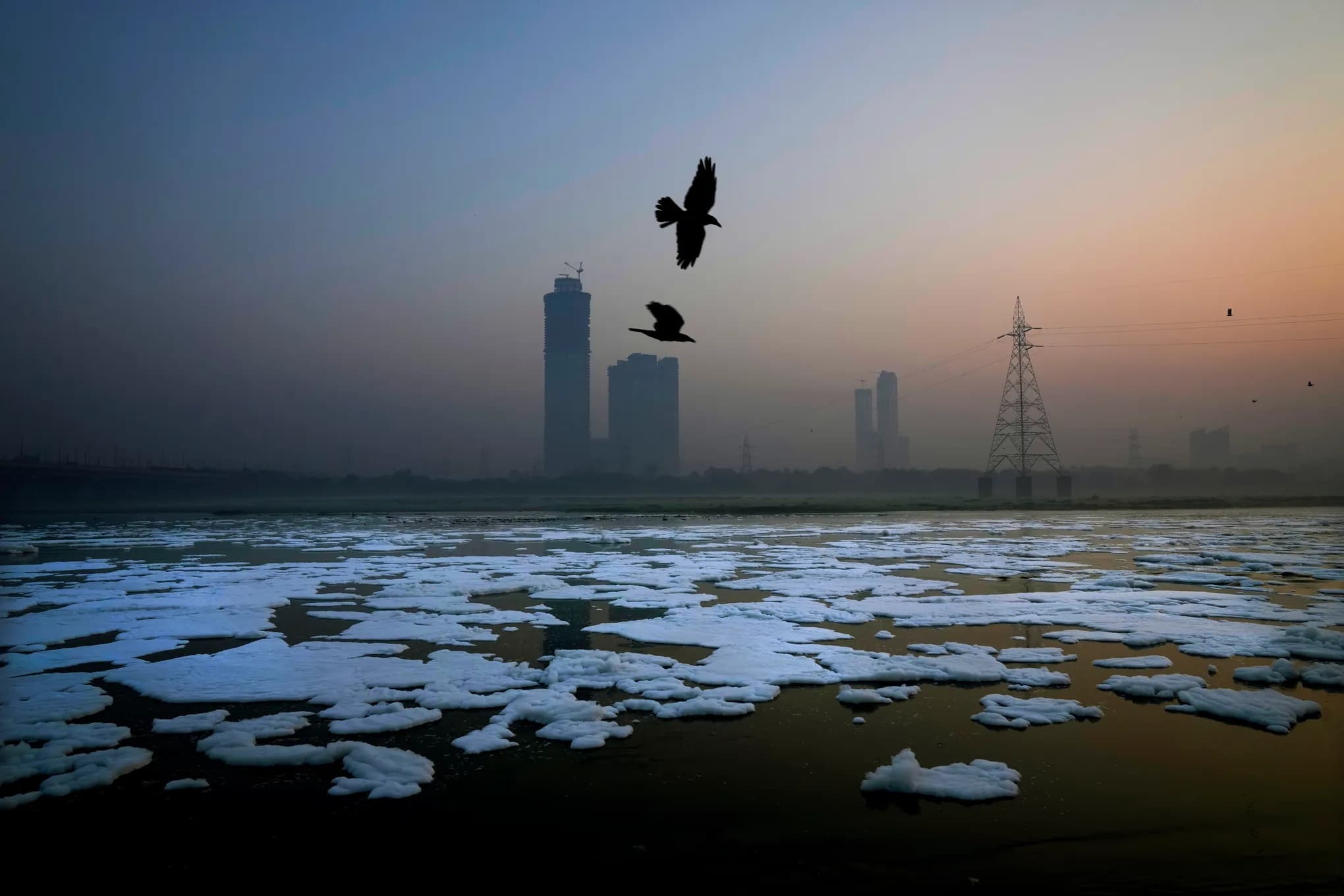
- February 2026 data from the State Pollution Control Board indicates alarming pollution levels in the Yamuna at key sites including Keshi Ghat, Vishram Ghat, and Gokul Barrage.
- Critical pollution indicators, such as total and faecal coliform bacteria, exceed safe standards, indicating severe sewage contamination.
- Water quality is deemed unsafe for human consumption and poses risks for bathing, affecting aquatic biodiversity.
5. Volunteer Engagement:
- Since its inception, CJP has recruited around 800 volunteers, who identify themselves as "cockroaches" to symbolize resilience and a desire for systemic change.
- CJP is characterized as an apolitical movement focused on creating a "swachh" (clean) system rather than contesting elections.
6. Public Reaction:
- Mixed responses to the movement; while some see it as a legitimate call to action, others criticize it as a stunt or politically motivated initiative.
- Naresh Khandelwal, a Mathura resident, expressed growing support for the movement among locals.
7. Related Political Context:
- The movement has drawn comparisons to the plight of farmers, with references to the Swaminathan Committee recommendations, which advocate for better pricing and support for agricultural produce.
8. Environmental Significance:
- The movement highlights the environmental crisis surrounding the Yamuna River, a significant water body revered in Hindu culture, underscoring the need for effective governance and environmental protection measures.
9. Constitutional and Policy References:
- The movement indirectly invokes themes from the Constitution of India, including the Right to a Healthy Environment, as implied by the Directive Principles of State Policy (DPSPs) under Article 48A, which mandates the state to protect and improve the environment.
10. Conclusion:
- The Cockroach Janata Party serves as a contemporary example of grassroots activism aimed at environmental issues, reflecting the intersection of social media, youth engagement, and public policy advocacy in India. Its focus on Yamuna pollution underscores the urgent need for environmental reforms and community involvement in governance.
Key Terms & Concepts
| Yamuna River | Pollution source of concern |
| Mathura Municipal Commissioner | Authority contacted by activists |
| State Pollution Control Board | Reported pollution data |
| February 2026 | Date of pollution report |
| Total and Faecal Coliform Bacteria | Pollution indicators in water |
| Swaminathan Committee | Recommended agricultural reforms |
| CJP (Common Justice Platform) | Movement for environmental awareness |
| Keshi Ghat, Vishram Ghat, Gokul Barrage | Key pollution sites in Mathura |
| 800 Volunteers | Support for CJP movement |