iAspirants
AI Advances Bacteriophage Genome Design
Published on:
Share this post
Article Summary
Study on AI-Designed Bacteriophage Genomes
Key Facts:
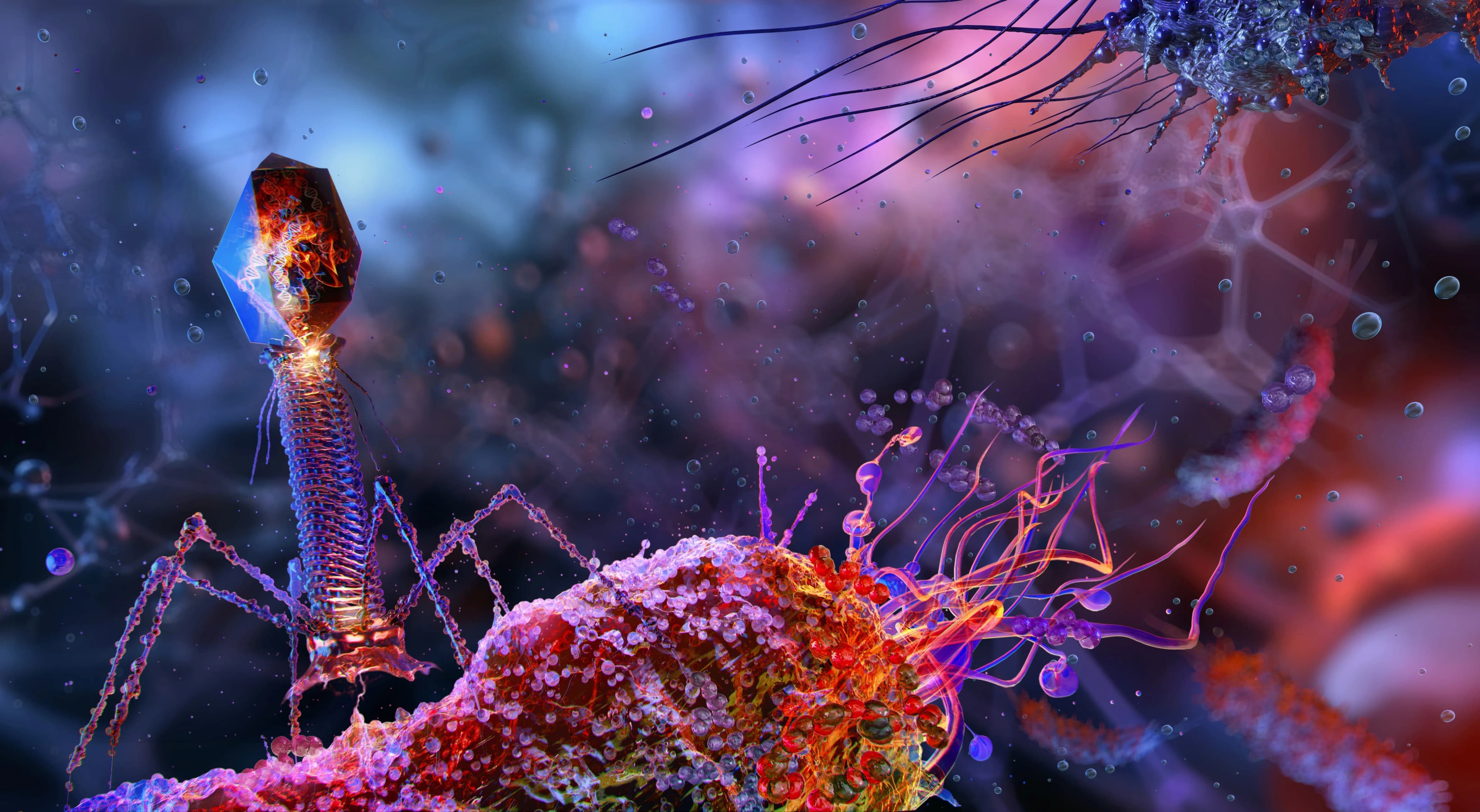
- Researchers from Stanford University and the Arc Institute utilized artificial intelligence (AI) to design complete genomes of bacteriophages—viruses that infect bacteria, aiming to provide alternatives to antibiotics for drug-resistant infections.
- This study is one of the first to demonstrate that AI can design entire viral genomes instead of just individual genes or proteins.
Research Methodology:
- The researchers generated thousands of potential bacteriophage genomes, synthesized about 300 chemically, and conducted laboratory tests.
- Sixteen of these synthesised genomes resulted in functional viruses capable of infecting Escherichia coli.
- Genome language models, named Evo 1 and Evo 2, were employed, which analyze DNA sequence patterns similarly to how language models interpret human language. These models were trained on millions of genomes.
Notable Findings:
- The study produced genome designs using the naturally occurring phage ΦX174 as a reference, resulting in new genetic combinations that retained biological function.
- One phage contained a DNA-packaging protein that was evolutionarily distinct from usual proteins found within its capsid, indicating innovative genetic engineering.
Antimicrobial Potential:
- The AI-designed phage cocktail effectively targeted E. coli strains resistant to the naturally sourced ΦX174 phages, suggesting a significant advancement in phage therapy, potentially overcoming bacterial resistance.
- This underlines the capability of AI to enhance the diversity of phage designs available for future testing.
Biosafety and Biosecurity Concerns:
- Although the research focuses on bacteriophages that specifically target bacteria and are not harmful to humans, experts have raised concerns about the biosecurity implications of generative AI that can create viral genomes.
- Potential applications in human, animal, or plant pathogens could pose unpredictable biosafety risks.
Safety and Future Applications:
- The study confirms that AI-generated sequences can create biologically active viral genomes in a controlled laboratory environment. However, no claims of efficacy in treating human infections have been made.
- Any further medical applications of these findings will necessitate rigorous validation and the establishment of safeguards against misuse.
Implications:
- This research signifies a breakthrough in using AI in biotechnology, especially concerning antibiotic resistance, but emphasizes the need for thorough exploration of ethical and safety dimensions. Further research is crucial before any medical applications can be considered viable.
Key Terms & Concepts
| Stanford University | Research institution |
| Arc Institute | Research institution |
| E. coli | Bacterial strain studied |
| ΦX174 | Starting framework for phage design |
| Evo 1 and Evo 2 | Genome language models used |
| 300 | Total genomes synthesised |
| 16 | Viable phages produced |
| August 08, 2026 | Publication date of study |
| AI-designed phages | New treatment design method |
| Biosafety and biosecurity | Concerns raised by experts |
| Antibiotics | Target of alternative research |
| Laboratory experiments | Testing environment |