iAspirants
Amendments to IT Rules for Content Regulation
Published on:
Share this post

Article Summary
Summary of Proposed Amendments to IT Rules 2021
Constitutional and Legal Context
- The Indian Constitution guarantees the Right to Freedom of Speech and Expression (Article 19(1)(a)), which is under scrutiny as the government seeks to regulate 'obscene' content online.
- Concerns have been raised about the misuse of this freedom to propagate obscene or violent content on digital platforms.
Proposed Amendments
- The Ministry of Information and Broadcasting (MIB) is considering amendments to Part III of the IT Rules, 2021.
- The changes aim to introduce definitions and a code of ethics regarding “obscene digital content” on OTT platforms (like Netflix, Amazon Prime Video, Disney+ Hotstar) and digital news outlets.
Key Features of the Code of Ethics
- Content must adhere to standards of good taste or decency.
- Prohibition on:
- Deriding any race, caste, creed, or nationality.
- Attacking religions or communities.
- Including obscene, defamatory, or false content.
- Promoting anti-national attitudes.
- Criticism that maligns individuals or segments of social, public, and moral life.
- Denigrating women, children, and persons with disabilities.
- Live coverage of anti-terrorist operations may be classified as obscene, necessitating controlled media reporting.
Background and Rationale
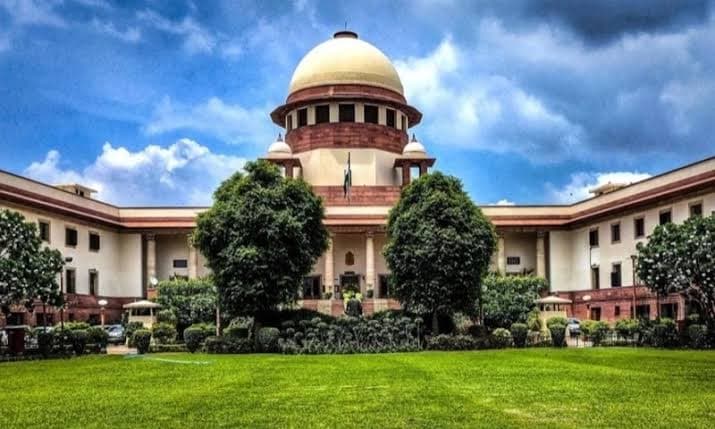
- The discussion follows controversies surrounding content created by influencers, which spurred the Supreme Court to inquire about regulation measures for online content.
- The MIB highlighted growing societal concern regarding prevalent obscene and violent content and indicated a demand for a stricter legal framework to tackle such issues.
Current Legal Framework
- Under Part III of the IT Rules, platforms must implement a three-level grievance redressal mechanism for violations of the Code of Ethics, which includes:
- Self-regulation by platforms.
- Industry-wide standards.
- Government oversight.
- Challenges to these provisions are ongoing in courts:
- Bombay High Court and Madras High Court have stayed enforcement of the grievance mechanism.
- The Kerala High Court has restricted coercive actions regarding compliance.
- Over 15 petitions regarding these rules have been filed, with the Supreme Court seeking to consolidate these cases into one hearing at the Delhi High Court.
Economic and Social Impact
- The regulatory changes aim to balance freedom of expression with the need to protect societal morals and prevent the dissemination of harmful content, reflecting a critical intersection of technology, policy, and societal values.
Conclusion
The proposed amendments to the IT Rules, 2021 highlight the government's effort to regulate digital content while navigating complex constitutional rights. The ongoing judicial challenges underscore the contentious nature of regulating speech in the digital age.
Key Terms & Concepts
| Information Technology (IT) Rules 2021 | Regulates digital content distribution |
| Ministry of Information and Broadcasting (MIB) | Administers IT Rules in India |
| Supreme Court of India | Judicial authority on content regulation |
| Intermediary Guidelines and Digital Media Ethics Code | Framework for online content standards |
| Grievance redressal mechanism | Handles violations of content rules |
| Bombay High Court | Issued a stay on regulations |
| Madras High Court | Issued a stay on regulations |
| Kerala High Court | Restrained coercive action on IT rules |
| Standing Committee on Communications and IT | Reviewed government policies on media |
| Code of Ethics | Sets standards for digital content |