iAspirants
Ancient Buddhist Site Discovered in Kashmir
Published on:
Share this post
Article Summary
Summary of Findings and Significance of Zehanpora Archaeological Site
Archaeological Discovery
- Location: Zehanpora village, Baramulla, North Kashmir.
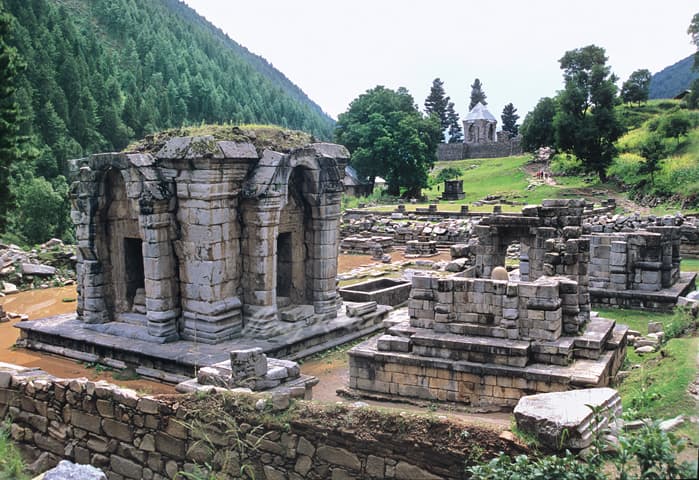
- Area: Approximately 10 acres of land, characterized by mounds of earth previously assumed to be natural formations.
- Age: Estimated to be over 2,000 years old, dating back to the Kushan era.
Cultural Significance
- Cultural Legacy: Highlighted by Prime Minister Narendra Modi in his Mann ki Baat address, emphasizing the importance of Jammu and Kashmir's rich history.
- Visual Resemblance: The formations have been compared to the images of three Buddha stupas found in a French museum archive, indicating a significant connection to Buddhist heritage.
Research and Excavation
- Mapping and Excavation Initiatives:
- Conducted by researchers from the Centre of Central Asian Studies at the University of Kashmir and the J&K Department of Archives, Archaeology, and Museums.
- Methods employed include drones and remote sensing for site mapping.
- Initial findings suggest extensive man-made structures, including evidence of a wooden super-structure.
Historical Context of Buddhism in Kashmir
- Early Presence of Buddhism: Traditionally believed to have been introduced during Emperor Ashoka's reign, with references in Kalhana’s Rajatarangini indicating its existence prior to Ashoka.
- Key Historical Figures:
- Ashoka allegedly invited Buddhist scholars from Kashmir to councils at Pataliputra.
- The Kushan rulers, particularly Kanishka, played a pivotal role in the establishment and spread of Buddhism, fostering the development of monasteries and stupas.
Contributions to Buddhist Learning and Influence
- Evolution of Buddhism: Noted interactions between various sects of Buddhism have occurred in Kashmir, influencing its spread into regions such as Central Asia and China.
- Mahayana Buddhism: Emerged and established roots in Kashmir, becoming one of the dominant forms of Buddhism that propagated across multiple regions.
Importance for Future Research
- Need for Further Excavation: The site requires extensive research efforts due to its size and potential historical value. The current timeline for excavation is expected to exceed three years.
- Historical Trade Routes: The site can offer significant insights into the trade routes traversing Kashmir and the region's Buddhist influence.
Ongoing Concerns
- Conservation Needs: Many archaeological sites in Kashmir, including Zehanpora, require further research and conservation support to preserve and understand their historical significance.
- Additional Sites: Numerous other archaeological locations in Kashmir already show strong Buddhist affiliations, including Kanispora, Ushkur, and Harwan.
Conclusion
The Zehanpora site represents a crucial piece of Kashmir's archaeological puzzle, reflecting the deep-rooted historical and cultural significance of Buddhism in the region. Future excavations and research will likely illuminate the complexities of Kashmir's past and its role in the broader context of Buddhist history.
Key Terms & Concepts
| Zehanpora Archaeological Site | Ancient cultural structure |
| 2,000 years | Estimated age of structures |
| Buddha stupas | Cultural significance |
| Kushan era | Historical period of significance |
| Centre of Central Asian Studies | Research organization involved |
| drones and remote sensing | Technology used for mapping |
| Ashoka's reign | Historical period of Buddhism's introduction |
| Rajatarangini | Historical text references |
| Mahayana Buddhism | Buddhist sect evolution |
| Kashmir's Buddhist heritage | Cultural legacy |