iAspirants
Ancient Hominin Insights into Bipedalism
Published on:
Share this post
Article Summary
Summary of Findings on Sahelanthropus tchadensis and Human Evolution:
Species Overview:
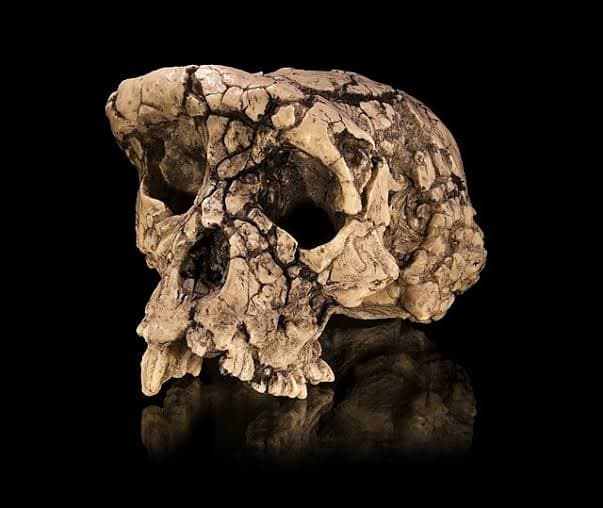
- Name: Sahelanthropus tchadensis
- Age: Approximately 7 million years old
- Significance: Considered the oldest known member of the human lineage after the divergence from chimpanzees.
Key Findings:
- Recent analysis suggests adaptations in Sahelanthropus show clear signs of bipedalism (upright walking).
- Anatomical features indicate it may have walked on two legs part of the time, suggesting a pivotal transition in human evolution.
Research Details:
- Conducted by Scott Williams (NYU) and team using modern imaging techniques.
- Focused on fossilized thigh bone and forearm fragments, comparing them to known hominins and non-human apes.
- Notable discovery: A projection on the thigh bone linked to a stabilizing ligament essential for upright walking.
Theoretical Implications:
- Findings support the theory of gradual bipedal evolution rather than a sudden shift.
- Raises questions about the primary locomotion of Sahelanthropus—whether it mainly walked upright or used a combination of tree climbing and ground walking.
Ongoing Debates:
- Skepticism persists about the sufficiency of fossil evidence to conclusively prove regular upright walking.
- Some scientists emphasize the need for more fossils to substantiate claims of bipedalism.
Future Directions:
- Planned excavations at the original site in Chad intend to yield more fossils, potentially clarifying the evolutionary timeline and mechanisms of bipedalism.
Importance for Human Evolution Studies:
- Contributes to understanding the anatomical and behavioral evolution of early hominins.
- Highlights the complexity of tracing the evolutionary pathway from primates to modern humans.
Conclusion: The study of Sahelanthropus tchadensis represents a significant step in elucidating the origins of human bipedalism, although debate continues over interpretations of fossil evidence and its implications for our evolutionary history.
Key Terms & Concepts
| Sahelanthropus tchadensis | Oldest known hominin species |
| 7 million years | Approximate age of species |
| Djurab Desert | Location of fossil discovery |
| 2001 | Year fossils first uncovered |
| New York University | Institution of lead researcher |
| bipedal movement | Key characteristic of the species |
| imaging techniques | Method of limb bone analysis |
| ligament stabilisation | Adaptation for upright movement |
| Chad | Country where fossils found |
| evolution of bipedalism | Main evolutionary topic discussed |