iAspirants
Ancient Lord Vishnu Idol Unearthed
Published on:
Share this post
Article Summary
Summary of Findings and Context on Discovery of Lord Vishnu Idol
Discovery Details:
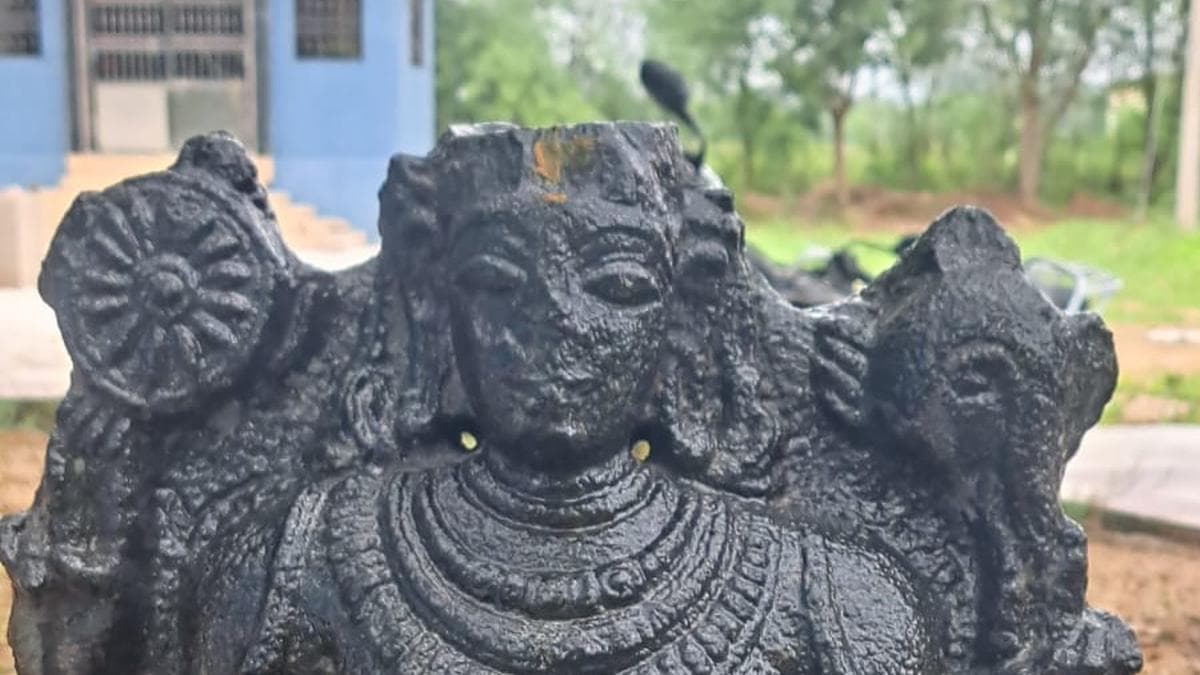
- A stone idol of Lord Vishnu, approximately 500 years old, was discovered by residents on the dry Palar riverbed in Puliyankannu village.
- Dimensions of the idol: 2 feet tall and 1.5 feet wide.
- The idol's head is slightly damaged, while two arms (including one holding a chakra) remain intact.
Historical Significance:
- Local historians suggest the idol belongs to the Vijayanagara era (14th to 17th century), a period noted for temple architecture and a strong presence of Vaishnavism.
- The region is historically significant, known for its temples and as a center of Vaishnavite and Shaivite worship.
Legal Framework and Custody:
- Under the Indian Treasure Trove Act of 1878, treasures found below one-foot depth are considered government property.
- Revenue officials confirmed the idol will be transferred to the district treasury with the Collector designated as the guardian of such treasures.
Future Display Plans:
- A request is to be made for public display of the idol at Arcot Museum to facilitate educational opportunities regarding the region's cultural heritage.
- Previous significant finds include a five-foot Vishnu idol from Mellur village, dated to the early Chola period (9th century), which was displayed in a museum.
Importance of Preservation:
- The discovery underscores the necessity of preserving archaeological finds in India, which contributes to the understanding of historical and cultural development in the region.
- Engagement with local historians and authorities plays a critical role in safeguarding and promoting archaeological heritage.
Contextual Geography:
- The Palar River region is historically recognized and intersects with major historical narratives concerning temple construction and religious practices, particularly during the Vijayanagara empire.
This discovery not only enriches the cultural tapestry of the region but also reinforces the importance of legal frameworks in the protection and display of Indian heritage.
Key Terms & Concepts
| Lord Vishnu idol | Ancient stone sculpture |
| Palar River | Geographical location of discovery |
| Vijayanagara era | Historical period of the idol |
| Indian Treasure Trove Act 1878 | Legal framework for treasure |
| Taluk Office, Walajah | Current location of idol |
| Arcot Site Museum | Proposed display location |
| Collector Priya Ravichandran | Guardian of the treasure request |
| Mellur village, 2008 | Previous discovery location |
| Chola period, 9th century | Historical context of another idol |