iAspirants
Asiatic Lion Conservation Challenges in India
Published on:
Share this post
Article Summary
Summary Notes on Asiatic Lion Conservation in India
Population Growth and Current Status
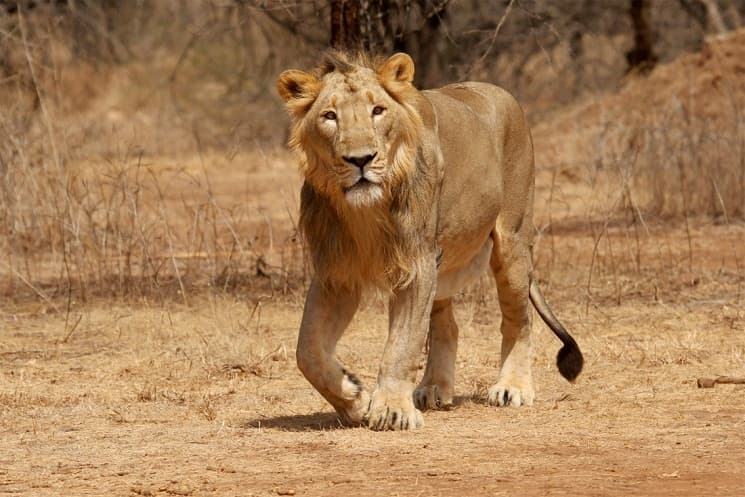
- Asiatic Lion Population: Increased from a few dozen in the early 20th century to approximately 891 lions today.
- Geographical Concentration: Entire global population is confined to Gir National Park in Gujarat, making it vulnerable to catastrophic events.
Scientific Consensus and Policy Recommendations
- Research History: Wildlife Institute of India reports emphasize the risks of a single population due to threats like epidemics, forest fires, and natural disasters.
- Supreme Court Judgment (April 15, 2013): Directed the translocation of lions to Kuno National Park in Madhya Pradesh, highlighting ecological principles over regional interests.
- Recognized the risk of extinction if lions remain in a single location.
Challenges and Policy Impasse
- Gujarat's Resistance: The state has resisted relocation, citing successful conservation efforts and concerns about habitat suitability elsewhere.
- Stalled Translocation Project: No lions have been introduced to Kuno National Park, despite preparations for habitat restoration.
Ecological Risks
- Disease Vulnerability: The 2018 Canine Distemper Virus outbreak exemplifies the risks associated with a concentrated population, leading to deaths and infections among lions.
- Genetic Diversity: Limited genetic diversity exacerbates the impact of diseases and environmental stressors.
Conservation Strategies
- Metapopulation Approach: Advocated by conservation science to distribute species across multiple habitats to reduce extinction risks from biological and environmental factors.
- Project Lion (2020): Aims to discuss expanding lion habitats, including proposals for sites like Barda Wildlife Sanctuary. However, experts argue these sites are too close to Gir to mitigate risks effectively.
Constitutional and Governance Issues
- Constitutional Framework: Wildlife is recognized as a shared responsibility under the Constitution of India, yet regional interests often complicate conservation efforts.
- Supreme Court's Position: Asiatic lions are considered a national heritage, not property of any single state, emphasizing the need for national-level action.
Conclusion and Future Directions
- Need for a Second Population: Establishing a second free-ranging population is critical for ecological resilience.
- Conservation Security: The current situation highlights the paradox of a thriving yet ecologically fragile population, stressing that numbers alone do not ensure survival; resilience is essential.
- Call to Action: Urgent implementation of a second home for Asiatic lions is necessary to prevent reversing decades of conservation success into ecological vulnerability.
Key Takeaways
- Ecological Necessity: A second home for Asiatic lions is essential to protect against potential catastrophic events.
- Policy Implementation: Effective conservation requires overcoming political and regional barriers to ensure the long-term survival of the species.
Key Terms & Concepts
| Asiatic lion population | Current population is approx. 891 |
| Supreme Court judgment | Directed translocation on April 15, 2013 |
| Kuno National Park | Proposed relocation site for lions |
| Canine Distemper Virus | Outbreak affected lion population in 2018 |
| Project Lion (2020) | Recent policy for lion habitat expansion |
| Barda Wildlife Sanctuary | Proposed site for lion relocation |
| Gir forest | Current habitat of Asiatic lions |
| Wildlife Institute of India | Conducted studies on lion population risks |
| National heritage | Supreme Court's recognition of lions |
| Ecological principles | Guidelines for conservation efforts |