iAspirants
Bangladesh Elections and Political Changes
Published on:
Share this post
Article Summary
Key Facts and Insights on Bangladesh's Political Landscape
Political Context:
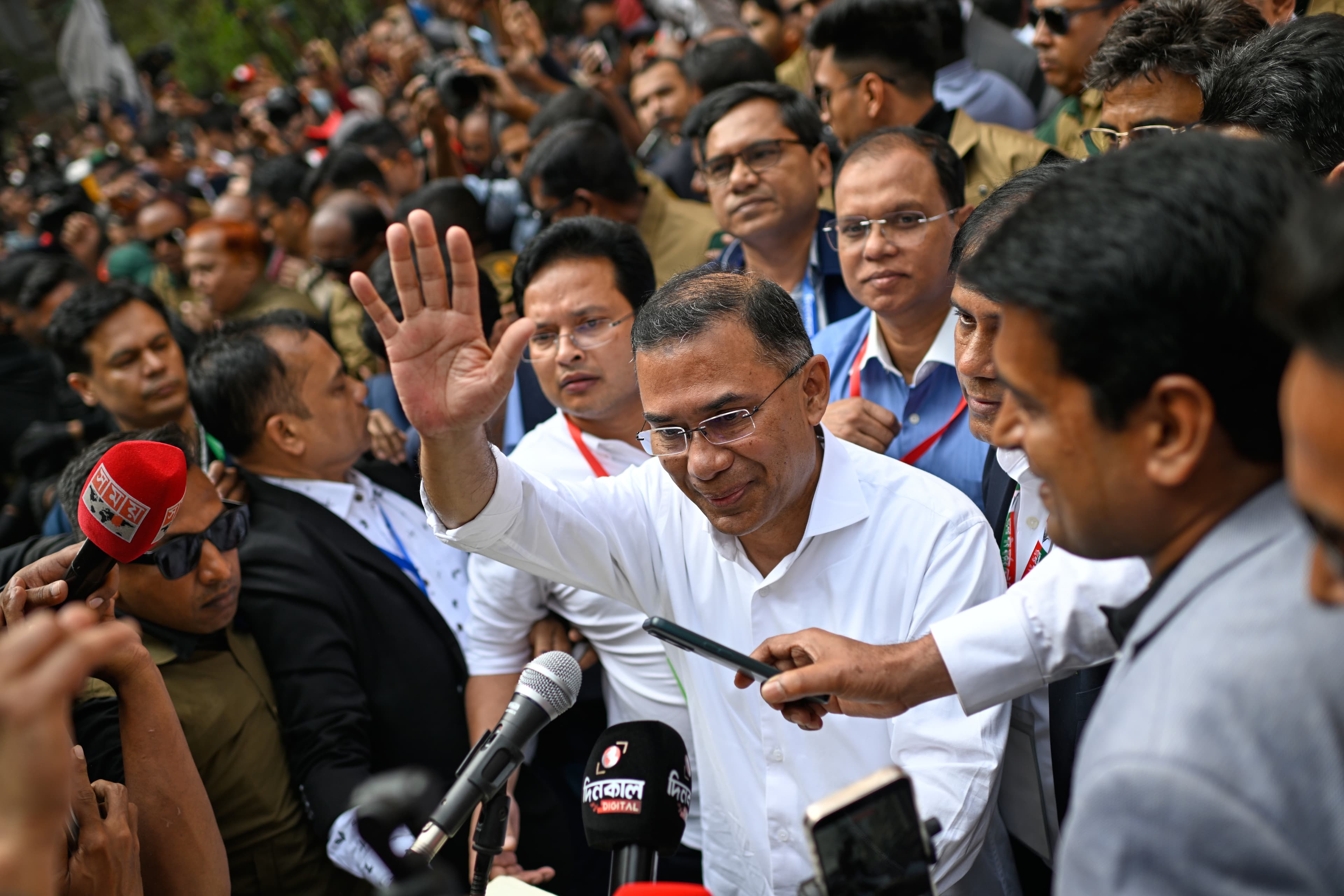
- Tarique Rahman from the Bangladesh Nationalist Party (BNP) is set to become Bangladesh's next Prime Minister following the recent national elections, marking the first election after the ousting of the Awami League's Sheikh Hasina in 2024.
Historical Background:
- Rahman comes from a prominent political lineage; his father, Ziaur Rahman, was a key military leader in Bangladesh's liberation movement and the founder of the BNP. His mother, Khaleda Zia, succeeded him as party leader.
Political Career:
- Rahman joined the BNP in 1988 and gradually rose in the party, initially avoiding public office. His political activities were largely behind-the-scenes until the 2001 elections, showcasing significant involvement in local issues.
- Following a change of government in 2006, he faced corruption charges and spent 17 years in exile before returning to Bangladesh in 2023.
Judicial and Political Developments:
- Rahman was sentenced in absentia on multiple corruption and terror charges during the Awami League’s tenure; however, he has since been cleared of all charges, enabling his return.
- His return was timed with the serious illness and subsequent death of his mother, Khaleda Zia, in December 2023.
Electoral Dynamics:
- The BNP's electoral success comes after a nearly two-decade period out of power, highlighting a shift in Bangladesh’s political dynamics and governance.
- Voter sentiment appears to favor a return to BNP leadership amid dissatisfaction with the Awami League's prolonged governance.
Governance Philosophy:
- Rahman emphasizes inclusivity, stating in his campaign that "religion belongs to each individual, but the state belongs to all," advocating for security and rights for all citizens irrespective of their faith, resonating with principles of secular governance.
International Relations:
- There are indications of renewed diplomatic overtures, with Indian Prime Minister Narendra Modi being among the first leaders to reach out to Rahman post-election.
Socio-Economic Considerations:
- Under Rahman's leadership, the BNP may focus on economic policies aimed at stabilizing and boosting the economy post-pandemic, though specific policy details were not disclosed in the article.
Public Sentiment and Future Direction:
- Rahman is portrayed as a figure who values consultation and traditions, gathering advice from party elders and interacting closely with the electorate. His campaign strategy was reportedly influenced by advisers from the UK.
- The rise of Islamist Jamaat-e-Islami as an electoral force could signal changes in political alignments and strategies moving forward.
Conclusion
Tarique Rahman's return from exile and the BNP's electoral resurgence herald significant changes in Bangladesh's political environment, with implications for governance, international relations, and civil rights. His approach to leadership and policy-making will be closely watched as the nation embarks on a new political chapter.
Key Terms & Concepts
| Bangladesh Nationalist Party (BNP) | Political party winning elections |
| Sheikh Hasina | Previous Prime Minister ousted |
| Ziaur Rahman | Founder of BNP |
| Khaleda Zia | Former BNP chairperson |
| March 7, 2007 | Date of Rahman's arrest |
| December 25, 2025 | Rahman's return to Bangladesh |
| December 30, 2025 | Death of Khaleda Zia |
| January 9, 2026 | Rahman's formal takeover position |
| Jamaat-e-Islami | Islamist party's performance in elections |
| Economic asylum | Rahman's status in London |
| Hawa Bhaban | Location of parallel government operation |
| Bangladesh elections 2024 | Recent elections in Bangladesh |