iAspirants
Battle of Haifa: A Historical Perspective
Published on:
Share this post
Article Summary
Facts and Historical Context
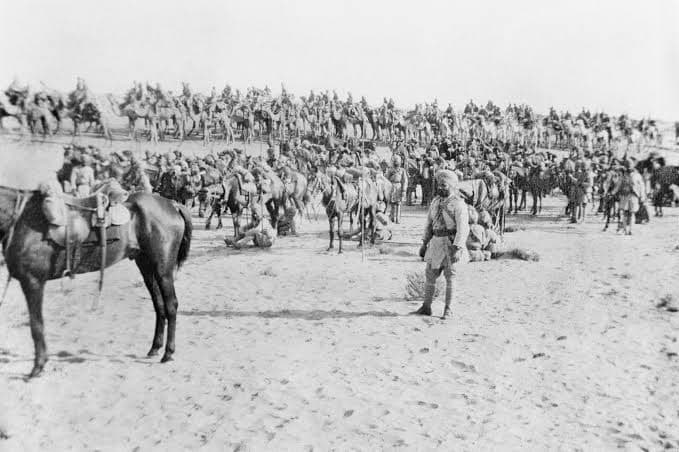
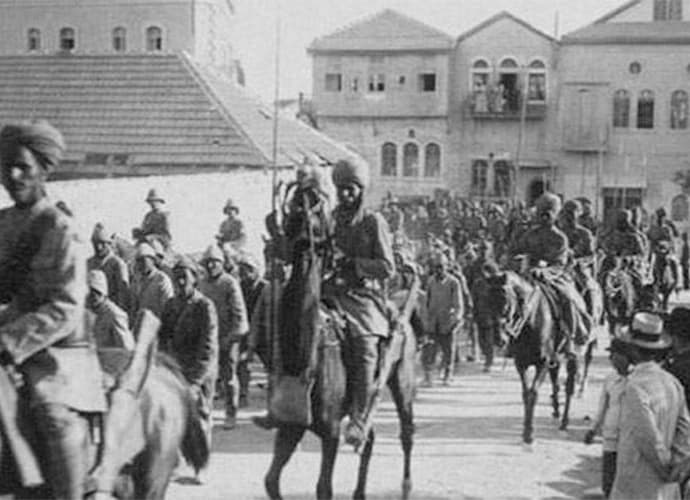
- Battle of Haifa (September 23, 1918): A military cavalry action during WWI involving Indian soldiers from the Jodhpur, Mysore, and Hyderabad Lancers under British command.
- Indian Contribution: Over 1 million Indians served in WWI; approximately 74,000 Indian soldiers died during the conflict.
- Military Significance: The charge was pivotal in securing Haifa, enabling the Allied forces to advance towards Damascus, and represented one of the last large cavalry charges in military history.
Commemorations and Memory
- Teen Murti Haifa Chowk: Renaming of a WWI memorial in India symbolizes recognition of Indian bravery and contribution to world events prior to India's independence.
- India-Israel Diplomatic Ties: Haifa has become a symbol of friendship, with annual commemorations reflecting this strategic partnership.
- Contested Narratives: The commemoration of the battle involves complex historical interpretations, with differing views on the significance and ownership of the narrative between India, Israel, and Palestine.
Political and Ethical Complexities
- Balfour Declaration: The Indian cavalry's involvement supported British control which facilitated the execution of the Balfour Declaration and ultimately contributed to the creation of Israel.
- Palestinian Perspective: For Palestinians, the battle is viewed as part of a longer narrative of foreign domination resulting in dispossession, leading to a mixed reception of Indian soldiers' involvement.
- Moral Ambiguity: The bravery of Indian soldiers is acknowledged; however, it is contrasted against the imperial context in which they served, leading to discomfort among some Indians about celebrating their role in a colonial project.
Diplomatic and Domestic Reactions
- Indian Response: There is a sense of pride in the soldiers' courage but discomfort with the imperial implications of their service. Historiography reflects ongoing debates about how to remember their actions appropriately.
- Palestinian Sensitivity: The Palestinian Ambassador to India emphasizes the implications of remembering Haifa within the context of ongoing struggles for Palestinian identity and rights.
Broader Implications
- The Battle of Haifa serves as a reminder of the complexities inherent in colonial history, where acts of bravery can lead to consequences that are morally disputable and affect contemporary political relationships.
- Historiographical Disputes: Historians from different communities contest the narratives around Haifa, highlighting varying interpretations and the quest for national identity.
Conclusion
- The commemoration of the Battle of Haifa encapsulates layered historical meanings, representing both Indian valor and the imperial repercussions that contributed to modern geopolitical dynamics. Emphasizes the need for a nuanced understanding of historical events that interweave courage with the realities of colonialism, legacy, and contemporary international relations.
Key Terms & Concepts
| September 23, 1918 | Date of the battle |
| Jodhpur, Mysore, and Hyderabad Lancers | Indian cavalry units involved |
| Allied advance northwards to Damascus | Objective of the battle |
| Balfour Declaration | Political statement influencing Palestine |
| Teen Murti Haifa Chowk | Commemorative site in India |
| more than a million Indian soldiers | Number of Indian soldiers served |
| 74,000 Indian soldiers died | Casualties in the war |
| 15th Imperial Service Cavalry Brigade | Key military unit in battle |
| Indian-Israel friendship | Diplomatic significance |
| Palestinian critique | Opposition perspective |
| naqba | Palestinian term for catastrophe |
| colonial command | Context of Indian soldiers' service |