iAspirants
Battle of Panipat: Historical Clash Overview
Published on:
Share this post
Article Summary
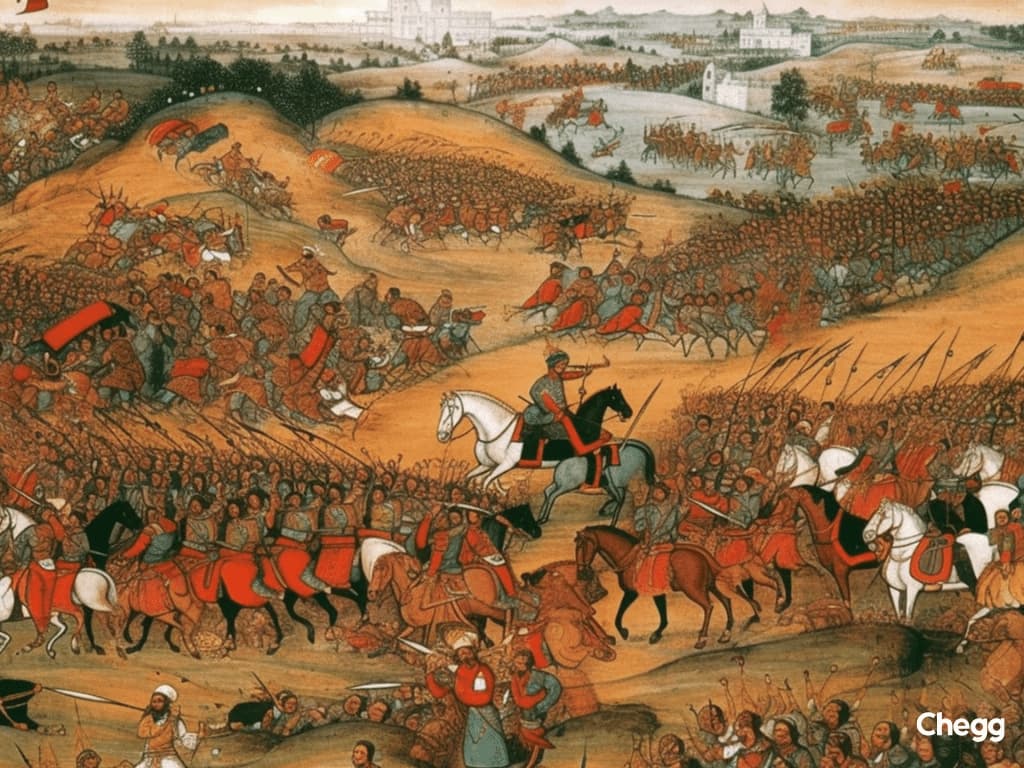
Historical Context: The First Battle of Panipat took place on April 12, 1526, marking the beginning of the Mughal Empire in India. The battle was fought between the forces of Zahiruddin Babur and Ibrahim Lodi, the Sultan of Delhi.
Forces Involved:
- Babur's Army: 15,000 soldiers
- Ibrahim Lodi's Army: Approximately 100,000 soldiers and 1,000 war elephants, making Lodi's forces nearly ten times larger than Babur's army.
Key Figures:
- Zahiruddin Babur: Leader of the invading army; claimed descent from both Timur and Genghis Khan, representing a significant historical lineage.
- Ibrahim Lodi: Ruler of Delhi at the time of battle.
Tactical Insights: Babur noted that Ibrahim Lodi's troops were indecisive during the battle, which contributed to the eventual defeat of Lodi's forces.
Cultural Impact: The victory at Panipat laid the foundation for the establishment of the Mughal Empire, which would have a lasting influence on Indian culture, governance, and history.
Importance of the Battle: The First Battle of Panipat is often recognized as one of the pivotal events that shaped the course of Indian history.
This brief encapsulates the significance of the First Battle of Panipat, the forces at play, and the implications for the future of India under Mughal rule while remaining focused on relevant historical facts and figures.
Key Terms & Concepts
| Battle of Panipat | Major historical battle |
| Zahiruddin Babur | Leader of invading army |
| Ibrahim Lodi | Delhi Sultan opposing Babur |
| April 12, 1526 | Date of the battle |
| Chagatai Turk | Babur's ethnic background |
| 1,00,000 soldiers | Lodi's army size |
| 15,000 soldiers | Babur's army size |
| 1,000 war elephants | Part of Lodi's forces |
| Timur and Genghis Khan | Historical lineage |
| April 17, 2026 | Date of publication |