iAspirants
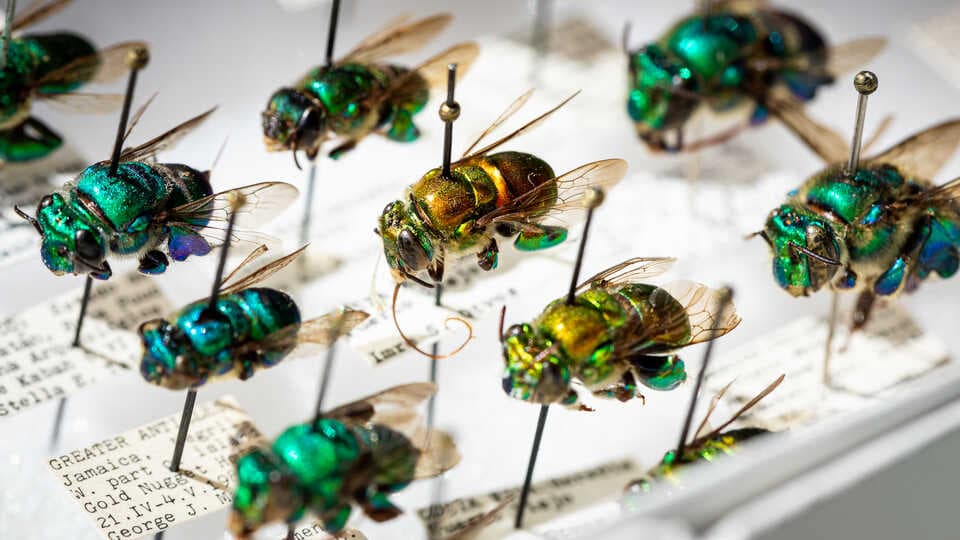
Bee Museum Educates on Pollinators
Published on:
Share this post
Article Summary
Summary of Key Facts and Insights
Biological and Ecological Insights:
- The newly established Bee Museum in Shivamogga aims to educate the public on bees, their behavior, and their ecological roles as pollinators.
- Focuses on the significance of small pollinators (bees, wasps, rodents, birds) in ecosystem functioning and highlights threats such as pesticides, habitat loss, and changes in agricultural practices.
Beekeeping Educational Initiatives:
- Apoorva BV, a beekeeper and educator, initiated the museum with the intent to make beekeeping accessible and interesting to individuals with no prior knowledge.
- Conducts beekeeping workshops and has participated in agricultural events across Karnataka, amplifying awareness of beekeeping practices.
Government Schemes and Support:
- Collaborated with Jayalaxmi Hegde on the Tribal Sub-Plan (TSP) scheme, which includes beekeeping training and distribution of beekeeping equipment to farmers.
- The TSP is intended to enhance rural livelihoods and promote beekeeping as a sustainable livelihood for farmers and tribals in the Western Ghats region.
Economic Aspects:
- Potential earnings of ₹2 lakhs per year for families maintaining 50 bee colonies in the Western Ghats, exemplifying beekeeping as a lucrative agricultural practice.
- Commercial beekeeping in India began post-independence through initiatives by the Khadi and Village Industries Commission (KVIC) aimed at rural employment.
Challenges and Development:
- The undertaking of creating the museum involved overcoming logistical challenges, including geographical distance from Bengaluru, structural repairs, and staffing issues.
- Opened to the public in March 2026 after nearly a year of planning and construction.
Cultural and Agricultural Importance:
- Emphasizes the intrinsic value of bees as sentient beings connected to nature, promoting a more humane approach toward beekeeping.
- Suggests that honey from the Western Ghats possesses unique aroma, flavor, and potential medicinal benefits, supporting environmental sustainability and local economies.
Judicial or Policy Initiatives:
- Absence of specific judicial or policy references in the provided details beyond the implementation of the TSP scheme.
Scientific and Technological Applications:
- Ongoing educational and outreach programs signify a growing awareness of the intersection between agriculture, biodiversity, and conservation.
Future Prospects:
- With increasing tourism in the Western Ghats, the market value for local honey is expected to rise, further supporting local economies and farmer livelihoods through enhanced bee conservation efforts.
Conclusion: The Bee Museum serves as a pivotal platform for enhancing public knowledge about beekeeping, promoting sustainable agricultural practices, and safeguarding biodiversity, thus contributing to both ecological preservation and economic stability in rural communities.
Key Terms & Concepts
| Bee Museum | Educational platform on bees |
| Keladi Shivappa Nayaka Agricultural and Horticultural Sciences | Museum location and university |
| Chandana Madhuvana Gramina Abhivruddhi Sangha | NGO supporting beekeeping |
| Tribal Sub-Plan (TSP) | Scheme for beekeeping training |
| Khadi and Village Industries Commission (KVIC) | Promotion of beekeeping post-independence |
| Western Ghats | Region with potential for beekeeping |
| ₹2 lakhs | Potential annual earnings per family |
| March 2026 | Museum opening month and year |
| 300 kilometres | Distance from Bengaluru to Shivamogga |
| 50 bee colonies | Sample colony count for earnings |