iAspirants
Butterfly Diversity in Thiruvananthapuram
Published on:
Share this post
Article Summary
Summary of Urban Green Spaces and Butterfly Diversity in Thiruvananthapuram
Study Overview:
- Published in: Urban Ecosystems journal.
- Research Team: Freerk Molleman (Adam Mickiewicz University, Poland) and Berke Can Aydin (Afyon Kocatepe University, Turkey).
Key Findings:
- Diversity: Urban green spaces in Thiruvananthapuram host a rich diversity of butterflies, including both protected and forest-dependent species.
- Fruit-Feeding Species: About 50% of Kerala’s known fruit-feeding butterfly species are located within city limits.
- Butterfly Count: Researchers recorded 3,625 butterflies from 29 species, all in the Nymphalidae family.
Habitat Analysis:
- Open vs. Closed Habitats:
- Open habitats (e.g., abandoned paddy fields, coconut farms) supported up to 17 species.
- Closed-canopy habitats (e.g., agroforestry plots, semi-natural forest patches) exhibited even higher diversity.
- Species Richness: The natural forest site near Vithura (adjacent to the Western Ghats) showed the highest species richness.
Notable Species:
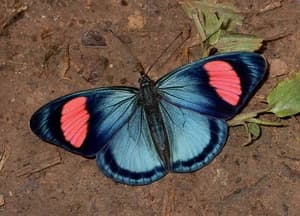
- Gaudy Baron Butterfly: Listed under Schedule IV of the Wildlife (Protection) Act, 1972; found in urban open habitats.
- Clipper Butterfly: A charismatic forest species also recorded within urban wooded valleys.
Seasonal Influences:
- Butterfly abundance peaks shortly after the onset of monsoon rains, indicating a correlation with fresh plant growth.
Environmental Concerns:
- Urban land in Thiruvananthapuram has more than doubled in the last two decades, resulting in a decline of farmland and natural habitats.
Ecological Insights:
- The landscape’s transition from protected forests to mixed agroforestry and residential areas supports the persistence of many forest-associated species by providing host plants and food sources such as coconut, mango, and banana.
Constitutional and Legal Context:
- Wildlife (Protection) Act, 1972: Establishes legal protection for certain butterfly species found in urban areas, emphasizing conservation-related policies.
Implications for Urban Planning:
- The study underscores the importance of preserving green spaces within urban settings to maintain biodiversity and support ecological health amidst urbanization.
Importance of Research:
- Highlights the sensitivity of butterflies as indicators of habitat quality, emphasizing the need for further studies and conservation strategies to preserve biodiversity in urban landscapes.
This research can inform policymakers on maintaining urban biodiversity as cities expand, balancing development needs with ecological preservation.
Key Terms & Concepts
| Thiruvananthapuram | Study location for butterflies |
| Kerala | State with butterfly species |
| Urban Ecosystems | Journal of published study |
| Nymphalidae | Butterfly family studied |
| 3,625 butterflies | Total butterflies recorded |
| 29 species | Total species recorded |
| Gaudy Baron | Protected butterfly species |
| Schedule IV | Legal protection under Wildlife Act |
| Wildlife (Protection) Act, 1972 | Law for species protection |
| Monsoon | Season affecting butterfly abundance |
| Coconut, Mango, Banana | Host plants for butterflies |
| Urban Expansion | Concern for biodiversity |
| Urban land |