iAspirants
Current AffairsPrelims PYQsUPSC CSE SyllabusUPSC CSE StrategyBlogsPricing
Login
iAspirants

Your AI-powered companion for UPSC preparation.

Quick Links

  • Home
  • About Us
  • Current Affairs
  • Prelims PYQs
  • UPSC CSE Syllabus
  • UPSC CSE Strategy
  • Blogs

Company

  • Pricing
  • FAQs
  • Contact Us
  • Login

Legal

  • Privacy Policy
  • Terms & Conditions
  • Return Policy

© 2025 iAspirants, Inc. All rights reserved.

  1. Blogs
  2. National and International Importance

Caste Discrimination Cases at IIT

Published on: 28-Sep-2026

Source: The Hindu

Share this post

Caste Discrimination Cases at IIT

Article Summary

  • Incident Overview: On September 18, 20-year-old Sahil Wakode, a second-year B.Tech student at IIT Bombay, died by suicide. His parents alleged caste discrimination, filing an FIR against IIT Bombay faculty under the Scheduled Castes and Scheduled Tribes (Prevention of Atrocities) Act.

  • Institutional Response:

    • IIT Bombay has set up a 10-member inquiry committee to investigate the circumstances of Sahil's death.
    • The institute acknowledged 18 demands from students, including:
      • Action against involved individuals and an apology for defamation.
      • Establishing a code of conduct for faculty and student representation in committees.
      • Provision of mental health support: one-on-one interactions with the Dean, 24/7 access to a psychiatrist, and at least one counselor per 250 students.
      • Independent auditing of the Student Wellness Centre and counselors in every hostel.
    • The Director of IIT Bombay, Shireesh Kedare, signed the memorandum from students and issued an apology for the previous statement about Sahil’s incident.
  • Protests: Ongoing student protests characterize IIT Bombay's response as inadequate, with demands including the resignation of the Director and Dean Doolla. A student group claimed a pattern of ignoring mental health issues and linked four previous suicides to inadequate institutional support.

  • Faculty Division: Faculty members are split on the issue, with some supporting Prof. Doolla, questioning the due process followed in Sahil’s case, and others criticizing the Faculty Forum for not representing the wider faculty opinion adequately.

  • Statistics on Caste Discrimination:

    • National Task Force report reveals that from 2018 to 2023, 13,600 students from disadvantaged communities dropped out of premier institutions:
      • Central Universities: 4,596 OBC, 2,424 SC, and 2,622 ST students.
      • IITs: 2,066 OBC, 1,068 SC, and 408 ST students.
      • IIMs: 163 OBC, 188 SC, and 91 ST students.
    • Notable dropouts occurred despite government support measures such as fee waivers and stipends.
  • Mental Health Context: The report by the National Task Force on students' mental health indicates severe academic stress as a significant contributing factor to the dropouts among underrepresented communities in higher education.

  • Support Services: The national helpline Tele MANAS is available at 14416 for persons in distress.

This summary emphasizes the key facts, statistics, institutional responses, and ongoing issues relevant to the suicide of Sahil Wakode and the implications regarding caste discrimination and student mental health in higher education institutions.

Key Terms & Concepts

Scheduled Castes and Scheduled Tribes (Prevention of Atrocities) ActLegal framework invoked in FIR
IIT-BombayInstitution involved in incident
10-member inquiry committeeInvestigative body for the case
National Task Force on mental healthReported data on student dropouts
13,600 studentsReported dropouts from institutions
4,596 OBC, 2,424 SC, 2,622 STDetails of dropouts by caste
Tele MANAS 14416Counselling service available
MaharashtraLocation of IIT-Bombay

Mind Map for UPSC Civil Services Revision

Turn UPSC Civil Services Current Affairs Into Exam-Ready Notes

Reading National and International Importance current affairs is half the work. Revise them with ready-made notes and test what actually stuck.

  • Daily UPSC Civil Services current affairs analysis
  • Revision notes, mind maps & MCQs
  • Prelims mock tests with instant results

Related UPSC Civil Services Current Affairs Articles

India's Nuclear Doctrine and Security Challenges
National and International Importance26-Sep-2026

India's Nuclear Doctrine and Security Challenges

India's Nuclear Doctrine & Strategic Environment

  1. Current Status of Nuclear Doctrine:

    • India’s nuclear doctrine has been stable since its operationalization in 2003, based on principles of credible minimum deterrence and a declared No First Use (NFU) posture.
  • It's stated that nuclear retaliation is an option following a major biological or chemical attack on India.
  • Historical Context:

    • Emerged post-Pokhran-II tests (1998) establishing India as a nuclear state and Kargil conflict (1999) demonstrating that nuclear deterrence does not preclude conventional wars.
    • Key documents: 1999 Draft Nuclear Doctrine, Cabinet Committee on Security’s decision (January 4, 2003).
  • Strategic Shifts:

    • China-Pakistan Alignment:
      • Increasing cooperation and interconnected threats from two nuclear-armed neighbors.
      • China has reportedly modernized its nuclear forces and military infrastructure, while Pakistan has diversified its nuclear capabilities, including tactical nuclear weapons.
    • Technological Advances:
      • Innovations in AI, cyber capabilities, space surveillance, and hypersonic weapons alter deterrence dynamics and introduce complexities in command and control networks.
    • Geopolitical Dynamics:
      • The Indo-Pacific region has emerged as a critical stage for great-power competition.
      • Evolving U.S.-China rivalry and enhanced China-Russia coordination present challenges to India's strategic calculus.
  • Policy Implications:

    • A review of the nuclear doctrine is deemed necessary to assess relevance against current and anticipated threats without fundamentally altering its core principles.
    • Focus areas for review: survivability, command/resilience, second-strike capabilities, and evolving technologies.
  • Concerns & Caution:

    • India's NFU stance has justified its image as a responsible nuclear power and any ambiguity could lead to adversaries recalibrating their strategies.
    • Strengthening operational capabilities, modernizing delivery systems, and improving command-control resilience should take precedence over changes in declaratory policies.
  • Potential Review Outcomes:

    • A reassessment of NFU could reinforce its rationale and clarify scope while maintaining credible deterrence capabilities.
    • A comprehensive review ought to align India’s nuclear policy with its broader diplomatic strategies and assertion of strategic autonomy.
  • Imperative for Strategic Coherence:

    • India's nuclear doctrine is a strategic tool, reflecting its ongoing commitment to restraint and responsible nuclear stewardship.
    • The interplay of doctrine, capability, and geopolitical events necessitates continuous evaluation to ensure effectiveness against a backdrop of shifting threats.
  • This document suggests that India's nuclear stance should acknowledge the evolving strategic landscape while retaining its foundational principles for enduring deterrence and international standing.

    Assessment of MSC Elsa 3 Wreck
    National and International Importance23-Sep-2026

    Assessment of MSC Elsa 3 Wreck

    Key Points on MSC Elsa 3 Wreck Case

    Judicial Context

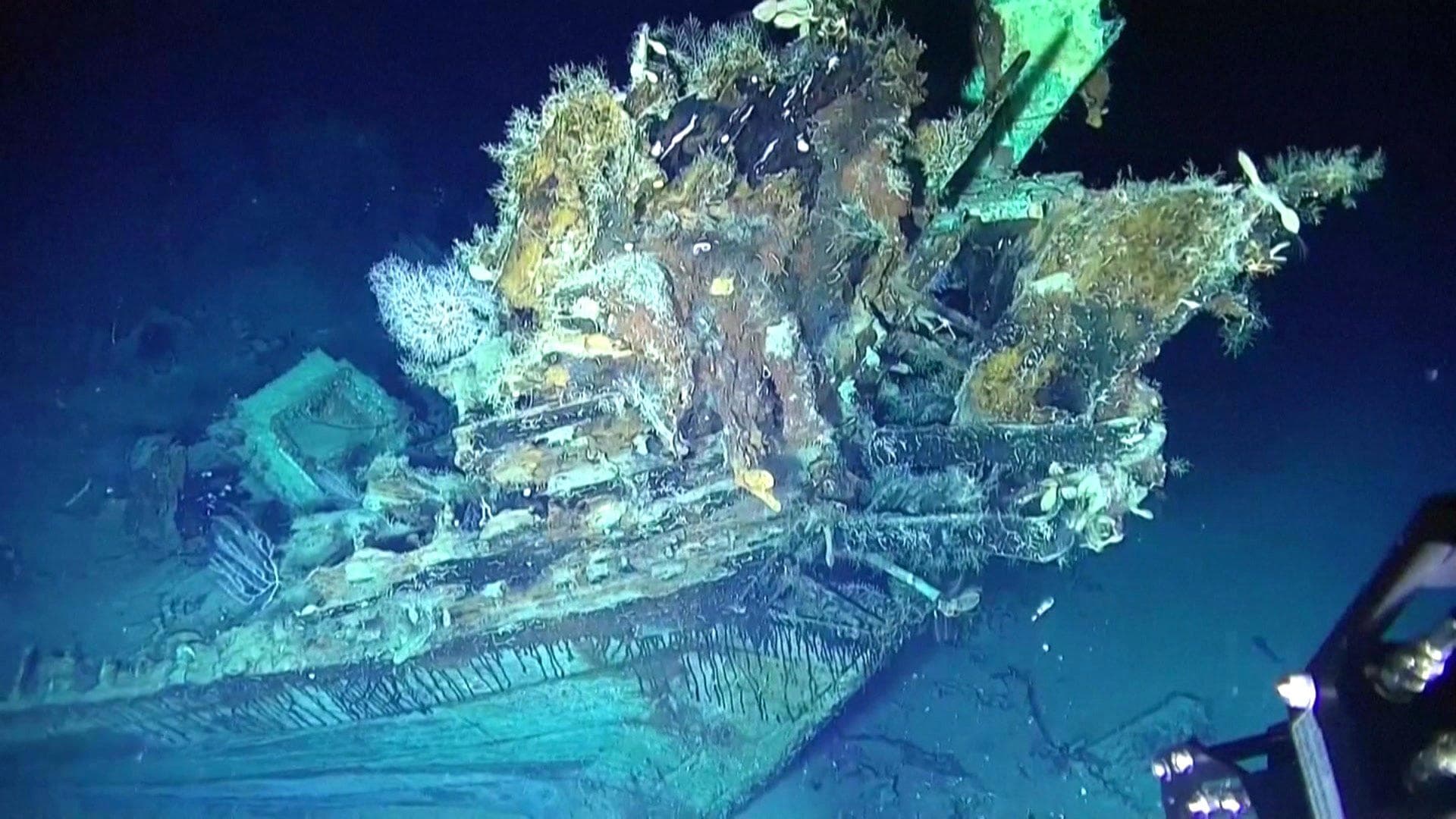
    • The Kerala High Court is hearing public interest litigations (PILs) regarding the removal of the wreck of MSC Elsa 3, a Liberia-flagged ship that sank off Alappuzha's coast in 2025.
    • The Division Bench consists of Justices V. Raja Vijayaraghavan and K.V. Jayakumar.

    Maritime Administration Involvement

    • Directorate General of Maritime Administration (DGMA) informed the court about steps taken to assess the wreck's situation.
    • DGMA requested assistance from the Indian Navy to perform an underwater survey of the submerged containers and hazardous cargo.

    Technical Surveys

    • Two Indian firms, C Track Surveys and Fugro Survey India Pvt. Ltd., have the technical capabilities to conduct multibeam and side scan surveys of the wreck site.
    • The costs of the proposed surveys are to be borne by Mediterranean Shipping Company (MSC), supervised by competent authorities.

    Committee Proposal

    • A proposal for the constitution of an inter-departmental committee to oversee the survey consists of:
      • Ministry of Ports, Shipping and Waterways
      • Mercantile Marine Department
      • Ministry of Environment, Forest and Climate Change
      • Kerala State Disaster Management Authority
      • Scientific and technical institutions like the National Institute of Oceanography and National Institute of Ocean Technology.

    Responsibilities Under Relevant Laws

    • According to the Merchant Shipping Act, 2025, the case involves assessing if the wreck poses a hazard based on factors such as:
      • Characteristics of the wreck
      • Tidal range & depth in the area
      • Proximity to protected areas, shipping routes, offshore pipelines, and tourist spots
      • Meteorological conditions & sensitive sea areas.

    Impacts & Public Interest

    • The court hearings focus on the potential hazards to the marine environment and local fishing communities and the need for responsible handling of hazardous materials from the wreck.
    • Affected fishermen have sought compensation for impacts stemming from the wreck.

    Conclusion

    The proceedings highlight the intersection of maritime law, environmental protection, and public safety in maritime incidents, demonstrating the role of various governmental bodies and the legal framework guiding the response to maritime hazards.

    Deterioration of Basra War Memorial
    National and International Importance23-Sep-2026

    Deterioration of Basra War Memorial

    Exam-focused Notes on Basra War Memorial and the Mysore Lancers

    Historical Context

    • Basra War Memorial: Built to honor 40,500 Commonwealth service personnel who died during the Mesopotamian Campaign (WWI: 1914–1921), including a significant number of Indian soldiers.
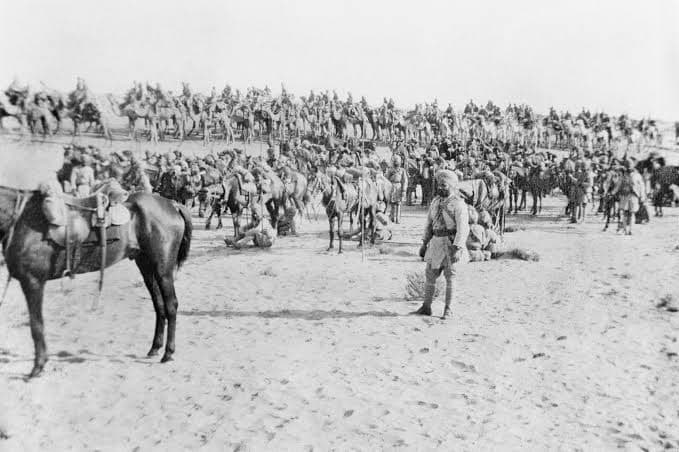
    • Mysore Imperial Lancers: Key participants in World War I, noted for their role in battle strategies, including the Liberation of Haifa on September 23, 1918.

    Recent Developments

    • Tombstone Destruction: Recent reports indicate the destruction of at least 3,000 tombstones at the Basra War Memorial.
    • Families of deceased soldiers are actively seeking public assistance to document the destruction and preserve the memory of the fallen.

    Contributions of the Mysore Lancers

    • The Lancers were originally part of the Indian Expeditionary Force, tasked with guarding the Suez Canal from 1915-1917, and later engaged in conflicts against Ottoman and German forces.
    • Their notable actions in trying conditions, lacking modern weaponry, highlight the courage displayed during the capture of positions held by the enemy.

    Key Battles and Rescues

    • Liberation of Haifa: Significant for overcoming Ottoman defenses with sheer bravery and rudimentary weaponry, with the Lancers playing a critical role.
    • Rescue of Abdu’l-Baha: The Indian forces, including the Mysore Lancers, were involved in the successful rescue operation of Abdu’l-Baha, a prominent religious figure.

    Research and Historical Documentation

    • Book by Anil Raje Urs: "Mysore Lancers - Valour in the World War I" provides insights from palace records into the journey of the Mysore Lancers and traces several families connected to the war.
    • A total of 15 families linked to the Mysore Lancers have been identified, with ongoing efforts to uncover more names and accounts.

    Commemoration and Recognition Issues

    • The Commonwealth War Graves Commission has acknowledged inaccuracies in memorial records relating to Indian soldiers. Efforts are ongoing to compile an accurate list of the names of those commemorated, as reflected in the CWGC’s Iraq Roll of Honour.

    Constitutional and Legal Context

    • While there are no direct constitutional references in this summary, the historical significance and commemorative aspects reflect India's legacy and its role in global conflicts, which can be further related to the principles of recognition and respect for sacrifices made by soldiers as espoused in national narratives.

    Summary

    The Basra War Memorial and the sacrifices of the Mysore Lancers highlight the important yet often overlooked contributions of Indian soldiers in WWI. Given the new findings on the destruction of their memorials, continued advocacy for historical accuracy and remembrance is essential to honor their legacy and ensure that their contributions are not forgotten.