iAspirants
Ceasefire and India's Fertilizer Crisis
Published on:
Share this post
Article Summary
Summary of Key Points
International Context and Conflicts
- Iran and US-Israel Conflict: A ceasefire was announced amid threat to civilian lives.
- Potential Lessons for India: Increasing global uncertainty and the importance of food security highlighted.
Food Security and Fertilizer Supply in India
- Fertilizer Import Dependence: India relies on imports for about 70% of its chemical fertilizers, including urea, implicating national food security.
- Urea Usage: India consumes approximately 40 million tonnes (MT) of urea, with 10 MT imported. Domestic production heavily relies (85%) on imported natural gas.
Price Fluctuations
- Urea Prices: Global urea prices rose 65% from $482/tonne to $795/tonne due to ongoing war tensions.
- LNG Prices: Increased from $12/MMBtu to $19.5/MMBtu, marking a 63% hike.
- DAP Prices: DAP (Diammonium phosphate) has seen a 15% increase from $627/tonne to $720/tonne.
Government Response
- Cabinet Decisions: Approval for higher urea subsidies to prevent price hikes for farmers.
- Overuse of Fertilizers: Government acknowledges farmers are over-using urea compared to phosphatic fertilizers.
- Rationing Proposal: A suggestion for states to ration urea supplies (10-15% cut) according to agricultural needs based on land records and crop history under the Essential Commodities Act.
Fertilizer Policy Recommendations
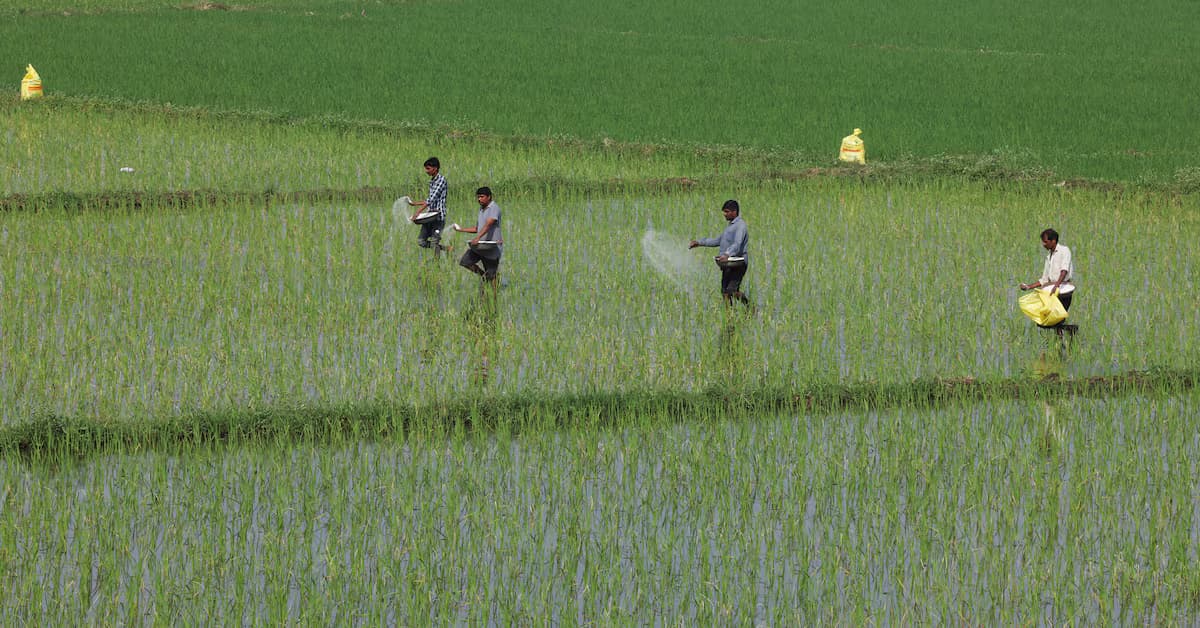
- Nutrient Use Efficiency (NUE): Granular urea has a NUE of 35-40%, leading to environmental concerns due to excess nitrogen loss.
- Shift to Liquid Urea: Advocating for the use of liquid urea in drip irrigation, which has a higher NUE (90%).
- Direct Cash Transfers: Proposal for direct cash transfers to farmers equivalent to the fertilizer subsidy to enhance transparency and effectiveness.
Agricultural Scheme Issues
- PM-KISAN Scheme: Concerns regarding tenant farmers being excluded from the subsidy. Suggestions to combine PM-KISAN funds with fertilizer subsidies for broader coverage.
Proposed Fertilizer Product Shifts
- Triple Super Phosphate (TSP): Recommended for better phosphorus (P) content over current DAP usage, advocating for domestic production and collaboration for phosphatic resources.
Conclusion
- Need for Reform: Urgent reforms in fertilizer policies and efficiency improvements are critical to ensure food security in India amidst fluctuating global prices and geopolitical tensions.
This summary encapsulates the critical aspects of fertilizer supply, policy adaptation, and food security strategies necessary for India, driven by current international dynamics.
Key Terms & Concepts
| Urea | Main nitrogen fertilizer used |
| 70% | Import dependence for fertilizers |
| 40 million tonnes | Urea consumption in India |
| 10 million tonnes | Urea imported by India |
| $795/tonne | Current global urea price |
| Essential Commodities Act | Regulatory framework for rationing |
| Nutrient Use Efficiency (NUE) | Efficiency metric for fertilizers |
| PM-KISAN scheme | Government subsidy program |
| Direct Cash Transfers | Proposed method for subsidies |
| Triple Super Phosphate (TSP) | Alternative to DAP fertilizer |
| Saudi Arabia | Source of phosphatic fertilizers |
| 18% | Nitrogen content in DAP |
| Granular Urea |