iAspirants
Current AffairsPrelims PYQsUPSC CSE SyllabusUPSC CSE StrategyBlogsPricing
Login
iAspirants

Your AI-powered companion for UPSC preparation.

Quick Links

  • Home
  • About Us
  • Current Affairs
  • Prelims PYQs
  • UPSC CSE Syllabus
  • UPSC CSE Strategy
  • Blogs

Company

  • Pricing
  • FAQs
  • Contact Us
  • Login

Legal

  • Privacy Policy
  • Terms & Conditions
  • Return Policy

© 2025 iAspirants, Inc. All rights reserved.

  1. Blogs
  2. Polity and Governance

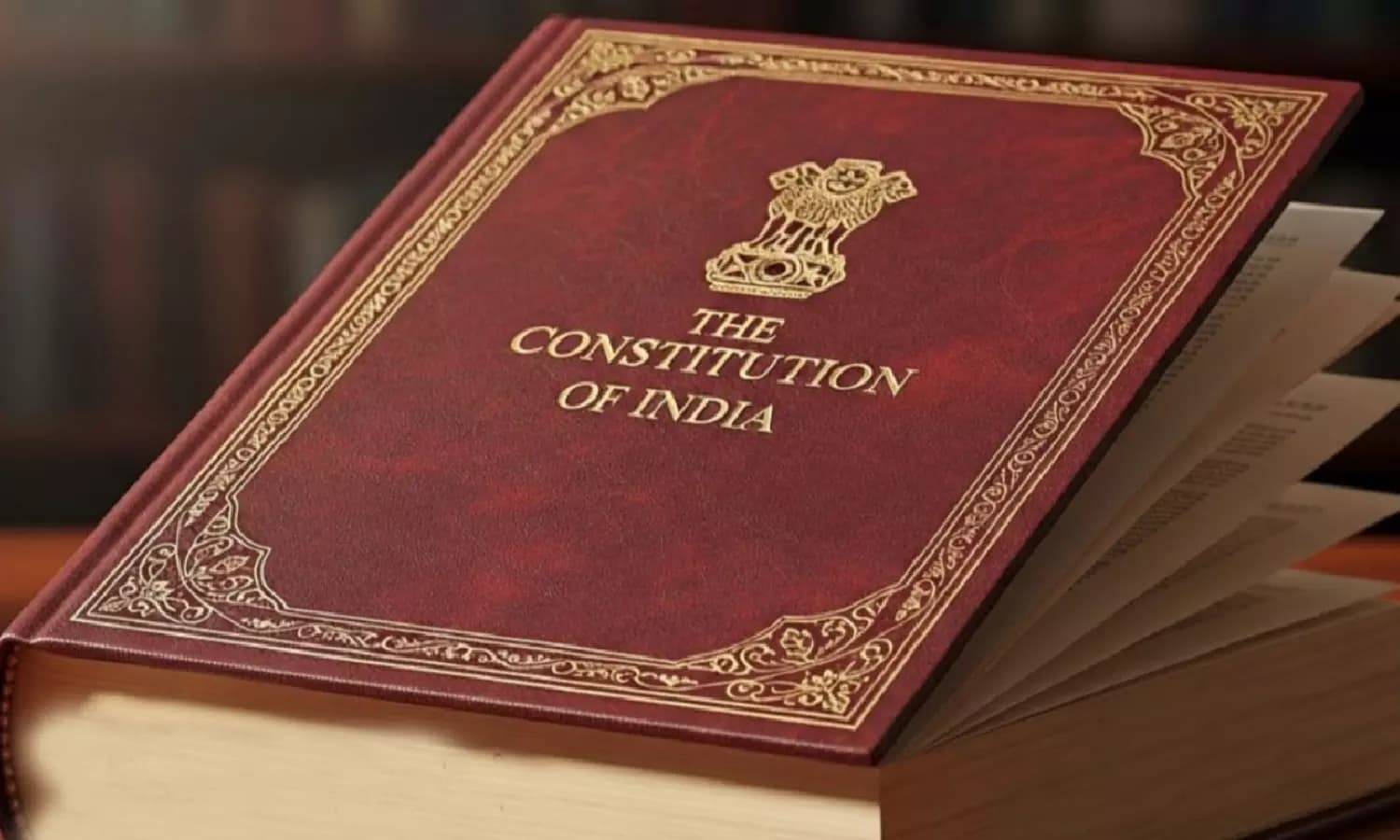
Celebrating India's Constitution Day 2025

Published on: 28-Nov-2025

Share this post

Celebrating India's Constitution Day 2025

Article Summary

Constitution Day of India - Key Highlights

Historical Context

  • Date of Adoption: November 26, 1949
  • Enforcement Date: January 26, 1950 (Republic Day)
  • Duration of Drafting: 2 years, 11 months, and 17 days
  • Sessions Held: 11 sessions totaling 165 days
  • Amendments Submitted: Approximately 7,600 amendments

Major Resolutions (November 26, 1949)

  1. Adoption of the Constitution as settled by the Assembly.
  2. Adjournment until a date before January 26, 1950, as determined by the President.

Key Figures Present

  • Sardar Vallabhbhai Patel: Announced state acceptance of the Constitution.
  • President Rajendra Prasad: Delivered notable speech acknowledging effort and contributions, particularly mentioning Dr. B.R. Ambedkar, Patel, and Jawaharlal Nehru.

Language Provisions

  • Algu Rai Shashtri raised concerns regarding the Hindi translation of the Constitution.
  • Rajendra Prasad confirmed that:
    • Official work would be conducted in English for 15 years.
    • A Hindi translation would be published by January 26, 1950, along with arrangements for translations into other languages.

Financial Aspects

  • Total expenditure on Constitution preparation until November 22, 1949: Rs. 63,96,729.

Key Constitutional Issues Addressed

  • Integration of States: Due to British colonial rule, the integration of territories was crucial.

    • Sardar Patel played a significant role in negotiating with princely states.
  • Communal Problem Resolution:

    • Elimination of separate electorates.
    • Provision for reservation limited to depressed classes (Hindus) and tribal people based on educational and socio-economic backwardness.

Presidential Remarks on Anomalies and Regrets

  1. Member Qualifications:

    • Regret expressed over the lack of qualifications for legislators, despite high standards for those administering laws.
  2. Language of Constitution:

    • Regret that the Constitution was not drafted in an Indian language, due to practical challenges.

Contextual Understanding

  • The Constitution of India is a foundational document, embodying the principles of justice, liberty, equality, and fraternity, incorporating a mixture of borrowed elements from various world constitutions and adaptations to Indian context.
  • Constitution Day also emphasizes the importance of citizenship, individual rights, and the structure of the governance framework established in the Constitution.

Conclusion

November 26 offers an occasion to reflect on the historical, cultural, and legislative significance of the Indian Constitution, honoring the rich democratic ethos it founded.

Key Terms & Concepts

Constitution of IndiaFundamental legal document
November 26, 1949Date Constitution adopted
January 26, 1950Date Constitution came into effect
2015Year Constitution Day observed
Sardar Vallabhbhai PatelKey figure in Constitution adoption
Rajendra PrasadPresident during Constitution adoption
Constituent AssemblyDrafted the Constitution
7,600 amendmentsTotal amendments submitted
165 daysTotal days of sessions
Rs. 63,96,729Cost of Constitution preparation
15 yearsEnglish used for official work
Communal problemMajor constitutional challenge
Depressed classes

Mind Map for UPSC Civil Services Revision

Turn UPSC Civil Services Current Affairs Into Exam-Ready Notes

Reading Polity and Governance current affairs is half the work. Revise them with ready-made notes and test what actually stuck.

  • Daily UPSC Civil Services current affairs analysis
  • Revision notes, mind maps & MCQs
  • Prelims mock tests with instant results

Related UPSC Civil Services Current Affairs Articles

Judiciary's Challenges and Future Directions
Polity and Governance20-Sep-2026

Judiciary's Challenges and Future Directions

Judicial Independence and Legal Education in India

Constitutional and Legal Framework

  • Judiciary Status: Justice N. Anand Venkatesh of the Madras High Court emphasized the need for judiciary introspection to restore neutrality.
  • Supreme Court Ruling: He referenced a Supreme Court ruling highlighting the essential role of advocates in upholding the rule of law and protecting citizens' rights.
Reservation clause in Constitution
Tribal peopleReservation clause in Constitution

Key Issues Highlighted

  • Commercialization of Legal Education: The rise of law colleges (over 1,500 today from a few hundred in the 1990s) has led to a decline in the quality of legal education.
  • Politicization: Concerns regarding political affiliations of advocates and the impact on judicial neutrality were raised, notably the involvement of the Bar Council of India (BCI) chairman in politics.
  • Lack of Guidance: Junior advocates are reportedly not receiving adequate mentorship from seniors, leading to a knowledge crisis.
  • Syllabus Gaps: Notable subjects such as intellectual property rights and international law are missing from the syllabi of government law colleges.

Economic and Educational Data

  • Enrollment Statistics: Only 5% of advocates are from 27 national law colleges, indicating a disparity in legal training quality.
  • Junior Advocate Crisis: Many juniors lack foundational knowledge, impacting their readiness for practice.

Current Challenges

  • Impact of AI: Justice Venkatesh warned that Artificial Intelligence could render some legal tasks, such as documentation and drafting, redundant for junior advocates.
  • Administrative Concerns: The absence of a vice-chancellor at Tamil Nadu Dr. Ambedkar Law University (TNDALU) was called a critical issue affecting legal education in the state.

Suggestions for Improvement

  • Neutral Bar Associations: To enhance judicial independence, it was suggested that bar associations must detach from political influences.
  • Revamping Legal Education: A call for reform in legal education to ensure comprehensive coverage of fundamental subjects and improved mentorship.

Conclusion

Justice N. Anand Venkatesh’s address at the Indian Association of Lawyers’ conference highlighted critical concerns affecting the legal profession's integrity and effectiveness in India. His remarks underscore the pressing need for systemic reforms in legal education, bar association neutrality, and mentorship for the next generation of advocates to ensure the rule of law and judiciary's independence are preserved.

Uniform Civil Code and its History
Polity and Governance20-Sep-2026

Uniform Civil Code and its History

Key Points on the Uniform Civil Code (UCC)

Background and Historical Context

  • The Uniform Civil Code (UCC) has been a core agenda of the BJP.
  • Union Home Minister Amit Shah announced plans to enact UCC in 21 NDA-ruled states by 2029.
  • Historically, UCC was not consistently included in BJP or BJS election manifestos.
  • RSS's second sarsanghchalak, MS Golwalkar (1972), expressed reservations about mandatory UCC, advocating for diversity in personal laws.

Constitutional Reference

  • The UCC relates to the need for unification of personal laws across religions, potentially reflecting Article 44 of the Directive Principles of State Policy (DPSPs) of the Indian Constitution which calls for a UCC to be provided in the state.

Timeline of UCC Advocacy

  • UCC advocacy gained momentum post-Shah Bano case (1985), marking a shift towards making UCC a priority.
  • The BJP under LK Advani in the mid-1980s made UCC, abrogation of Article 370, and Ram temple issues central to its agenda.
  • The 1989 BJP manifesto proposed a commission to draft UCC. Subsequent manifestos in 1991, 1996, 2004, 2009, 2014, 2019, and 2024 reiterated commitments to UCC.

Challenges in Implementation

  • Scheduled Tribes (over 8.6% of India’s population) have customs that complicate UCC implementation.
  • Disputes center on marriage laws, succession, and definitions of tribal identities, which vary significantly.
  • The implementation of UCC has seen exclusions, as evidenced by Uttarakhand's decision to not include Scheduled Tribes in recent laws.

Current Government Position

  • Amit Shah's commitment to UCC aims to fulfill long-standing promises, particularly post-Ram temple and Article 370 abrogation.
  • The ruling BJP may seek to establish a coherent legislative approach to the UCC to leave its prior commitments realized.

Comparative Overview

  • Historical opposition to UCC has evolved, indicating shifts in both societal attitudes and political strategies concerning personal laws.
  • The opposition and support have often reflected broader societal and political challenges, impacting consensus around the formulation of a UCC.

Societal Implications

  • Introduction of UCC could impact diverse communities and the nature of personal laws across religions.
  • The focus on “unity in diversity” remains a contentious point reflecting India's complex socio-cultural fabric.

Conclusion

The UCC remains a significant and contentious issue in Indian politics, reflecting historical shifts in ideology, constitutional principles, and socio-legal frameworks. The unfolding discussions and policy proposals indicate a complex negotiation between India's diverse communities and the central government's legislative objectives.

Supreme Court Observes on IDP Conditions
Polity and Governance19-Sep-2026

Supreme Court Observes on IDP Conditions

Supreme Court Concerns: Relief Camps for IDPs in Manipur

  1. Judicial Concern:

    • The Supreme Court expressed shock over reports of deaths, including unnatural ones, in relief camps for internally displaced persons (IDPs) in Manipur.
  2. Current Situation of IDPs:

    • IDPs have faced prolonged displacement for over three years, deepening vulnerabilities including loss of access to healthcare.
    • As of the latest report, the number of IDPs in relief camps reduced to 28,899 from nearly 60,000 at the peak of violence.
  3. Healthcare Access Issues:

    • Manipur's healthcare facilities are largely centralized in Imphal, with two principal tertiary hospitals:
      • Jawaharlal Nehru Institute of Medical Sciences
      • Regional Institute of Medical Sciences
    • Access to healthcare for Kuki-Zo people from the hills is restricted due to violence and ethnic segregation, lacking specialists and essential medical equipment.
    • Many patients have to seek treatment outside Manipur, with the nearest healthcare facility located in Aizawl, a 12-hour journey by road.
    • Persistent blockades affect patient transit to hospitals, as well as the movement of medicines and medical personnel.
  4. Food and Nutrition Crisis:

    • Reports indicate that food provided in many relief camps is nutritionally deficient, undermining health and recovery of the IDPs.
  5. Need for Government Action:

    • There is a pressing need for the Manipur state government to enhance healthcare provisions for those still in camps, including ensuring adequately staffed medical facilities and a stable supply of medicines.
    • Dialogue and confidence-building measures are essential for a political settlement to the ongoing Meitei-Kuki conflict that impacts the prospects of rehabilitation and security for the displaced population.
  6. Constitutional and Policy Framework:

    • Addressing the IDP crisis aligns with the fundamental rights enshrined in the Constitution, especially the right to health (Article 21) and right to life with dignity.
    • The situation emphasizes the need for the state to fulfill its obligations under the Directive Principles of State Policy (DPSP) to provide adequate healthcare (Article 39(e) and (f)).
  7. Long-term Solutions Required:

    • A durable political solution is necessary to mitigate conflict, ensure a safe environment for rehabilitation, and empower IDPs to rebuild their lives with dignity and security.
Uniform Civil Code Controversy Intensifies
Polity and Governance16-Sep-2026

Uniform Civil Code Controversy Intensifies

Key Highlights on the Uniform Civil Code (UCC) Developments

  1. Statement by Home Minister: Amit Shah announced the intention to implement a Uniform Civil Code (UCC) across all NDA-ruled states by 2029.

  2. Support from NDA Partners:

    • Telugu Desam Party (TDP): Led by state president P. Srinivasa Rao, supports the UCC, emphasizing it as a move to strengthen national unity.
    • Shiv Sena: Deputy Chief Minister Eknath Shinde referenced founder Bal Thackeray’s vision of "one country, one law."
    • Janata Dal (United) - JD(U): Offers a non-oppositional stance pending a review of the UCC Bill, with Deputy Chief Minister Vijay Kumar Chaudhary noting their willingness to discuss if provisions are unexceptionable.
  3. Political Context:

    • TDP has 16 seats, Shiv Sena 13, and JD(U) 12 in the Lok Sabha, making their support crucial for the BJP.
    • Relations within NDA are dynamic, as demonstrated by varied responses from allies about the UCC's implications and implementation.
  4. Criticism and Concerns:

    • Opponents argue that the UCC may threaten articles 25, 26, and 29 of the Constitution related to personal religious freedoms.
    • CPI(M) and the National Conference express concerns about the UCC being a diversion from pressing issues like unemployment.
  5. Constitutional References:

    • Articles related to religious freedom and minority rights:
      • Article 25: Freedom of conscience and free profession, practice, and propagation of religion.
      • Article 26: Freedom to manage religious affairs.
      • Article 29: Protection of interests of minorities.
  6. Judicial Consideration: No current judicial rulings have been mentioned regarding the UCC, but its introduction is likely to spark legal debates about constitutional rights and provisions.

  7. Responses from Opposition Figures:

    • Jammu and Kashmir Chief Minister Omar Abdullah criticized the manner of state-by-state implementation rather than addressing it in Parliament, indicating a potential lack of parliamentary support for UCC.
    • AIMIM president Asaduddin Owaisi voiced that if NDA allies have any disagreement, they should formally oppose the UCC, questioning the motives behind its introduction.
  8. Government Actions:

    • Maharashtra Chief Minister Devendra Fadnavis indicated that the state government would proceed with the UCC once the drafting committee reports its findings.
    • Proposals for UCC are being received amid backlash and careful examination by NDA partners, indicating a complex political landscape.
  9. Public Sentiment: The UCC continues to evoke mixed responses, influencing both support and dissent among different political factions, suggesting potential unrest regarding legislative direction.

Summary:

The UCC proposal is gaining traction in NDA-ruled states, with varying support and concern among coalition partners. While the BJP pushes ahead with the introduction of the UCC, significant opposition arises concerning its implications on constitutional rights for religious minorities. As discussions unfold, especially within state assemblies, the socio-political ramifications of this legislative endeavor are likely to be profound, calling into question national unity and individual freedoms.

Youth Protests and Democratic Safeguards
Polity and Governance16-Sep-2026

Youth Protests and Democratic Safeguards

Summary of Recent Youth Protests and Political Dynamics in India

Key Themes and Context

  1. Emergence of Youth Protests:

    • Growing discontent among India’s Gen Z has led to new forms of protests aimed at disrupting established orders.
    • Protests are seen as essential for addressing and reforming unequal systems.
    • Historical context: Student movements have previously led to democratic changes in authoritarian regimes in nearby countries, like Nepal and Bangladesh.
  2. Role of Digital Platforms:

    • Digital tools and social media amplify the reach and impact of youth-led protests.
  3. Recent Notable Movements:

    • The Cockroach Janta Party (CJP) hosted a "sit-in protest" at Jantar Mantar, driven by concerns over examination mismanagement (e.g., National Eligibility cum Entrance Test).
    • Notable unrest in states like Jharkhand, Chhattisgarh, and Bihar emphasizes pent-up frustration over governance issues.

Concerns Over Governance and Authority

  1. State Response:

    • Authorities typically resort to force against student protests, which raises concerns about a disproportionately heavy-handed response against young activists.
    • There is a noted tendency for governments to label protesters as “foreign agents” or “anti-national,” reminiscent of tactics used in past uprisings.
  2. Historical Perspectives:

    • Comparisons are made to previous significant movements like those led by Birsa Munda, pointing to historical grievances and current agitation around recruitment irregularities.

Political Implications

  1. Recognition of Protests:

    • The government and political figures need to heed emerging signs of unrest to prevent escalation.
    • Current demonstrations convey deeper sentiments about governance quality and perceived dealing injustices affecting youth.
  2. Youth Sentiment:

    • There is a belief among young people that their grievances are neglected, leading to growing mistrust in political institutions.
    • A shift in political engagement may occur, with youth beginning to assume more proactive roles in political discourse.
  3. Challenges to Democracy:

    • Concerns about the erosion of democratic principles and institutional safeguards are prevalent, as youth feel increasingly sidelined.

Constitutional and Legal Framework

  1. Democratic Rights:
    • The Constitution of India provides for the right to protest under Article 19(1)(a) (freedom of speech and expression), indicating that protests are a legitimate form of expressing dissent.

Recommendations for Authorities

  1. Promote Dialogue:

    • Government officials and political leaders should engage in constructive dialogue with youth representatives to address their concerns effectively.
  2. Evaluate Examination Systems:

    • Steps to review examination management and educational policies could alleviate some tensions.
  3. Emphasize Civic Responsibility:

    • Authorities should ensure that law enforcement practices respect civil liberties while maintaining public order.

Conclusion

The current wave of youth protests in India indicates a significant undercurrent of dissatisfaction with governance and political engagement. Addressing these concerns is vital to maintaining democratic integrity and fostering a productive political environment. Ensuring dialogue and reform can prevent the emergence of more pronounced discontent and potential unrest.