iAspirants
Censorship Issues in Internet Governance
Published on:
Share this post
Article Summary
Exam-Focused Notes on Government Censorship and IT Rules
Constitutional References and Legal Framework:
- Information Technology Act, 2000: Key legislation governs cyber activities including social media usage.
- Section 79(3)(b): Allows for blocking of content considered illegal without prior hearing.
- Section 69A: Authorizes the government to block specific websites with procedural fairness, though often not followed.
- High Court Rulings: Multiple high courts have issued interim orders challenging the IT Rules, but many cases remain pending without final judgement.
Government Policies and Amendments:
- IT Rules, 2021: Established by the Ministry of Electronics and Information Technology (MeitY) to govern online content and user rights.
- Origin: Issued through executive order on February 25, 2021.
- Expansion of powers under these rules has led to increased censorship and restriction of user rights.
- February 10, 2023 Amendments: Compressed takedown timelines to three hours, raising concerns about suffocating parody and satire.
- October 10, 2025: Enhanced the Sahyog censorship portal, empowering over 35 state police and eight central agencies for content takedowns.
- March 30, 2023 Proposed Amendments: Further expands censorship to social media users commenting on current affairs; perceived as elimination of free speech.
- Broadcasting Bill, 2024: Proposed regulations stalled due to public opposition are being reintroduced informally through IT Rules amendments.
Evidence of Increasing Censorship:
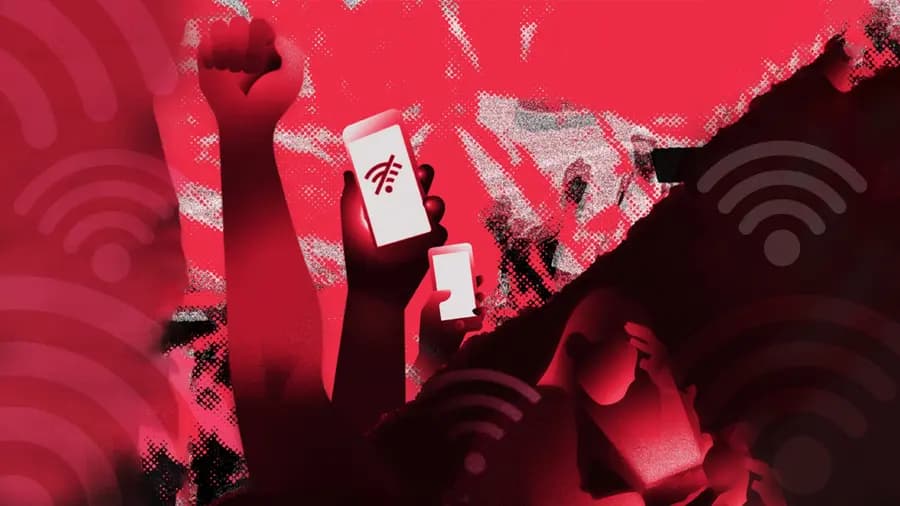
- Recent notices and account restrictions have shown a tangible increase in censorship on social platforms.
- Users face lack of clarity on removals—uncertainty about who issued the censorship and the reasons behind it.
Impact on Society:
- Rise of government-directed censorship creates an environment of fear and uncertainty for content creators and social media users.
- Critique regarding the reduction of transparency and accountability in government interventions on digital platforms.
Ministerial Statements:
- Ashwini Vaishnaw (Union Minister): Claims that amendments respond to challenges posed by AI-generated misinformation, has framed India's approach as a "global benchmark."
International Context:
- Growing scrutiny over digital rights reflects a global concern about freedom of expression and the influence of state censorship on social media.
Technological Considerations:
- The amendments aim to address issues associated with deepfakes and misinformation but raise alarms about excessive power without adequate checks.
- Changes to data retention laws propose removal of the three-month cap for online intermediaries, potentially leading to longer surveillance and data gathering.
Conclusion:
- Overall, these developments highlight a trend of increasing governmental control over digital media, potentially infringing on user rights and freedoms as outlined in constitutional provisions. Continuous monitoring of legal challenges and societal responses to these policies is essential.
Key Terms & Concepts
| Section 79(3)(b) of IT Act | Legal basis for content blocking |
| Information Technology Rules, 2021 | Framework for online censorship |
| Ministry of Electronics and Information Technology (MeitY) | Regulatory authority over IT rules |
| Sahyog censorship portal | Platform for content takedowns |
| Section 69A | Legal procedure for blocking websites |
| Broadcasting Bill, 2024 | Regulation for media content |
| Proposed amendments on March 30 | Further expansion of censorship |
| AI-generated misinformation | Justification for policy changes |
| Account restrictions and content takedowns | Evidence of censorship escalation |