iAspirants
Challenges in Tuberculosis Vaccine Development
Published on:
Share this post
Article Summary
Exam-Focused Notes on Tuberculosis Vaccine Research
Disease Overview
- Tuberculosis (TB) is the deadliest infectious disease, outpacing COVID-19 at its peak.
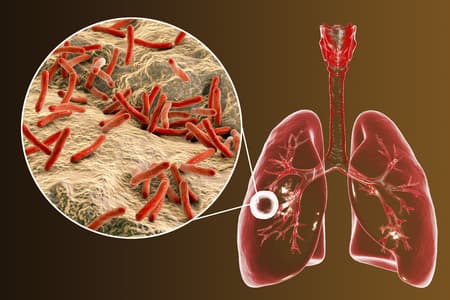
- TB can present as Pulmonary TB (PTB) (infectious) or Extrapulmonary TB (EPTB) (harder to diagnose, more debilitating, and sometimes fatal).
- In low- and middle-income countries, TB incidence ranges between 200 to 300 per 100,000 population. Eliminating TB requires reducing this to 10-20 per 100,000.
India's TB Burden
- India has one of the highest TB burdens globally.
- Policy for TB elimination involves a holistic approach including better detection, preventive therapy, and vaccination.
- There's currently no structured TB vaccination strategy for school-age children in India.
Recent Research Findings
- The PreVenTB trial, conducted by the Indian Council of Medical Research (ICMR), involved over 12,700 contacts of TB patients across 18 sites in India.
- Vaccines tested:
- VPM1002 and Immuvac.
Efficacy Results
VPM1002 efficacy:
- 50.4% against EPTB.
- 64.6% efficacy in children aged 6-14 against all forms of TB.
- Overall 21.4% efficacy against all TB.
Immuvac efficacy:
- Over 60% efficacy against EPTB in children aged 6-10.
- More than 60% efficacy against disease progression in latent infection cases.
Nutritional Considerations
- Lower vaccine efficacy linked to individuals with low Body Mass Index (BMI), emphasizing the need for nutritional support in TB care.
Operational Advantages of VPM1002
- Single-dose vaccine based on a modified BCG platform, facilitating easier logistics and scalability for mass production.
Historical Context & Policy Actions
- Previous public health innovations, such as the TrueNat molecular test and Bharat Biotech’s Covaxin, underscore the need for a proactive approach rather than waiting for ideal solutions.
- Historical approval of vaccines despite modest efficacy shows a willingness to act on urgent health threats.
Integration into Health Programs
- Vaccination research needs to be integrated with:
- Early detection strategies.
- Preventive treatment for latent TB.
- Nutritional support programs.
Strategic Implications
- TB control strategies must be multifaceted, combining early detection, targeted vaccinations for PTB and EPTB, and nutritional supplementation.
- The aim is to quickly deploy available vaccines while awaiting more advanced options.
Conclusion
- Immediate actionable solutions, supported by robust research evidence, are essential in combating TB.
- Waiting indefinitely for perfect vaccines could jeopardize progress, highlighting the importance of pragmatism in public health responses.
Key Terms & Concepts
| Mycobacterium tuberculosis | Causes tuberculosis infection |
| PTB | Infectious form of TB |
| EPTB | Affects organs beyond lungs |
| 200-300 per 100,000 | TB incidence in low-income countries |
| 10-20 per 100,000 | Threshold for TB elimination |
| PreVenTB trial | Evaluated TB vaccines in India |
| ICMR | Conducted TB vaccine research |
| VPM1002 | Vaccine with reported efficacy |
| Immuvac | Vaccine with reported efficacy |
| 50.4% | Efficacy of VPM1002 against EPTB |
| 64.6% | Efficacy of VPM1002 in children |
| 60% | Efficacy of Immuvac in children |
| Single-dose vaccine |