iAspirants
Cheetahs' Historical Presence and Conservation
Published on:
Share this post
Article Summary
Cheetah Conservation and Potential Reintroduction in Saudi Arabia
Species Overview:
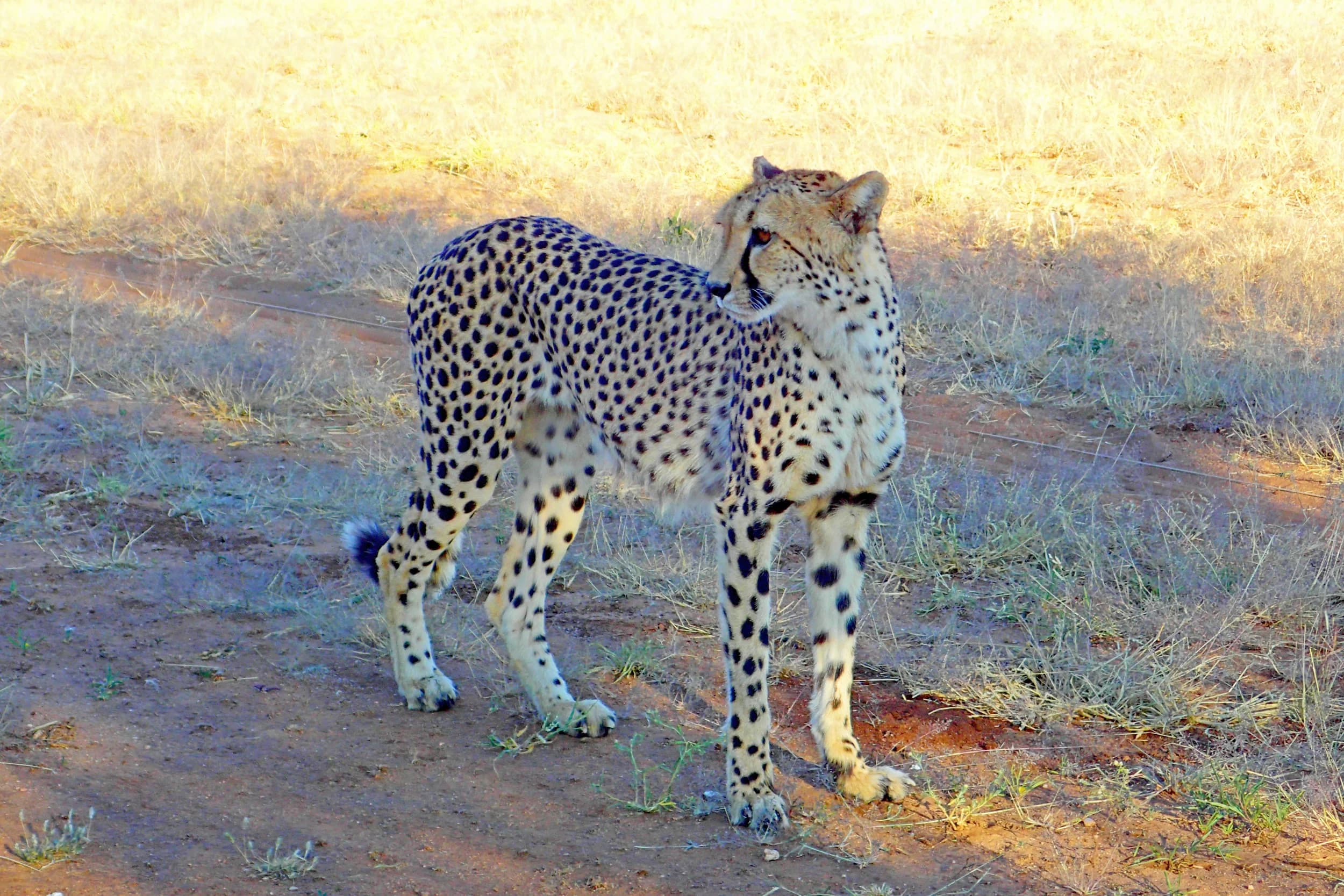
- Cheetah (Acinonyx jubatus) is the world's fastest terrestrial mammal, once widespread across Africa and parts of Asia, but now extinct in 91% of its historical range.
- The Asiatic cheetah (A. j. venaticus) is critically endangered, with approximately 50 individuals remaining in the wild, primarily in Iran.
Recent Discovery:
- A significant discovery in the Lauga cave network, Saudi Arabia revealed seven naturally mummified cheetah remains, with skeletal remains dating back over 4,200 years.
- This find provides insights into the evolutionary history of cheetahs in Saudi Arabia.
Genetic Findings:
- Analysis of the mummified specimens indicated the presence of two subspecies: Asiatic cheetah (A. j. venaticus) and north-western African cheetah (A. j. hecki).
- Potential for "rewilding" Saudi Arabia with cheetahs based on the closest genetic links to these subspecies.
Challenges for Reintroduction:
- Historically, cheetah decline in the Arabian Peninsula attributed to habitat loss, prey depletion, and human-wildlife conflict.
- Successful reintroduction requires at least 100,000 square kilometers of viable habitat, comprising appropriate prey density and low human interference.
Saudi Arabia’s Biodiversity Efforts:
- Over the past 50 years, Saudi Arabia has changed wildlife management policies, focusing on restoring native species (e.g., Arabian oryx, gazelles).
- This aims to restore ecological balance by reintroducing apex predators like cheetahs.
International Conservation Perspectives:
- Globally, 90% of Africa’s cheetah population lives outside protected areas, frequently leading to conflicts with agriculture, as lions and other large carnivores threaten their survival.
- Little clarity surrounding the funding and logistical aspects of India's Project Cheetah, which involves introducing African cheetahs into Madhya Pradesh.
Ecological Considerations:
- Experts emphasize that any introduction of cheetahs should ensure habitat quality and sustainability to prevent further endangerment of existing species.
- Concerns raised about sourcing cheetahs from already threatened populations, recommending alternatives from more stable subpopulations in Africa.
Scientific Techniques Utilized:
- Palaeo-chronological dating and genomic sequencing were used to establish timelines and identify subspecies of ancestral cheetahs.
- Projects highlight the preservation capability of arid environments for ancient biodiversity.
Conclusion: The ongoing cheetah conservation initiatives in Saudi Arabia reflect global efforts to restore endangered species within their historical ranges, demanding thorough planning, funding, and international cooperation to mitigate existing ecological and population challenges.
Key Terms & Concepts
| Cheetah | Fastest terrestrial mammal |
| Asiatic cheetah | Critically endangered subspecies |
| Nature Communications Earth and Environment | Published research journal |
| Saudi Arabia | Region of mummified remains |
| 4,223 years ago | Dating of discovered remains |
| Habitat loss and fragmentation | Primary reasons for extinction |
| Project Cheetah | Cheetah reintroduction effort in India |
| 1 lakh sq. km. | Required habitat for viability |
| DNA studies | Analyze genetic relationships |
| 90% | Percentage of cheetahs outside protection |
| A. j. hecki | Northwest African cheetah subspecies |
| A. j. raineyi | East African cheetah subspecies |