iAspirants
China-Japan Tensions Over Taiwan Crisis
Published on:
Share this post
Article Summary
Summary of Japan-China Diplomatic Tensions
Background and Trigger Events:
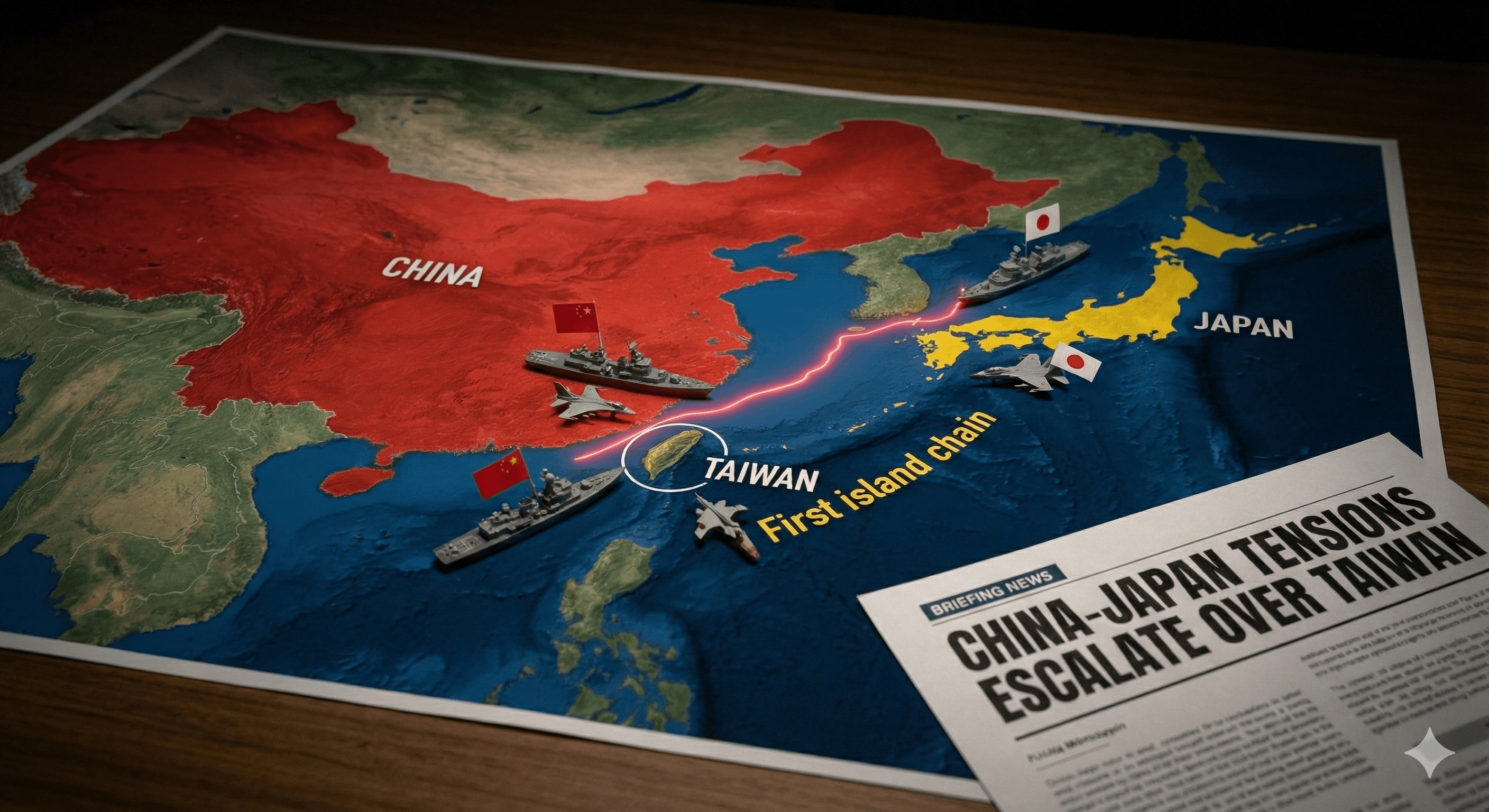
- Japan's Prime Minister Sanae Takaichi made a significant statement on November 7, suggesting that any Chinese military actions against Taiwan might pose a threat to Japan's survival, potentially signifying Japan’s readiness for military intervention.
- This marks a deviation from Japan's historically cautious stance on military engagement (strategic ambiguity) regarding Taiwan.
China’s Response:
- In reaction, China demanded Takaichi retract her remarks, imposed a ban on Japanese seafood imports, and issued travel advisories to its citizens against visiting Japan.
- Claims surfaced from China regarding Japan's alleged plans to deploy missiles on Yonaguni Island, labeling this as an "extremely dangerous move."
- Increased patrols of Chinese Coast Guard vessels near the disputed Diaoyu/Senkaku Islands were reported, which Japan asserts are violations of its territorial waters.
Historical Context:
- The complexities of Japan-China relations are magnified by Japan’s colonial history over Taiwan (1895-1945), which remains a sensitive subject for China.
- Taiwan was returned to Chinese control post-World War II but has operated with self-rule since the Kuomintang retreated there in 1949. China views Taiwan as a core sovereignty issue, supported by the One-China policy widely recognized, including by the U.S.
Economic Interdependence:
- Despite tensions, China and Japan maintain a robust economic relationship, with bilateral trade exceeding $300 billion annually.
Geopolitical Dynamics and Proposed Solutions:
- The escalation in rhetoric and military posturing threatens regional stability.
- Maintaining the status quo—China’s claims, Taiwan’s autonomy, and the U.S. strategic ambiguity—remains critical for peace.
- De-escalation and enhanced economic cooperation are vital for both nations.
- The U.S. must navigate its security obligations to Japan while also engaging in diplomatic efforts to mitigate risks of miscalculation.
International and Economic Implications:
- The situation reflects larger issues of regional security in East Asia and the balance between military preparedness and diplomatic negotiations.
- Observers note that the ongoing developments could impact global markets, trade dynamics, and military alliances in the Asia-Pacific region.
This summary encapsulates the significant developments, historical perspectives, and potential future implications regarding the Japan-China tensions, focusing on key facts, figures, and international relations that may appear on examinations related to political science and international affairs.
Key Terms & Concepts
| Taiwan | Self-ruled entity threatened |
| China | Military intervention threat |
| Japan | Planned military response |
| November 7 | Date of crucial statement |
| Treaty of Shimonoseki | Historical agreement reference |
| One-China policy | International diplomatic stance |
| $300 billion | Bilateral trade value |
| East China Sea | Disputed territorial waters |
| Senkaku Islands | Territorial dispute location |
| Ms. Takaichi | Prime Minister's hardline stance |
| Second World War | Conflict influencing current tensions |
| 1895 to 1945 | Period of Japanese occupation |