iAspirants
Current AffairsPrelims PYQsUPSC CSE SyllabusUPSC CSE StrategyBlogsPricing
Login
iAspirants
Current AffairsPrelims PYQsUPSC CSE SyllabusUPSC CSE StrategyBlogsPricingContact UsLoginSignUp
iAspirants

Your AI-powered companion for UPSC preparation.

Study Resources

  • Current Affairs
  • Prelims PYQs
  • UPSC CSE Syllabus
  • UPSC CSE Strategy
  • Blogs

Practice & Plans

  • Mains Answer Evaluation
  • Pricing
  • Sign Up
  • Login

Company

  • Home
  • About Us
  • Contact Us
  • FAQs

Legal

  • Privacy Policy
  • Terms & Conditions
  • Return Policy

© 2026 iAspirants, Inc. All rights reserved.

  1. Blogs
  2. International Relations

China-Pakistan Military Cooperation Update

Published on: 18-Nov-2026

Source: Indian Express

Share this post
China-Pakistan Military Cooperation Update

Article Summary

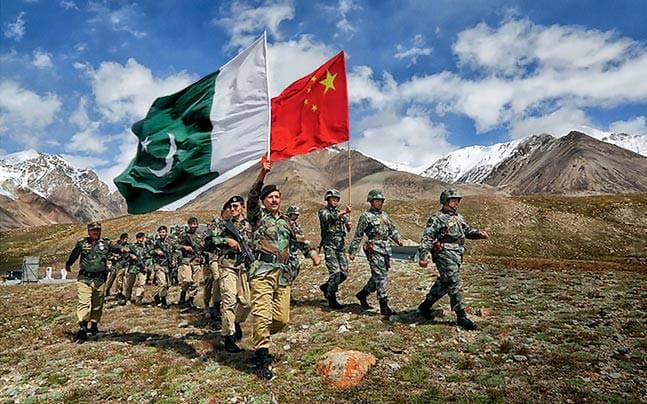
Summary: China-Pakistan Military Cooperation and Exercise Karakoram-2026

Key Facts and Figures

  • Military Cooperation: The military partnership between China and Pakistan is characterized by functional integration and interoperability, moving beyond simple defense acquisitions.
  • Exercise Karakoram-2026:
    • Dates: October 14-22, 2026.
    • Location: Xinjiang Uyghur Autonomous Region, adjacent to Jammu & Kashmir and Ladakh.
    • Participants: Regular army formations from both the People's Liberation Army (PLA) and Pakistan Army.
    • Phases:
      • Phase One: Focused on high-altitude operations, specialized tactics, close-quarter combat, and drone operations.
      • Phase Two: Joint command maneuvers, counterterrorism operations, and coordinated fire drills.
  • Equipment Used: Included Chinese small arms, armored vehicles, infantry fighting vehicles, and aerial drones.

Constitutional and Strategic Framework

  • Sino-Pakistan Boundary Agreement (1963): Formed the basis of strategic alignment, wherein Pakistan ceded the Shaksgam Valley to China.
  • Strategic Priority: Pakistan is viewed as a strategic priority for China within its South Asia policy framework.

Military Supplies & Co-production

  • Arms Supply: China accounts for 70-80% of Pakistan’s military imports.
  • Majoracquisitions: Includes J-10C and JF-17 fighter jets, Type 054 A/P frigates, Hangor-Class submarines, and various air defense systems.
  • Co-production: Joint ventures in manufacturing military equipment like fighter jets, tanks, and missiles.

Information and Infrastructure Cooperation

  • Information Sharing: Cooperation includes cyber warfare capabilities, intelligence sharing, and satellite technology (Bei Dou navigation system).
  • Infrastructure Projects: Significant collaborations include the China-Pakistan Economic Corridor (CPEC) and Gwadar Port as part of the Belt and Road Initiative (BRI).

International Relations and Regional Dynamics

  • Bangladesh’s Role: Bangladesh is enhancing defense ties with both China and Pakistan, discussing purchases of fighter jets and joint training opportunities.
  • Trilateral Cooperation: Although not formalized, cooperative dynamics among Islamabad, Dhaka, and Beijing are emerging, influenced by changing geopolitical contexts.

Strategic Implications for India

  • Operational Challenges: The intensified cooperation and joint military exercises pose a dual-front security challenge for India, necessitating an evaluation of defense strategies.
  • Military Integration Impact: The increasing integration of Chinese military systems within Pakistan is seen as a critical aspect of the evolving strategic landscape, impacting India’s northern border security.
  • National Security Strategy: India is urged to develop a coherent national security strategy to address the integrated threats posed by both adversaries.

Conclusion

The Karakoram-2026 exercises exemplify the deepening military integration between China and Pakistan, impacting regional security. The strategic implications are significant, necessitating India's close monitoring and robust response to evolving military capabilities on its northern front.

Key Terms & Concepts

Karakoram-2026Joint military exercise
People’s Liberation Army (PLA)Chinese military force
Pakistan ArmyMilitary force of Pakistan
XinjiangLocation of the exercise
China-Pakistan Economic Corridor (CPEC)Strategic infrastructure project
J-10C and JF-17Fighter aircraft acquired
Operation SindoorIndia's military operation
Shakasgam ValleyCeded by Pakistan to China
Bei DouChinese navigation satellite system
Gwadar PortStrategic maritime project
Mantika PassSite of joint patrol
Type 054 A/P frigatesNaval vessels supplied
HQ-9 Series

Mind Map for UPSC Civil Services Revision

Turn UPSC Civil Services Current Affairs Into Exam-Ready Notes

Reading International Relations current affairs is half the work. Revise them with ready-made notes and test what actually stuck.

  • Daily UPSC Civil Services current affairs analysis
  • Revision notes, mind maps & MCQs
  • Prelims mock tests with instant results

Related UPSC Civil Services Current Affairs Articles

Iranian Diplomats Use Bollywood Memes
International Relations18-Nov-2026

Iranian Diplomats Use Bollywood Memes

Summary Notes on Iranian Diplomacy and Cultural Engagement in India

Context

  • Iranian diplomats in Delhi are utilizing Indian pop culture, particularly Bollywood, to create political memes aimed at engaging with the Indian public. This approach serves as a strategic form of diplomacy amidst international challenges.

Key Individuals

Air defense systems
Karakoram regionArea of military focus
Practise Mains answer writingUpload a handwritten answer and get it evaluated
  • Omid Babelian: A young diplomat from Iran, with advanced degrees in Indian studies, who is crafting memes as part of a cultural engagement strategy.
  • Mahdi Esfandiari: Press Counsellor at the Iranian Embassy, overseeing Babelian’s projects.

Cultural Strategy

  • Babelian employs Bollywood films and themes to resonate with Indian audiences while delivering political messages against the US, particularly targeted at President Donald Trump.
  • Examples of referenced Bollywood themes include characters from famous films like Dangal, Sholay, and others to embed political satire.
  • This cultural connection stems from Babelian's childhood experiences with Indian cinema, highlighting historical ties and cultural understanding.

Political and Diplomatic Implications

  • The initiative reflects Iran's aim to soften its international image and enhance its connection with the global audience by using humor.
  • This cultural engagement acts as a non-confrontational mode of communication in the context of ongoing tensions like the war in West Asia and US sanctions on Iran.

Memes as a Tool for Diplomacy

  • Memes serve as a medium for addressing complex political situations with humor, aiming to build empathy and relatability between the two nations.
  • The process involves careful consideration of cultural sensitivities to avoid offense related to minority groups and governmental policies in both nations.

Social Dynamics

  • Babelian acknowledges the importance of humor in Iranian society and understands its potential as a diplomatic tool.
  • His work illustrates a blend of cultural diplomacy, where understanding Indian cinema enhances Iran's ability to communicate effectively and positively with the Indian populace.

Educational Background

  • Babelian's studies included not only cinema but also significant aspects of Indian history, philosophy, and culture, showcasing a well-rounded understanding necessary for effective diplomacy.
  • He emphasizes understanding India through its cultural narratives to avoid common misconceptions.

Conclusion

This diplomatic strategy represents an innovative approach to international relations, highlighting the significance of cultural references and humor as tools for engagement. The Iranian Embassy’s use of Bollywood memes illustrates the intersection of culture, politics, and communication in contemporary diplomacy.

New US Restrictions on AI Technology
National and International Importance18-Nov-2026

New US Restrictions on AI Technology

Summary of US Restrictions on AI Chip Exports to China

1. Overview of New Restrictions:

  • The US Commerce Department announced stringent restrictions on AI chip exports aimed at preventing Chinese firms from accessing advanced American technology through foreign data centers.
  • The regulations address loopholes allowing Chinese companies to utilize servers in countries like Malaysia and Singapore to gain computing capabilities.

2. Regulatory Details:

  • The interim final rule issued by the Bureau of Industry and Security (BIS) restricts overseas data centers that supply significant computing resources to Chinese firms, requiring governmental authorization for the importation of specific advanced American chips.
  • Companies linked to counterparts in China via subsidiaries are also targeted by these new rules.

3. Technical Specifications and Thresholds:

  • The threshold for restricted remote access is set at an aggregate Total Processing Performance (TPP) of more than 12 million, indicating significant computing capacity.
  • New licensing requirements apply to exports of advanced semiconductors to five nations: Malaysia, Singapore, Indonesia, Thailand, and Brazil.

4. Exemptions and Transition Period:

  • Certain shipments to US-based companies are exempt under specific reporting requirements.
  • Existing data centers will have a 90-day period from the rules' effective date to secure the necessary licenses.

5. Impact of Recent Controversies:

  • The regulations are partly a response to controversy surrounding chipmaker Nvidia and its connections through cloud computing partner Megaspeed.
  • The resignation of Nvidia CEO Jensen Huang heightened scrutiny, as reports surfaced about his association with Alice Huang, linked to possible intelligence connections.

6. Broader Context of Export Controls:

  • The US aims to limit access to powerful semiconductors citing concerns that AI capabilities could enhance military and cyber-espionage initiatives in China.
  • In the past, chip shipment restrictions have led to challenges, as Chinese companies continue finding alternative access routes to advanced chips.

7. Research Findings Impacting Policy:

  • A study from Unemployment Labs indicated that several advanced Chinese AI systems were made using Nvidia's restricted Blackwell processors, intensifying debates over the effectiveness of existing export controls.
  • Epoch AI research estimates approximately two million advanced AI chips made their way to China during 2024 and 2025 via undisclosed arrangements.

8. Conclusion and Policy Implications:

  • The new export controls represent a significant policy shift by the US government in response to potential national security threats and challenges posed by loopholes in technology export regulations.
  • The effectiveness of these measures will be closely monitored in light of the ongoing investigations into chip access and the integrity of the US technology sector.

Constitutional and Legal References

  • No specific constitutional articles or amendments were cited in the news; however, these export controls reflect ongoing legal frameworks surrounding national security and international trade practices.

International Relations Context

  • The restrictions on chip exports may further strain US-China relations, particularly in technology and trade sectors, affecting global supply chains and international economic dynamics.
China's AI Chips and US Restrictions
National and International Importance17-Nov-2026

China's AI Chips and US Restrictions

Summary of Key Points: AI Chip Export Controversy Involving China and the US

1. Technological Findings:

  • Several Chinese AI companies allegedly trained advanced models using Nvidia's Blackwell GPUs despite US export restrictions.
  • Research by Unemployment Labs analyzed AI model weights, revealing distinctive hardware fingerprints linked to Nvidia chips in six models from four companies: DeepSeek, Moonshot AI, MiniMax, and Ant Group.
  • GPU usage patterns indicate a transition from Nvidia’s previous-generation Hopper to Blackwell GPUs in 2026.

2. US Export Controls and Concerns:

  • The US has imposed stringent export controls on advanced GPUs to China as a strategy to limit Beijing’s AI advancements and military enhancement capabilities.
  • There are fears that these chips could facilitate the development of sophisticated weapons and improve cyber warfare capacities.

3. Investigation Findings:

  • Estimates indicate that approximately 12,000 Blackwell GPUs were required for collective training runs of the noted models, though assumptions about efficiency and duration impact accuracy.
  • The investigation suggested that Chinese developers may have accessed Nvidia's technology via third countries, chiefly citing Malaysia as a potential route for advanced chip smuggling.

4. Economic Data:

  • An analysis indicated that from April 2024 to June 2025, trade data suggests over $3 billion worth of advanced chips were smuggled into China through Malaysia.
  • Disparities in reported export and import values between Malaysia and China raised suspicions of misclassification and smuggling involving AI servers.

5. Political and Regulatory Context:

  • The enforcement of semiconductor export controls has led to divisions within the Trump administration, particularly regarding the actions of Commerce Secretary Howard Lutnick and Treasury Secretary Scott Bessent’s concerns about companies like Megaspeed International, which allegedly helped Chinese entities access Nvidia processors.
  • The controversy has raised questions on the effectiveness of current US regulatory frameworks and oversight of semiconductor exports.

6. Legal and Policy Issues:

  • Allegations were made regarding Moonshot AI’s acquisition of Nvidia’s processors, raising broader concerns about compliance with US export restrictions.
  • Political disputes have surfaced regarding how these export laws are managed and enforced, with ongoing investigations into companies suspected of facilitating access to advanced technologies for China.

7. Environmental and Technological Impact:

  • The impact of export control policies and technology access on global AI development remains a critical point of discussion, with implications for national security and economic competition.

Conclusion: The ongoing developments concerning AI chip exports highlight the complexities of international technology trade, especially amidst geopolitical tensions between the US and China. The ability of Chinese companies to potentially circumvent US restrictions presents significant challenges for policy enforcement and international relations in the tech sector.

China-Pakistan Military Cooperation Overview
International Relations17-Nov-2026

China-Pakistan Military Cooperation Overview

China-Pakistan Military Cooperation and the Karakoram-2026 Exercise: Key Highlights

  1. Joint Military Exercise: Karakoram-2026

    • Dates: October 14-22, 2026
    • Location: Xinjiang Uyghur Autonomous Region, China
    • Significance: First army-level joint exercise between the People’s Liberation Army (PLA) and Pakistan Army.
    • Phases:
      • Phase One: Focused on high-altitude operations, specialized tactics, close-quarter combat, and drone operations.
      • Phase Two: Involved joint command, mixed formations, counterterrorism operations, and coordinated fire drills.
    • Equipment Used: Predominantly Chinese military hardware including small arms, armoured vehicles, and drones.
  2. Historical Context of China-Pakistan Nexus

    • Originated from the 1963 Sino-Pakistan Boundary Agreement, where Pakistan ceded Shakasgam Valley to China.
    • China is Pakistan’s principal arms supplier, accounting for of its military imports, including advanced fighter jets and missile systems.
European Security Shifts Amidst Russia
International Relations17-Nov-2026

European Security Shifts Amidst Russia

Key Points on European Security and Russia's Influence

International Negotiations and Participants

  • Key Leaders: Donald Trump, Xi Jinping, and Vladimir Putin are set to meet, indicating a shift in who influences European security.
  • Historical Context: European nations previously secured multiple negotiation seats (e.g., E3 on the Iran nuclear deal, Normandy Format for Ukraine crisis negotiations).
  • Permanent UN Security Council Members: France, UK (nuclear powers) crucial for discussions, alongside Germany (largest EU economy) and Poland (frontline state in Ukraine).

EU's Role and Position

  • Collective Representation: The EU demands representation to reflect its 27 member states' interests, as previous formats have sidelined European nations.
  • Evolution of Engagement: EU countries, once hesitant to engage with Russia, are now seeking a unified presence due to shifting dynamics.

Current Context & Challenges

  • : With decreased US financial backing, European nations are increasingly responsible for Ukraine's defense efforts.
Nvidia Chips Export Restrictions Impact AI
Science and Technology17-Nov-2026

Nvidia Chips Export Restrictions Impact AI

Summary of Key Points:

AI & Technology Developments

  • Nvidia Chips: The advanced Blackwell generation GPUs, which are restricted from export to China, were allegedly used to train Chinese AI models by companies such as DeepSeek and Moonshot AI.
  • Model Training: Six AI models released since April 2026 supposedly show characteristics indicative of being trained on Blackwell chips. Earlier models from these companies were trained on the older Hopper generation.
  • Technical Report: Conducted by Unemployment Labs, it claims to provide evidence of training on advanced Nvidia chips using a method to analyze AI model weights and configurations, enabling identification of models trained with specific hardware.

Economic Data & Costs

  • Cost Estimates: Estimated costs for clusters of Blackwell GPUs in China range from $200 million to $300 million for training operations. For context, 36,000 Blackwell chips in Malaysia for ByteDance's use are valued at over $2.5 billion.
  • Supply Chain Insights: Between 2024 and 2025, approximately 275,000 Nvidia AI chips were imported to Malaysia, with estimates suggesting up to 1.5 million GPUs reached China through various smuggling routes.
India-ASEAN Summit Strategic Importance
International Relations16-Nov-2026

India-ASEAN Summit Strategic Importance

International Relations: India-ASEAN Engagement

  • Summit Information:

    • Prime Minister Narendra Modi participated in the ASEAN-India Summit and East Asia Summit on November 16-17, 2026.
    • Location: Manila.
  • Context & Importance:

    • The summit is viewed as pivotal due to rising strategic rivalries and economic disruptions on an international scale.
    • Aims to reaffirm ASEAN centrality in global governance and consolidate outcomes of the 2026 ASEAN-India Year of Maritime Cooperation.
    • The event is aligned with India's Act East Policy to enhance cooperation with Southeast Asian nations.
  • ASEAN-India Dialogue Partnership:

    • The partnership will celebrate its 35th anniversary in 2027 after evolving since the establishment of relations in 1992.
    • Highlights a transition from basic bilateral trade and cultural exchanges to a Comprehensive Strategic Partnership.
  • Significance of ASEAN:

    • India is recognized as an ASEAN dialogue partner that prioritizes ASEAN’s strategic autonomy and supports its inclusive institutional framework.
    • Reinforces India's commitment towards regional integration and collaboration in multifaceted areas including trade, security, cultural exchange, and environmental sustainability.
  • Future Prospects:

    • Potential for added momentum in various sectors, suggesting growth in economic ties, security collaboration, and cultural interactions as part of the evolving partnership.
70-80%
  • Key Components of the Cooperation

    • Military Supplies: Major equipment acquisitions include J-10C and JF-17 aircraft, naval assets, and air defense systems.
    • Defence Co-production: Joint development of military technologies enhances Pakistan’s access to sophisticated equipment.
    • Information Collaboration: Intelligence sharing and joint cyber initiatives like the China-Pakistan Information Corridor.
    • Strategic Infrastructure Projects: Involves initiatives such as the China-Pakistan Economic Corridor (CPEC).
  • Recent Developments and Strategic Implications

    • Joint patrolling near Khunjrerab Pass indicates deepening operational integration.
    • Increased urgency in military cooperation post-India’s Operation Sindoor in May 2025, which underscored the strategic entanglement of China-Pakistan relations.
    • Development of trilateral military cooperation with Bangladesh potentially reshaping the regional security landscape.
  • Strategic Assessments

    • The evolving military cooperation heightens the security threat for India, presenting a dual-front challenge.
    • Emphasis on interoperability, joint operational experiences, and integration of Chinese military technology into Pakistan’s forces represents a significant shift in regional military dynamics.
    • Recommendations for India include the formulation of a comprehensive national security strategy to address these emerging military alignments.
  • Conclusion

    • The Karakoram-2026 exercise exemplifies the deepening military ties between China and Pakistan, impacting regional security architecture significantly. The collaboration facilitates heightened military readiness and poses challenges for neighboring countries, particularly India, underscoring the need for vigilant monitoring and strategic planning.
  • US Support Reductions
  • Negotiation Dynamics: Europeans express skepticism regarding direct talks (e.g., in Abu Dhabi), feeling sidelined even with representation.
  • Concerns: The notion of a "new European security architecture" is alarming, as it threatens NATO’s established framework.
  • Strategic Dilemmas

    • Russian Trap: Danger of being drawn into broader negotiations, which may detract from prioritizing an immediate ceasefire in Ukraine.
    • Sequencing of Discussions: Emphasis should be on securing a ceasefire first before other issues, and concerns arise that discussions may extend beyond necessary frameworks.

    Potential Outcomes and Future Directions

    • Pressure on Leaders: European leaders are caught between accusations of hindering peace and the need to respond to Moscow's conditions.
    • Strategic Clarity Needed: The EU must formulate a coherent strategy for future security arrangements, even considering mechanisms to prevent further conflict with Russia.

    Economic Implications

    • The cost burden of sustaining Ukraine’s war effort has shifted increasingly to European nations as the US reduces its financial input.

    Summary of Constitutional & Policy Implications

    • European Security Architecture: The implications for EU and NATO frameworks are critical, as Russia’s actions may necessitate realigning traditional security structures.
    • The concept of collective security, central to the EU’s foundational principles, may need reevaluation in light of current geopolitical realities.

    Conclusion

    Europe faces a pivotal moment in determining its security stance in relation to Russia. The need for a strategic and unified approach, balancing immediate ceasefire interests with long-term security planning, is essential. Thus, negotiation tactics and participants' roles must be carefully managed to safeguard European stability and strategic autonomy.

    U.S. Policies & Export Controls

    • Export Restrictions: The Biden administration enforces tight restrictions on advanced chips to limit Chinese military access. Former President Trump lifted certain controls but imposed additional limitations on many Chinese firms through the US Entity List in 2025.
    • Responses to Violations: The U.S. Commerce Department has been scrutinized for its lax investigations into suspected chip smuggling, leading to concerns over the efficacy of current export controls. Previous investigations failed to track the movement of chips effectively.
    • Lobbying for Access: Ex-CEO Jensen Huang argued against restrictive exports, suggesting that openness would preserve the U.S.'s technological lead. He cautioned that such restrictions could lead to the emergence of competitive Chinese alternatives in the tech sector, such as chips being developed by Huawei.

    Constitutional & Judicial Context

    • National Security Efforts: Policies around chip exports reflect broader national security strategies aimed at ensuring that American technological advancements do not benefit geopolitical adversaries.

    International Relations

    • China and AI Race: Concerns have been raised about the effectiveness of U.S. export restrictions, as Chinese firms, despite limitations, appear to be catching up in AI technologies and capabilities.
    • Global Chip Market Dynamics: US-China tensions around technology and exports underscore a complex geopolitical landscape where supply chain dependencies and competitive strategies are continuously evolving.

    Conclusion

    The ongoing dynamics surrounding AI development and chip technology reflect significant issues at the intersection of economics, technology policy, international relations, and national security. Awareness of these interconnected factors is critical for understanding the future trajectory of technological competition globally.