iAspirants
China's Success in Air Pollution Control
Published on:
Share this post
Article Summary
Exam-Focused Summary on Air Pollution Policy and Initiatives
International Context: China’s Air Pollution Management
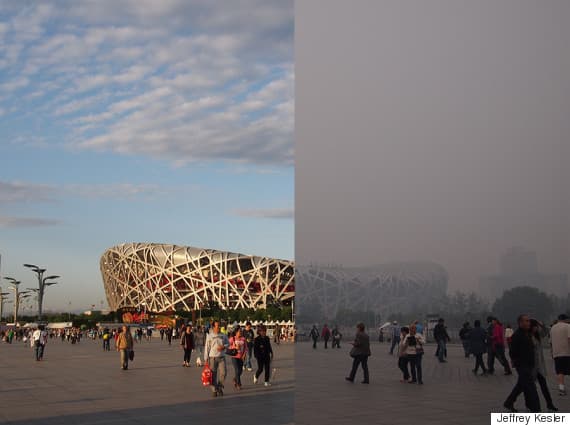
- Reduction in Pollution: China achieved significant improvements in air quality despite sustained economic growth near 10% annually for two decades. Post-COVID-19, sharp declines in PM2.5 pollution levels were noted.
- Beijing’s Policy Framework:
- Initiated urgent measures pre-2008 Olympics.
- Established regulations and public engagement strategies to address air quality issues.
- Implemented a five-year action plan in 2013 focusing on transport emissions and coal usage.
Key Statistics
- Beijing’s investment to combat air pollution grew from $450 million in 2013 to over $2.5 billion in 2017 (UNEP data).
- PM2.5 levels in cities saw a 36% reduction from 2015 to 2022.
- Shenzhen electrified all public buses by 2017; Beijing now has a lottery system for vehicle registration favoring electric vehicle (EV) buyers.
Government Schemes and Policies in China
- Emissions Standards: Comprehensive policy measures addressing transport, electricity generation, and industry emissions.
- Incentives for EV Adoption: Easier access to license plates for electric vehicles; strict regulations on new internal combustion engine cars.
- Coal Usage Reduction: Coal-fired boiler restrictions and promotion of renewable energy sources.
Judicial and Legislative Overview
- China’s 2013 National Air Pollution Action Plan set specific PM2.5 reduction targets for key urban regions, focusing first on heavily polluted areas like Beijing-Tianjin-Hebei.
- Continued policy adaptations through subsequent action plans reflecting evolving pollution dynamics.
Economic Indicators
- China’s economic activities have transitioned to focus more on environmental sustainability, impacting heavy industries by encouraging their relocation.
- The integration of electric vehicles into public transportation as a significant investment in green technology.
Environmental Focus
- The emphasis on restructuring industrial processes to limit emissions and enhancing urban green spaces to combat pollution sources.
- Adoption of emergency measures during severe pollution days to restrict vehicle usage and shut down polluting factories.
International Relevance
- Global Model: China’s air quality management serves as a potential model for other urbanized regions worldwide facing similar pollution challenges, including India's National Capital Region (NCR).
Current Challenges
- Reports indicate new pollution rising in south and western provinces, attributed to industrial migration, presenting a new challenge for future policy efforts.
Implications for India
- Identifying vehicular pollution as a primary issue for Delhi's air quality deterioration.
- State directives to accelerate the adoption of EVs and enhance related infrastructure development as a response to consistent air crises.
Conclusion
The strategic and comprehensive approach taken by China in tackling air pollution through robust policy frameworks, economic reorientation towards cleaner technologies, and active public engagement provides key insights that can be adapted to other regions, particularly in India, to combat air quality deterioration effectively.
Key Terms & Concepts
| Beijing | Model for air quality improvement |
| PM2.5 | Pollutant measurement standard |
| United Nations Environment Programme | Reported pollution spending |
| Electric Vehicles (EVs) | Focus of China's transport policy |
| 2013 National Air Pollution Action Plan | Policy framework for pollution control |
| Shenzhen | First city to electrify buses |
| 2018 Action Plan | Continued focus on air quality |
| Coal-fired boilers | Target for emissions reduction |
| Chinese statistics | Reported PM2.5 reduction |
| 2014 to 2022 | Timeframe for pollution progress |