iAspirants
Climate Change Impact on Nilgiri Wood Pigeon
Published on:
Share this post
Article Summary
Climate Change Impact on the Nilgiri Wood Pigeon: Summary of Key Findings
Species Overview:
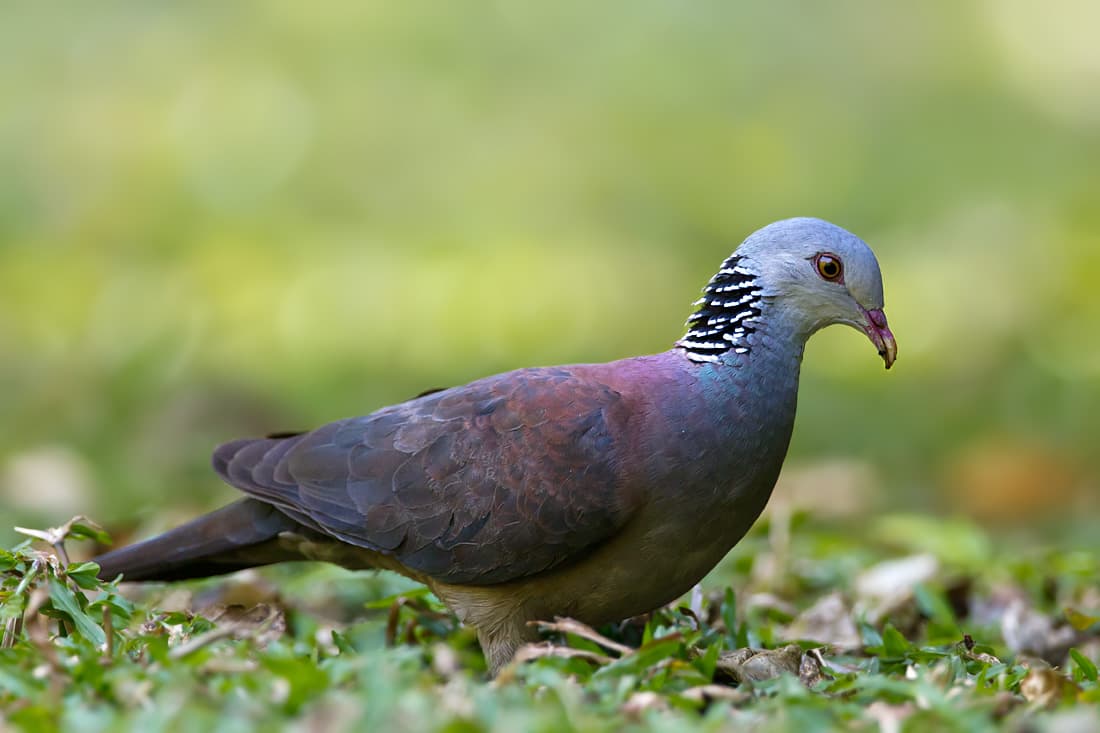
- The Nilgiri Wood Pigeon (Columba elphinstonii) is an endemic bird species found in the Western Ghats, notably in the Nilgiris and Anamalai Hills of Tamil Nadu and Kerala, as well as isolated locations like the Biligirirangan Hills and Nandi Hills.
Research Findings:
- A study published in the "Proceedings of the Indian National Science Academy" utilized MaxEnt, a machine-learning method, to assess habitat suitability.
- Estimates predict severe habitat contraction by the end of the century due to climate change, especially in high-elevation wet evergreen and moist deciduous forests.
Habitat Suitability Predictions:
- Initial increase in habitat suitability for 2021-2040 as lower montane areas become more suitable.
- Decline begins thereafter, with significant habitat loss projected by 2081-2100.
- Current estimates show 117 presence points based on 9,757 occurrence records from the eBird database.
Vulnerability Factors:
- The Nilgiri Wood Pigeon is especially vulnerable to anthropogenic pressures, including:
- Deforestation
- Agricultural and infrastructure expansion
- Plantation development
- The Nilgiri Wood Pigeon is especially vulnerable to anthropogenic pressures, including:
Conservation Status:
- Currently listed as "Least Concern" by the IUCN due to its distribution exceeding 10,000 mature individuals, though this status remains unvalidated by systematic assessments.
- The study indicates that warming projections could severely limit climatically suitable habitats long-term.
Conservation Strategies:
- Urgent need for climate-resilient conservation strategies for high-altitude Western Ghats forests.
- Recommendations include:
- Systematic population surveys
- Long-term ecological studies to assess breeding ecology and habitat use
- Integration of distribution data with climate vulnerability assessments for long-term conservation planning.
Call to Action:
- Ecological shifts anticipate proactive planning rather than reactive measures post-collapse, emphasizing the importance of recognizing emerging risks to endemic species like the Nilgiri Wood Pigeon.
Research Contributors:
- The study's authors include Phillmon Smart Edward, Jeyasubashini Reguhupathikannan, and Arockianathan Samson from the Bombay Natural History Society.
Conclusion: The research highlights critical insights into the ongoing impacts of climate change on species biodiversity within the Western Ghats and stresses the necessity for immediate conservation efforts and scientific validation of species' conservation statuses to ensure the survival of endemic species like the Nilgiri Wood Pigeon.
Key Terms & Concepts
| Nilgiri Wood Pigeon | Endemic bird species |
| Western Ghats | Habitat region |
| MaxEnt | Machine-learning method |
| eBird database | Citizen-science project |
| IUCN | Conservation status authority |
| Climate change | Environmental phenomenon |
| Projected warming scenarios | Future climate predictions |
| February 27, 2026 | Publication date |