iAspirants
Climate Change Impacts on India-China
Published on:
Share this post
Article Summary
Climate Change and Its Impact on India and China: Key Notes
Extreme Weather Events:
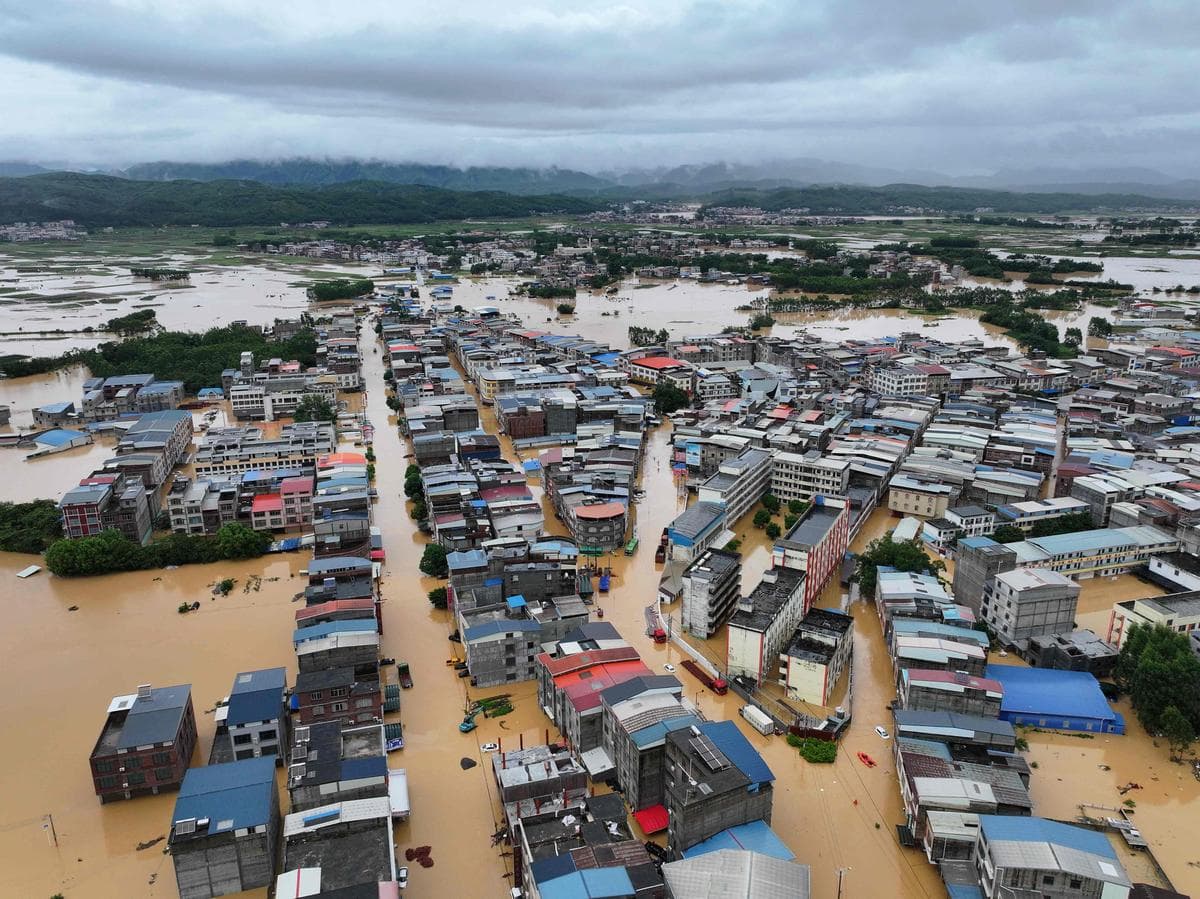
- India and China are witnessing severe effects from climate change, including intense rainfall and flooding.
- El Niño contributed to the delay of the monsoon in India, with cities like Mumbai and Surat experiencing heavy rains resulting in significant flooding, particularly in Assam and Odisha.
- Similar extreme weather patterns are observed in China, affecting provinces such as Guangxi, Shaanxi, and Gansu.
Climate Change Attribution:
- Experts link these weather extremes to climate change, which is raising atmospheric temperatures and warming oceans.
- Short, high-intensity rainfall events have become more frequent, threatening economic growth, food security, and public well-being.
Bilateral Relations and Cooperation:
- Recent engagement between India and China shows potential for collaboration on climate resilience, particularly post strained diplomatic relations.
- In April 2026, a Chinese delegation led by the Special Envoy for Climate Change visited New Delhi, signaling a priority on climate cooperation.
Previous Engagement Frameworks:
- Historical collaborative efforts from the early 1990s to 2020 included multiple Memoranda of Understanding (MoUs) on climate-induced disasters and their management.
- Topics of cooperation covered sustainable urban planning, waste management, and capacity building through six strategic dialogues.
Urban Resilience:
- China emphasizes embedding climate resilience into urban and rural planning, utilizing data-driven approaches for policies concerning transport, housing, and drainage systems.
- India showcases community-led strategies like early warning systems and heat action plans. There is a need for knowledge exchange on urban design and drainage modernization.
Rural Livelihoods:
- Cooperation in agricultural practices will be vital for enhancing food security and resilience. Academic and planning agency collaboration could yield better hydrological modeling and indigenous climatic knowledge integration.
Shared Water Resources:
- Agreements regarding shared water resources between India and China have stalled since 2022, necessitating renewed discussions particularly around the melting glacial systems in the Himalayan ecosystem.
Financial Barriers:
- Financing remains a hurdle for both nations, reliant on public funding. Greater private sector participation, through tools like blended finance and municipal bonds, is necessary to bridge funding gaps.
Scientific Collaboration:
- Experts stress the importance of collaboration in scientific innovation and governance practices, proposing joint research and development initiatives to enhance climate resilience.
Global Context:
- Climate change effects are global, with coordination between India and China being essential not only for local benefits but also for contributing to climate resilience standards across the Global South.
Conclusion: The challenges posed by climate change present opportunities for renewed India-China cooperation, particularly in mitigating disastrous impacts and enhancing resilience through strategic partnerships and practical implementation of joint initiatives.
Key Terms & Concepts
| El Niño | Delayed monsoon, caused flooding |
| Mumbai | Received intense rainfall |
| Surat | Received intense rainfall |
| Assam | Severe flooding impact |
| Odisha | Severe flooding impact |
| China | Similar flooding conditions |
| Guangxi | Affected by severe flooding |
| Shaanxi | Affected by severe flooding |
| Gansu | Affected by severe flooding |
| climate change | Driving extreme weather events |
| April 2026 | Chinese delegation visit planned |
| Delhi-Beijing | Sister city agreement |
| Mumbai-Shanghai | Sister city agreement |