iAspirants
Coastal Wave Monitoring Enhances Safety
Published on:
Share this post
Article Summary
Summary of Key Points on WAMAN and Coastal Observations
WAMAN Overview:
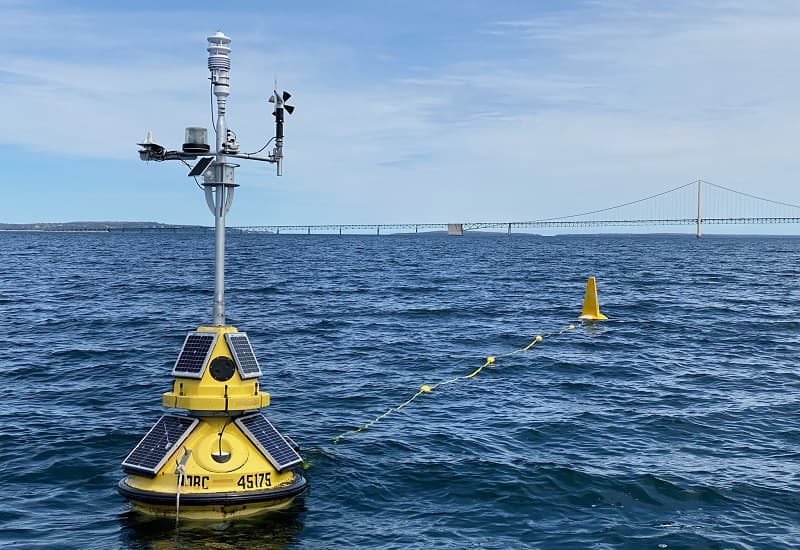
- The Wave Monitoring Along Nearshore (WAMAN) buoy network is operated by the Indian National Centre for Ocean Information Services (INCOIS).
- Established 18 years ago, it consists of 17 buoys along India’s coastline, providing real-time data on wave height, direction, and energy.
Community Engagement:
- The project represents a community-owned coastal observation system, marking a pioneering effort in the Indian Ocean.
- Early collaboration with local communities, such as fisher groups and harbor authorities, was crucial to establish trust and ensure the sustainability of the observation system.
Real-time Data and Impact:
- Data from WAMAN feeds into operational wave models, offering forecasts that help in early warnings for high-wave events.
- The system currently supports nearly one million fishers across India and neighboring countries (Sri Lanka, Maldives, Seychelles, etc.).
- Local language dissemination of data increased its relevance and utility for fishing communities.
Technological Integration:
- Fisher Friend mobile app provides offline alerts when boats approach buoys, enhancing safety at sea.
- SMS alerts on buoy status are sent to fishing boats, the Coast Guard, and marine police, facilitating community-led search and recovery efforts.
Design and Reliability:
- Between 2007 and 2024, only two buoys were lost, indicating high reliability (data availability exceeded 90%).
- The system is designed not just for real-time forecasting but also serves as a long-term data repository for climate variability research.
Port and Shipping Industry Utilization:
- Indian ports leverage WAMAN data for navigation safety and managing vessel movements.
- The shipping industry uses this information to set Inland Vessel Limit (IVL) zones, aiding in commerce and coastal safety.
International Recognition and Collaboration:
- INCOIS has been acknowledged as a Regional Specialised Meteorological Centre by the World Meteorological Organization.
- Under the Ministry of Earth Sciences, INCOIS collaborates with RIMES, Indian Ocean Rim Association, and Global Ocean Observing System to extend the WAMAN model regionally.
- These collaborations also align with the UN’s initiative ‘Early Warnings for All’.
Challenges and Adaptive Strategies:
- Challenges included buoy vandalism, marine growth affecting data quality, and environmental conditions causing drift.
- Strategies like equipping community knowledge centers and improving buoy visibility contributed to enhancing data sustainability.
Future Vision:
- INCOIS aims to foster local ownership further, encouraging communities to maintain vigilance and responsibility towards the observing system.
- The success is not only in technological deployment but in empowering communities as custodians of ocean observation.
This comprehensive framework underscores the integration of technology, community involvement, and sustainable practices in coastal monitoring efforts, significantly impacting local livelihoods while addressing the challenges posed by maritime conditions.
Key Terms & Concepts
| Wave Monitoring Along Nearshore (WAMAN) | Monitoring wave conditions |
| Indian National Centre for Ocean Information Services (INCOIS) | Provider of ocean data |
| 17 buoys | Real-time wave data sources |
| Fisher Friend mobile app | Mobile alert system for fishers |
| UN’s Early Warnings for All | Global initiative for preparedness |
| World Meteorological Organization | Recognized INCOIS for expertise |
| 2007 to 2024 | Timeframe for buoy statistics |
| 90% | Data availability statistic |
| Indian Ocean | Region of wave research |
| Coastal communities | Stakeholders in wave monitoring |