iAspirants
Commemoration of Serengsia Battle Insights
Published on:
Share this post
Article Summary
Summary of Adivasi Resistance and Historical Context in Jharkhand
Historical Significance
- The event commemorated on February 2 marks the Battle of Serengsia (1837), a pivotal moment of resistance against British colonization in the Kolhan region, primarily involving the Ho Adivasis.
- Adivasi activists argue the chosen date for commemoration is historically inaccurate. They emphasize the importance of accurate historical remembrance based on documented events and community memory.
Background
- The Kolhan region comprises present-day East Singhbhum, West Singhbhum, and Seraikela-Kharsawan in Jharkhand, originally inhabited by the Ho community.
- British colonial expansion, initiated around 1820-21, strained relations with the local Adivasi population, resulting in the 1821 treaty requiring them to pay tribute and allowing non-tribal settlers on their land.
- A series of socio-political impositions, including forced payments and cultural suppression, led to resistance, culminating in the Kol uprising of 1831.
The Battle of Serengsia
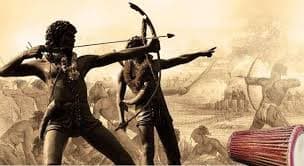
- Tensions escalated to a significant battle in late November 1837, where a British contingent of approximately 400 infantrymen and cavalry, supported by local Hindu rulers, engaged in combat against the Adivasi fighters led by leaders such as Poto Ho.
- The Adivasis employed guerrilla tactics using traditional weapons; they successfully inflicted heavy casualties on British forces—over 100 British soldiers compared to approximately 26 Adivasi fighters killed.
Consequences
- British retaliatory actions post-battle included the destruction of Ho villages and the arrest of tribal leaders. Key leaders, including Poto Ho and Narra Ho, were publicly executed in January 1838.
- The events greatly affected Adivasi leadership and community memory, framing the issues of identity and resistance against colonial rule.
Cultural Impact
- Sunny Sinku, an Adivasi activist, stresses that January 1 and 2 symbolize the culmination of Kolhan resistance, representing the sacrifice of Ho leaders. The misaligned commemoration date risks diluting the historical significance of their struggle and its intertwined legacy with indigenous identity.
Constitutional Context
- This historical recount aligns with constitutional provisions related to the protection of cultural rights and the recognition of scheduled tribes under Articles 46 (Promotion of educational and economic interests of Scheduled Castes, Scheduled Tribes and other weaker sections) and 342 (Scheduled Tribes).
Implications for Policy and Society
- There is a call for the government and society to recognize and preserve Adivasi historical narratives within education and public memory to honor their struggles and contributions, thereby fostering a more inclusive understanding of India's colonial history.
Conclusion
- The recognition of historical events such as the Battle of Serengsia is crucial for understanding the socio-political dynamics of Adivasi communities and their resistance against British colonization. Accurate commemoration, rooted in historical context, is a matter of cultural integrity and identity for the Ho Adivasis today.
Key Terms & Concepts
| Serengsia Valley | Location of historical battle |
| East India Company | Colonial force in India |
| Adivasi resistance | Uprising against British rule |
| Kolhan region | Homeland of Ho Adivasis |
| British trade expansion policy | Motivated territorial control |
| Kol uprising of 1831 | Preceding Adivasi revolt |
| Treaty of 1821 | Agreement with British forces |
| Battle of Serengsia | Significant Adivasi conflict |
| January 1, 1838 | Date of executions of leaders |
| 79 other Ho fighters | Imprisoned after the battle |
| Damyanti Sinku | Scholar documenting events |
| Historical context of resistance | Importance of accurate remembrance |