iAspirants
Current AffairsPrelims PYQsUPSC CSE SyllabusUPSC CSE StrategyBlogsPricing
Login
iAspirants

Your AI-powered companion for UPSC preparation.

Quick Links

  • Home
  • About Us
  • Current Affairs
  • Prelims PYQs
  • UPSC CSE Syllabus
  • UPSC CSE Strategy
  • Blogs

Company

  • Pricing
  • FAQs
  • Contact Us
  • Login

Legal

  • Privacy Policy
  • Terms & Conditions
  • Return Policy

© 2025 iAspirants, Inc. All rights reserved.

  1. Blogs
  2. Economic and Social Development

Concerns Over India's Economic Policies

Published on: 04-Oct-2026

Source: Indian Express

Share this post

Concerns Over India's Economic Policies

Article Summary

Economic Policy and Foreign Direct Investment in India: Key Insights

  1. Bilateral Investment Treaty (BIT) Concerns:

    • The 2016 Model BIT remains under revision, with Finance Minister Nirmala Sitharaman indicating a need for updates since it has not evolved significantly.
    • It mandates foreign investors to litigate for five years in Indian courts before approaching international arbitration, contrasting with global norms where a consultation period is typically three to six months.
    • Recent treaties with the UAE (2024) and Israel (2025) reduced the litigation period to three years, which remains excessively long compared to international standards.
  2. Foreign Direct Investment (FDI) Statistics:

    • In 2025-26, India recorded an FDI inflow of $94.5 billion but faced $53.6 billion in repatriations or disinvestments, resulting in a net FDI of only $7.65 billion, approximately 0.18% of GDP.
    • This represents a recovery from a low of 0.02% in 2024-25 but is among the lowest in three decades.
    • Reinvested earnings by foreign firms stood at $25.6 billion, more than three times the net FDI amount.
  3. Equity Market Performance:

    • In 2025, Indian equities underperformed compared to emerging markets and Asia-Pacific for the largest gaps in decades.
    • Foreign investors withdrew $17.7 billion from Indian equity markets, with an additional $10.5 billion in the subsequent period until August 19, reflecting a trend of capital outflow.
  4. International Investment Trends:

    • Indian firms invested $33.3 billion abroad, indicating a trend of domestic capital flight that undermines local investment opportunities.
    • The redefined metrics around direct and portfolio investment raise concerns about accuracy in reporting and the actual attractiveness of India as an investment destination.
  5. Conclusion and Recommendations:

    • The ongoing challenges with FDI and treaty structures highlight a need for reform to improve India’s investment landscape.
    • The focus should be on aligning policies with international standards to attract foreign investment rather than relying on band-aid solutions that obscure underlying issues.
  6. International Standards and Practices:

    • The OECD Benchmark Definition outlines a clear differentiation between direct and portfolio investments, which India must adhere to in order to maintain international credibility.
    • The proposed reclassification of long-term portfolio investments as direct investments lacks grounding and fails to address the fundamental barriers facing foreign investors.

This summary encapsulates crucial aspects of India's economic policy and FDI landscape, shedding light on systemic challenges while suggesting the importance of constructive reforms for enhanced foreign relations and economic growth.

Key Terms & Concepts

Model Bilateral Investment TreatyInvestment framework revision
Finance Minister Nirmala SitharamanStated BIT revision timeline
WTOInternational trade organization
2016Year of BIT implementation
UAEUpcoming investment treaty partner
IsraelUpcoming investment treaty partner
2024Year of UAE treaty
2025Year of Israel treaty
$94.5 billionRecord FDI inflow in 2025-26
$53.6 billionAmount repatriated by foreign investors
$40.9 billionNet FDI retained
$7.65 billionNet foreign direct investment
0.18% of GDP

Mind Map for UPSC Civil Services Revision

Turn UPSC Civil Services Current Affairs Into Exam-Ready Notes

Reading Economic and Social Development current affairs is half the work. Revise them with ready-made notes and test what actually stuck.

  • Daily UPSC Civil Services current affairs analysis
  • Revision notes, mind maps & MCQs
  • Prelims mock tests with instant results

Related UPSC Civil Services Current Affairs Articles

AI Investment Trends and Predictions
Economic and Social Development04-Oct-2026

AI Investment Trends and Predictions

AI Investment and Economic Implications

  1. Global Spending Trends:

    • Cumulative global expenditure on data centers could reach $30 trillion by 2050 (PwC projection).
    • AI investment eclipses prior technological booms (railways, internet).
Net FDI as GDP percentage
25.6 billionReinvested earnings from foreign firms
1993Benchmark year for equity performance
$17.7 billionForeigners withdrew from equities
30 percentage pointsMargin between India and emerging markets
OECD's Benchmark DefinitionInternational standard for investment
Technical Expert GroupFocus on Household Income Survey
$33 billionIndian firms' foreign investments
  • Major AI firm Anthropic plans to invest $518 billion, more than 100 times its projected 2025 revenue.
  • Potential described as more transformational than steam engines and industrialization.
  • Productivity Concerns:

    • JP Morgan highlights that broad-based productivity gains in the US remain elusive, raising doubts about AI valuations.
    • Bain & Company states productivity gains from existing markets may not justify current investment levels without entirely new markets emerging.
  • Investment Requirements:

    • US hyperscale firms (e.g., Google, Amazon, Microsoft) need to generate over $4.2 trillion in new revenue within five years for infrastructure buildouts.
    • Investment in the AI sector in the US alone might reach $9 trillion from 2025 to 2032, representing about 3.2% of US GDP annually.
    • The US AI sector would require generating about $3.55 trillion in annual revenue by 2032 for a 10% return on investment.
  • Debt and Risk Factors:

    • Increased debt funding for AI infrastructure introduces risks where minor downturns could exacerbate losses.
  • Historical Context:

    • Historical trends suggest technology booms might end without sufficient returns from infrastructure investments (JP Morgan insight).
  • Productivity Growth Predictions:

    • Anthropic forecasts for 2030:
      • 2.4% growth in a modest AI environment,
      • 5.4% with substantial AI impact,
      • 15.4% under extreme scenarios.
  • Labor Market Impact:

    • Forecasts predict AI could eliminate 50% of entry-level white-collar jobs within five years, though current data shows a 19% lower employment rate for young workers in AI-exposed sectors compared to less automated fields.
    • Hiring for roles vulnerable to AI, such as accounting and paralegal positions, has slowed.
  • Positive Economic Outlook:

    • Historical insight indicates that beneficial transformations often take considerable time to materialize; for example, the productivity effects of previous technologies were often seen 10 to 50 years post-integration into the economy.
  • Judicial and Regulatory Factors:

    • No specific legislative or regulatory references mentioned in the text.
  • Technological Innovations:

    • Recursive self-improvement of AI could lead to unprecedented productivity gains, but also raises existential risk concerns.
  • Future Economic Policy Focus:

    • The potential need for strategies focusing on nurturing infrastructure for future productivity growth is emphasized.
  • These notes encapsulate the article's essential elements concerning AI’s vast economic implications, underlining the challenges and requirements for sustainable growth within the sector.

    Chennai's Monsoon Flood Mitigation Efforts
    National and International Importance04-Oct-2026

    Chennai's Monsoon Flood Mitigation Efforts

    Flood Mitigation Measures in Chennai

    Current Situation:

    • Flood Vulnerability:
      • Vulnerable locations within Greater Chennai Corporation (GCC) reduced from nearly 800 in 2015 to 389 in 2023, with a target of 219 for the 2026 Northeast monsoon.
      • Micro-level stormwater drain (SWD) works are reported to be 95% complete, with ongoing challenges in capacity along critical canals.

    Government Response:

    • Leadership: Chief Minister C. Joseph Vijay has mobilized ministers and senior officials for proactive flood mitigation.
    • Coordination: GCC is collaborating with the Railways and Chennai Metro Rail Limited for comprehensive drainage solutions.
    • Temporary Solutions: Includes the installation of pumping facilities to manage floodwaters.

    Judicial and Administrative Feedback:

    • Concerns about transparency and consultations in flood preparedness inspections have been raised by local elected representatives and activists.
    • Urban Planning Recommendations: Urban planner K.P. Subramanian has emphasized zoning regulations and regular desilting of waterways to mitigate flooding risks.

    Environmental Factors:

    • Climate researcher D. Raghunandan stresses the need for a redesigned SWD network capable of handling extreme rainfall events instead of just traditional patterns.
    • A call for the protection and restoration of wetlands and lakes in Chennai, such as Pallikaranai and Perumbakkam, to store excess rainfall and reduce flooding risk.

    Economic Data and Infrastructure:

    • Investment: ₹42-crore project aimed at minimizing flooding and enhancing waterway handling capacity during heavy rains.
    • Infrastructure Preparedness: Chennai Metro Water's second phase of sewer network cleaning addresses sewage-related complaints. Continuous maintenance and upgrades to sewage pumping stations are ongoing.

    Public Health and Water Management:

    • Sewage Monitoring Innovations: Deployment of IoT technologies for real-time monitoring of sewage systems and detection of leaks in pipelines.
    • Community Engagement: Residents are encouraged to participate in reporting issues related to flood preparedness.

    Upcoming Initiatives:

    • Desilting Efforts: Continued desilting across GCC with a second cycle covering about one lakh silt catch pits.
    • Completion of Monsoon Preparatory Works: Local bodies across Tamil Nadu are mandated to complete all monsoon-related works by October 10, 2026.

    Key Constitutional and Policy References:

    • State Responsibilities: The Municipal Administration and Water Supply (MAWS) Department under Article 243 (Panchayati Raj), emphasizes local governance responsibilities for flood management.
    • Constitutional Provisions: Article 21 (Right to Life) implies a government duty to ensure safety from natural disasters.

    Conclusion:

    The GCC's multi-faceted approach to flood mitigation in Chennai combines immediate infrastructure upgrades, long-term environmental conservation strategies, and significant resource allocation. Stakeholder cooperation, community awareness, and proper legislative frameworks will be critical in enhancing the region's resilience to flooding.

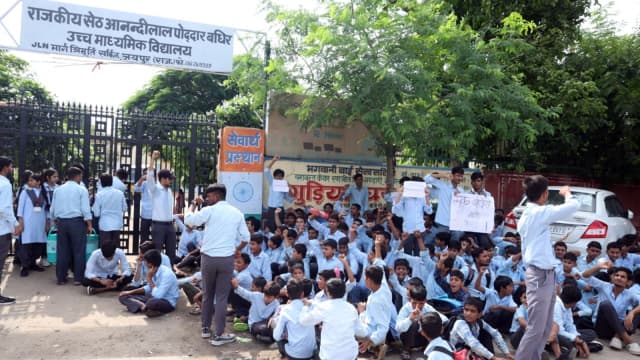
    Students Protest Over School Conditions
    Economic and Social Development03-Oct-2026

    Students Protest Over School Conditions

    Summary Notes on Recent Protests in France and India

    Protests in France

    • Student Grievances:

      • Overcrowded classrooms: Class sizes reportedly contain as many as 35 students.
      • Teacher shortages: Lack of necessary staff, including a year without a science teacher for some students.
      • Poor infrastructure: Deteriorating and overheated classroom conditions, inadequate facilities.
      • Long school days with insufficient lunch breaks.
    • Scale of Protests:

      • Protests initiated in the Paris region and expanded nationwide.
      • Around 560 schools disrupted, leading to 400 high schools closed as of recent reports.
      • Roughly 5,000 arrests have been made since the onset of unrest, with a majority being minors.
    • Economic Context:

      • Proposed education budget for 2027 at €65.53 billion; a 1.7% increase which is below inflation and does not include pensions for teachers.
    • Violence and Response:

      • Confrontations with police, use of tear gas reported.
      • 65 education workers injured, including 40 headteachers, with 305 police officers injured during clashes.
      • Accusations of excessive police force by human rights groups, prompting investigations.

    The Cockroach Janta Party (CJP) in India

    • Campaign Focus: “School Thik Karo” initiative launched on August 15, 2026 (Independence Day) aimed at improving government school conditions in villages.

    • Objectives:

      • Conduct audits of government schools to assess basic needs (water, functional toilets, power, safety, etc.).
      • Citizens utilize a structured social audit checklist to document and report issues in schools.
    • Checklist Parameters:

      • Covers drinking water, functional toilets, electricity, safe classrooms, boundary wall security, and teacher attendance.
      • The checklist available in 13 languages aimed at auditing 1.6 million schools.
    • Background:

      • Campaign evolved from earlier protests associated with the NEET-UG controversy and involved a significant sit-in at Jantar Mantar demanding the resignation of former Education Minister Dharmendra Pradhan.

    Comparative Insights

    • Similarities: Both movements in France and India share a common focus on the deteriorating conditions in educational facilities. Protests in France emphasize public demonstration while India's CJP takes an auditing approach with demands for action.
    • Differences: The context of the movements is distinctly different, influenced by respective political climates and educational policies.

    Keywords

    1. France:

      • Overcrowded classrooms, teacher shortages, €65.53 billion education budget, protests, student arrests.
    2. India (CJP):

      • "School Thik Karo," citizen audits, social audit checklist, education improvement, government schools, teacher attendance.

    Conclusion

    The ongoing education-related protests in both France and India bring to light significant issues regarding the adequacy of public schooling, the need for proper facilities and staffing, and financial implications tied to educational funding.

    India's New Fuel-Efficiency Regulations
    National and International Importance02-Oct-2026

    India's New Fuel-Efficiency Regulations

    Summary of India's CAFE-III Fuel Efficiency Rules

    Overview:

    • The Corporate Average Fuel Economy (CAFE)-III framework has been established to enhance fuel efficiency standards for passenger vehicles in India from April 1, 2027, to March 31, 2032.
    • It emphasizes a fleet-wide approach, compelling manufacturers to optimize fuel efficiency across their entire vehicle portfolio rather than on individual models.

    Key Regulations:

    • CAFE norms apply to M1 category passenger vehicles (cars manufactured or imported for sale in India).
    • The framework replaces model-specific regulations with a system based on the average unladen weight of vehicles sold by a manufacturer.

    Important Dates:

    • Notification Date: September 29, 2023
    • Application Period: April 1, 2027 - March 31, 2032

    Weight and Fuel Consumption Formula:

    • The annual average fuel consumption formula is defined as: [ \text{Annual Average Fuel Consumption} = a \times (W - b) + c ]
      • Where:
        • W = Weighted average unladen mass of vehicles sold.
        • b = Fixed reference weight (1,229 kg).
        • a = Variable determining target changes per kg above/below reference weight (starting at 0.00158 for FY28).
        • c = Baseline fuel target (3.9960 litres/100 km for FY28).

    Progressive Standards:

    • By FY32, values for a and c tighten to 0.00131 and 3.3273 litres/100 km, respectively.

    Powertrain Specific Benefits:

    • Battery-electric vehicles (BEVs) receive the highest compliance benefits, with their volume calculation weighted to enhance fleet performance.
    • Carbon Neutrality Factor (CNF) allows incorporating low-carbon fuels such as ethanol and biofuels to aid compliance.

    Impact on Small Cars:

    • The final framework does not create a separate regulatory category for small cars (under 909 kg), despite initial proposals for additional concessions.
    • Weight remains central to the compliance calculation.

    Carmaker Credit System:

    • Manufacturers can earn credits for exceeding efficiency targets and incur debits for falling short.
    • Credits can carry over within compliance blocks and can be traded between manufacturers.
    • Debits can be compensated by purchasing credits from the Bureau of Energy Efficiency starting at Rs 2,500 per g CO2/km in FY2027-28 and increasing annually.

    Technological Innovations Encouraged:

    • Efficiency improvements can be claimed from specified technologies like start-stop systems, LED lighting, and efficient alternators, with a cap on overall reductions permitted.
    • Alternative fuels receive positive recognition through specific carbon-neutrality factors.

    Judicial and Legislative Context:

    • CAFE norms were initially introduced in 2017 under the Energy Conservation Act, indicating a legislative framework aimed at reducing vehicle emissions progressively.

    International Context:

    • The new regulations align with global trends toward stricter emissions and fuel efficiency standards, reflecting India's commitment to cleaner energy and compliance with international environmental agreements.

    Benefits to Stakeholders:

    • The regulations have been positively received by automobile manufacturers, providing clarity and stability for long-term planning and technology investment.

    Conclusion

    India's CAFE-III framework represents a significant shift in automotive regulatory policy aimed at improving overall fuel efficiency and reducing CO2 emissions, aligning industry objectives with environmental goals and international standards.