iAspirants
Conservation Efforts for Rock Eagle Owl
Published on:
Share this post
Article Summary
Summary of Conservation Efforts for the Rock Eagle Owl
Species Overview:
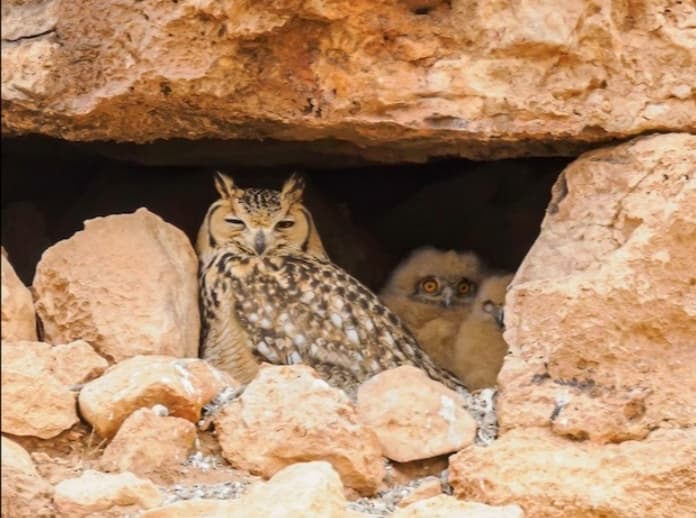
- Rock Eagle Owl (Bubo bengalensis), also known as Bengal eagle-owl.
- Native to hilly scrub forests in India; characterized by brown and grey plumage with a distinctive white throat patch with black stripes.
- Classified as a Schedule I animal under Indian wildlife protection laws, indicating it is endangered.
Threats and Conservation Actions:
- The species is listed in the International Union for Conservation of Nature (IUCN) Red List as decreasing due to threats including habitat loss and poaching.
- Poachers reportedly make Rs 35-40 lakh per bird in the black market.
Incident Background:
- A quarry operation in Yenakathala, Vikarabad, Telangana, was paused after the discovery of a rock eagle owl nest containing five eggs.
- Quarry operations were costing the owner, Laxma Reddy, an estimated Rs 1.2 lakh per day in losses.
Community Response:
- The eggs were discovered by wildlife photographers who alerted the quarry manager, leading to a temporary halt in mining.
- Advocacy from conservationists prompted the involvement of C. Suvarna, Principal Chief Conservator of Forests, who facilitated protection measures.
Conservation Measures Implemented:
- Quarry activities and visitor access have been restricted to protect the nesting site and ensure the eggs hatch without disturbance.
- Forest officials were deployed to oversee the conservation area and ensure compliance with protection efforts.
Incubation Details:
- The incubation period for rock eagle owl eggs typically ranges from six to eight weeks.
- The eggs were approximately two weeks old at the time of discovery.
Judicial and Policy Framework:
- The case reflects the application of the Wildlife Protection Act, 1972, which provides legal protection to endangered species and their habitats.
- The incident illustrates community engagement in wildlife conservation and the role of local governance in enforcing wildlife protection laws.
Ecological Importance:
- The rock eagle owl’s natural nesting preferences indicate important ecological factors, such as the necessity for habitats that provide camouflage and safety from predators.
Economic Considerations:
- The situation highlights the conflict between economic activities (quarrying) and biodiversity conservation, showcasing the need for sustainable practices that protect wildlife.
These actions underscore the importance of community activism and legal frameworks in the conservation of endangered species like the rock eagle owl.
Key Terms & Concepts
| Rock Eagle Owl | Endangered species in India |
| Schedule I | Legal protection status |
| International Union for Conservation of Nature | Global conservation authority |
| Rs 1.2 lakh | Daily loss for quarry operations |
| Rs 35-40 lakh | Potential black market value |
| Principal Chief Conservator of Forests | Authority involved in intervention |
| Vikarabad District Forest Officer | Oversees wildlife protection |
| 6 to 8 weeks | Incubation period of eggs |