iAspirants
Conservation Issues of Historic Monuments
Published on:
Share this post
Article Summary
Summary & Exam-Focused Notes on Heritage Preservation in Uttar Pradesh
Centrally Protected Monuments (CPMs):
- As per the Comptroller and Auditor General (CAG) Report, 2024, Uttar Pradesh has 487 CPMs. Of these:
- 96 monuments are encroached upon.
- 31 are untraceable.
- Only 6.4% of monuments have proper ownership documentation.
- Concerns raised regarding negligence in conservation and inappropriate restoration work.
- As per the Comptroller and Auditor General (CAG) Report, 2024, Uttar Pradesh has 487 CPMs. Of these:
Judicial & Legal Framework:
- Public Interest Litigations (PILs) filed in the Allahabad High Court by heritage enthusiasts regarding encroachment and preservation issues.
- The Ancient Monuments and Archaeological Sites and Remains Act, 1958 prohibits damaging activities on protected structures.
Heritage Architecture:
- Awadhi architecture features significant Persian influences, as seen in monuments like:
- Bara Imambara
- Chota Imambara
- Rumi Darwaza
- This architectural style reflects cultural syncretism during the rule of the Nawabs of Awadh.
- Awadhi architecture features significant Persian influences, as seen in monuments like:
Government Schemes and Policies:
- National Policy for Conservation of Ancient Monuments and Archaeological Sites and Remains (2014) outlines standards for conservation and mandates documentation and planning for preservation.
- Site Management Plans (SMPs) require multidisciplinary input for managing monuments and their protection.
Encroachment Issues:
- Reports of encroachments by local authorities and establishments (e.g., hospitals and schools) in and around heritage sites.
- Public spaces like the Chota Imambara have seen commercial encroachments that violate preservation laws.
Conservation Challenges:
- The CAG report criticized the Archaeological Survey of India (ASI) for failures in maintaining and documenting conservation efforts.
- Calls for a State heritage law with strict anti-encroachment measures and citizen involvement.
Cultural Significance:
- The preservation of monuments is vital not only for architectural integrity but for maintaining Awadhi culture, which encompasses art forms like kathak, chikankaari, and Urdu poetry.
Recent Developments:
- Notable removals from the protected list of monuments in 2024 include Qadam Rasul and Chota Chhatar Manzil due to issues of neglect and encroachment.
Environmental & Urban Impact:
- The situation highlights the intersection between urban development and heritage conservation, where demand for infrastructure conflicts with the need to protect historical sites.
Statistics and Implications:
- A lack of mid-term or long-term conservation plans in U.P. ASI circles indicates urgent need for strategic intervention.
This summary emphasizes critical legal, historical, and cultural aspects necessary for understanding the conservation landscape in Uttar Pradesh while pointing at systemic failures and the response needed to protect India’s rich heritage.
Key Terms & Concepts
| Uttar Pradesh | Location with protected monuments |
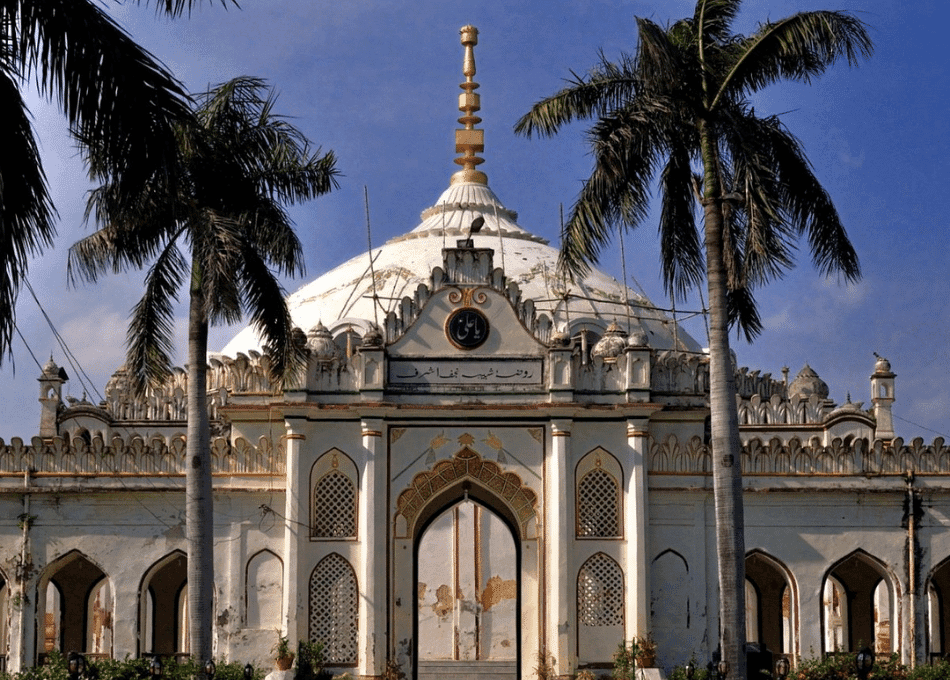
| Imambara Shah Najaf | Historic monument in Lucknow |
| Gomti River | River near historic sites |
| Comptroller and Auditor General of India | Government agency providing reports |
| 487 | Total CPMs in Uttar Pradesh |
| 6.4% | Percentage with proper documentation |
| 31 | Number of untraceable CPMs |
| Public Interest Litigations (PILs) | Legal actions for heritage protection |
| Ancient Monuments and Archaeological Sites and Remains Act, 1958 | Legislation protecting heritage sites |
| National Policy for Conservation of Ancient Monuments and Archaeological Sites and Remains, 2014 | Policy for monument conservation |
| ASI guidelines, January 2005 | Regulations for monument usage |
| Chota Imambara |