iAspirants
HomeAbout UsCurrent AffairsPrelims PYQsPricing
iAspirants
HomeAboutBlogsFAQsPricingLogin
Privacy PolicyTerms & ConditionsReturn PolicyContact Us

© 2025 iAspirants, Inc. All rights reserved.

  1. Blogs
  2. Biodiversity

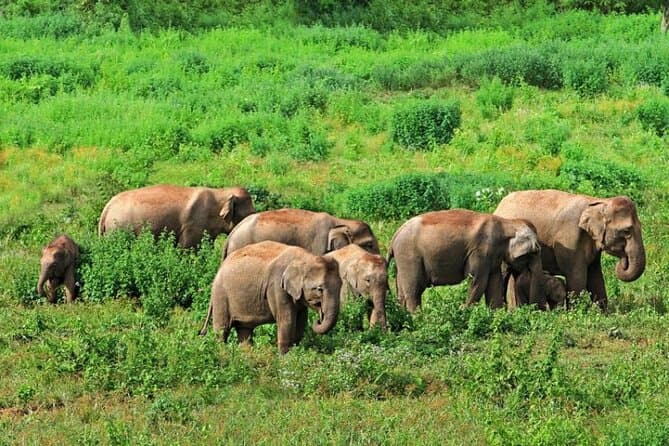
Conservation of Elephant Habitat in India

Published on: 13-Aug-2026

Share this post

Conservation of Elephant Habitat in India

Article Summary

  • Traditional Elephant Habitat Conservation: A report by an ecological reconnaissance party emphasizes the urgent need for the conservation of elephant habitats in South India, specifically focusing on the Jawahar National Park, which spans 2,000 square kilometers and includes Bandipur and Nagarahole national parks in Karnataka, Mudumalai in Tamil Nadu, and Wynaad in Kerala.

  • Ecological Study: Conducted during the monsoon of 1975, the study involved a foot tour of the entire proposed area to analyze wildlife concentration and environmental factors impacting these ecosystems.

  • Key Concerns:

    • Detrimental effects of the Kabini reservoir and land encroachments, particularly in the vested forest of Pulpully, Kerala.
    • Significant reduction of wildlife habitat, leading to fragmentation of habitats and disruption of traditional elephant migration routes.
  • Call to Action: The report advocates for strong actions on multiple fronts to conserve the habitat crucial for the survival of elephants, highlighting it as one of the finest elephant forests in India.

These facts underline the importance of environmental conservation for biodiversity and stress the need for effective measures to protect wildlife habitats.

Key Terms & Concepts

Jawahar National ParkProposed conservation area
2,000 square kmsArea size of proposed park
Bandipur National ParkPart of conservation area
Nagarahole National ParkPart of conservation area
Mudumalai National ParkPart of conservation area
WynaadPart of conservation area
Kabini ReservoirKey wildlife habitat affected
1975Year of ecological study
Elephant migration routesSeverely impacted by habitat loss
Encroachments in PulpullyThreatens wildlife habitat

Mind Map for UPSC Civil Services Revision

Turn UPSC Civil Services Current Affairs Into Exam-Ready Notes

Reading Biodiversity current affairs is half the work. Revise them with ready-made notes and test what actually stuck.

  • Daily UPSC Civil Services current affairs analysis
  • Revision notes, mind maps & MCQs
  • Prelims mock tests with instant results

Related UPSC Civil Services Current Affairs Articles

India's Marine Resource Management Program
Environment and Ecology12-Aug-2026

India's Marine Resource Management Program

Exam-Focused Notes on Marine Biology and Resource Management in India

Government Initiative:

  • The Ministry of Earth Sciences has implemented a comprehensive program through the Kochi-based Center for Marine Living Resources and Ecology (CMLRE) to assess and monitor marine living resources (MLR) in India's Exclusive Economic Zone (EEZ).

Surveys Conducted:

  • Over the past three years (2023-2026), CMLRE has conducted 19 surveys to evaluate fish resources and marine biodiversity within the Indian EEZ.

Key Applications of Scientific Data:

  • The scientific data obtained is utilized for:
    • Sustainable fisheries management.
    • Marine conservation.
    • Evidence-based policy-making.

Specific Programs and Goals:

  • Estimation of potential fish yield in the Indian EEZ (conducted every eight years).
  • Identification of Ecologically and Biologically Significant Areas (EBSA).
  • Development of biodiversity inventories and genomic reference libraries.
  • Identification of fish breeding grounds and seasons.
  • Presentation of data aligned with national and international commitments, including the Convention on Biological Diversity and Sustainable Development Goal 14 (SDG-14).
  • Publication of scientific reports on deep-sea and remote marine resources in the Indian EEZ.

Long-term Monitoring and Assessment:

  • The program includes long-term observation and monitoring of fish resources, biodiversity, and environmental factors in the Indian EEZ.
  • Ongoing mapping and evaluation of marine ecosystems.

Conservation Efforts:

  • The establishment of the Bhavsar National Reserve for the long-term preservation and documentation of deep-sea biological samples.
  • Support for modern classification and biodiversity research through advanced scientific technologies and digitization of collections and data.

Collaboration:

  • Capacity building and collaboration with national and international institutions in the field of marine science.

Alignment with National Policies:

  • The program supports the conservation of sensitive marine ecosystems and the sustainable management of marine living resources in accordance with national priorities and international commitments.

Judicial and Legislative Framework:

  • While specific constitutional articles or legal frameworks were not mentioned in the text, the program aligns with India's commitments under international treaties and national environmental policies.

Overall Impact:

  • The initiative aims to enhance scientific research, ecosystem monitoring, and long-term assessment of marine living resources, contributing to sustainable development and biodiversity conservation in India's marine areas.
World Elephant Day Celebrates Conservation Efforts
Environment and Ecology12-Aug-2026

World Elephant Day Celebrates Conservation Efforts

World Elephant Day: Conservation Efforts and Significance

Environmental and Ecological Importance

  • Elephant Population: India is home to approximately 60% of the world's wild Asian elephants, with an estimated population of 22,446 elephants as per the Synchronous All-India Elephant Estimation (SAIEE) 2021-25.
  • Keystone Species: Elephants play a crucial role in maintaining forest ecosystems, supporting biodiversity, and ensuring ecological balance. Their migratory behavior helps create paths and water sources beneficial for other wildlife.

Government Initiatives

  • Project Elephant: Launched by the Government of India under the Ministry of Environment, Forest and Climate Change (MoEFCC) to protect elephant habitats and mitigate human-elephant conflicts. It provides financial and technical assistance to states.
  • Elephant Reserves: India has established 33 elephant reserves covering an area of 80,777 square kilometers, with an increase of 8,610 square kilometers since 2014. This initiative enhances habitat connectivity and ecological integrity.
  • Elephant Corridors: Identified and confirmed 150 corridors across four regions to facilitate safe movement and genetic diversity of elephant populations, reducing human-elephant conflict.

Conservation Techniques

  • Technological Integration: Use of DNA-based sampling for population assessments and monitoring through technology-driven measures like AI-enabled systems for real-time alerts in railway corridors.
  • Monitoring Framework: The Management Effectiveness Evaluation Framework for Elephant Reserves was introduced in 2023 to ensure transparent evaluation and management.

Legislative Framework

  • Wildlife Protection Act, 1972: Governs the protection of elephants from illegal trade and trafficking.
  • Captive Elephants (Transfer or Transport) Rules, 2024: Introduced to regulate the movement of captive elephants and prevent illegal transfers.

Community Engagement

  • Local Community Involvement: The government promotes community participation in wildlife protection through financial aid for damages caused by wildlife, including compensation for injuries and crop loss.
  • Human-Wildlife Conflict Mitigation: The Human-Wildlife Conflict Advisory provides strategies for managing conflicts, including hotspot mapping and rapid response teams.

Economic and Statistical Data

  • Railway Safety Measures: The government has identified 127 sensitive railway sections across 14 states to reduce elephant fatalities, implementing protective measures such as underpasses and using advanced technologies like optical fiber intrusion detection.
  • Reduction in Train-Related Deaths: Deaths of elephants from train incidents decreased from 26 in 2013 to 12 in 2024, representing a reduction of over 50%.

Cultural Significance

  • Cultural Heritage: Elephants hold significant cultural value in India, symbolizing wisdom and authority in various traditions, including their role in religious practices and community identities.

Conclusion

India's commitment to elephant conservation reflects a blend of scientific research, community participation, and traditional values, aiming to secure the future of Asian elephants while promoting ecological balance and cultural heritage. The ongoing efforts highlight the importance of sustainable coexistence between humans and wildlife.

Debate on English as Indian Language
Polity and Governance11-Aug-2026

Debate on English as Indian Language

  • Supreme Court Observation: Recent remarks by the Supreme Court of India have reignited the discussion on the status of English in the Indian linguistic landscape.

  • Indigenous vs. Non-Indigenous Languages: The debate centers around whether English can be classified as an indigenous language. While English is historically linked to British colonialism and was utilized for administration and commerce, it has evolved through Indian cultural appropriation.

  • Promotion of Multilingualism: There is a call for nurturing India’s linguistic diversity without positioning one language against another. The promotion of Indian languages such as Hindi, Tamil, Telugu, Odia, Kannada, and Marathi should coexist with the recognition of English.

  • Historical Context: Although English was introduced through colonial rule, it has been redefined by Indian speakers, serving their aspirations over colonial objectives. This evolution suggests a unique local identity for English within the Indian context.

  • Cultural Integration: The narrative asserts that languages are dynamic and that English, despite its colonial origins, has been reshaped by Indian sociocultural factors to become a part of India’s linguistic identity.

These points reflect the ongoing linguistic discourse and the constitutional principles supporting India's multilingual framework, underpinning the significance of diverse languages in nation-building and culture.