iAspirants
Current AffairsPrelims PYQsUPSC CSE SyllabusUPSC CSE StrategyBlogsPricing
Login
iAspirants

Your AI-powered companion for UPSC preparation.

Quick Links

  • Home
  • About Us
  • Current Affairs
  • Prelims PYQs
  • UPSC CSE Syllabus
  • UPSC CSE Strategy
  • Blogs

Company

  • Pricing
  • FAQs
  • Contact Us
  • Login

Legal

  • Privacy Policy
  • Terms & Conditions
  • Return Policy

© 2025 iAspirants, Inc. All rights reserved.

  1. Blogs
  2. Polity and Governance

Constitutional Rights and Dissent Issues

Published on: 13-Aug-2026

Source: The Hindu

Share this post

Constitutional Rights and Dissent Issues

Article Summary

Exam-Focused Notes on Constitutional Rights and Dissent

Key Constitutional References:

  • Article 19(1)(a): Guarantees the freedom of speech and expression.
  • Article 19(1)(b): Guarantees the right to assemble peacefully without arms.
  • Part III of the Constitution: Ensures fundamental rights, including those of expression and peaceful assembly.

Judiciary Insights:

  • Justice Ujjal Bhuyan: Stressed the importance of protecting the right to dissent in a democratic society during a speech at the National Law Institute University in Bhopal.
  • Judicial Precedents:
    • Justice D.Y. Chandrachud: Emphasized that “dissent is the safety valve of democracy” and that courts must protect citizens against arbitrary state power.
    • Justice H.R. Khanna: Noted for his dissent during the Emergency period that highlighted the importance of life and personal liberty.
    • Justice B.V. Nagarathna: Advocated for independent institutions and constitutional morality to sustain democracy against political expediency.

Concerns Raised:

  • Increasing criminalization of peaceful dissent, with reports of extended detention without trial and stringent bail conditions intended to suppress speech.
  • Recent examples include the arrest of individuals for activities deemed unlawful without any legal basis—highlighting a potential misuse of criminal law.

Recent Developments:

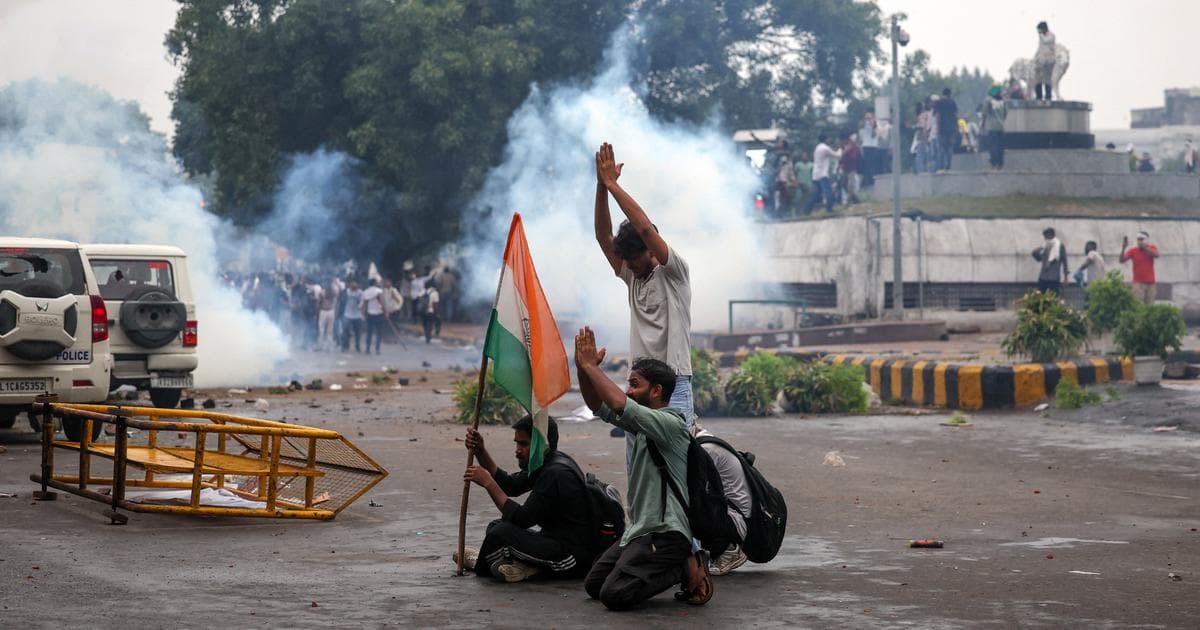
  • Peaceful protests in Delhi's Jantar Mantar by students demanding accountability for examination irregularities were met with allegations of police excesses, such as baton charges and mass detentions.
  • The Supreme Court intervened by ordering the release of detained minors and stopping coercive actions against protestors.

Judicial Recognition of Rights:

  • The judiciary has emphasized that criminal law should target genuine criminal conduct and should not suppress lawful assembly and expression of dissent.
  • The principle established is that protecting dissent is crucial for the health of democracy; restrictions must be exceptional and legally justified.

Civic Participation and Government Accountability:

  • Citizens must be able to challenge government actions and policies openly, reinforcing the democratic fabric of the nation.
  • Peaceful dissent is framed not as disloyalty but as faith in constitutional rights; any suppression of this fundamental freedom undermines democracy itself.

Conclusion: The remarks made by Justices amidst recent events underscore the continuous need for vigilance regarding constitutional rights. The protection of dissent contributes significantly to the stability and legitimacy of democracy, wherein the right to question authority is foundational. Governments are urged to facilitate rather than inhibit peaceful expression and to engage in sincere dialogue with all citizens.

Key Terms & Concepts

Article 19(1)(a)Guarantees freedom of speech
Article 19(1)(b)Guarantees right to peaceful assembly
Justice Ujjal BhuyanCritiques criminalization of dissent
Delhi’s Jantar MantarSite of recent protests
Supreme CourtDirected no coercive action
Justice D.Y. ChandrachudAdvocate for dissent as safety valve
Justice B.V. NagarathnaEmphasizes constitutional democracy
Justice H.R. KhannaDefended personal liberty during Emergency
Pro-Palestine demonstration in MumbaiCriticized for curtailing assembly rights
Criminal lawMust address genuine crimes
Bail conditionsRestrictions on free speech
Examination irregularities protestsDemand for accountability

Mind Map for UPSC Civil Services Revision

Turn UPSC Civil Services Current Affairs Into Exam-Ready Notes

Reading Polity and Governance current affairs is half the work. Revise them with ready-made notes and test what actually stuck.

  • Daily UPSC Civil Services current affairs analysis
  • Revision notes, mind maps & MCQs
  • Prelims mock tests with instant results

Related UPSC Civil Services Current Affairs Articles

Concerns Over Voter Deletions in India
Polity and Governance27-Sep-2026

Concerns Over Voter Deletions in India

Electoral Roll Purge and Concerns in India

Background

  • The Chief Election Commissioner (CEC) Gyanesh Kumar faces allegations over unilateral changes to voter registration processes, raising alarms about administrative overreach in the electoral system.
  • An investigative report exposes objections from two Election Commissioners regarding alterations to new voter registration forms and mass deletions during the Special Intensive Revision (SIR) exercise.
Prolonged incarcerationQuestioned in context of rights

Key Figures and Data

  • Delhi Voter Stats:

    • 54.6% of voters in Delhi (approx. 80 lakh) are currently under scrutiny by the Election Commission of India (ECI).
    • Out of 1.45 crore registered voters:
      • 47.5 lakh marked for deletion (Absent, Shifted, Dead, Duplicate).
      • 33.13 lakh flagged for errors, including:
        • 19.33 lakh marked for "logical discrepancies".
        • 13.80 lakh unmapped against 2002 electoral rolls.
    • Over 31.6 lakh notices generated by mid-September.
  • National Impact:

    • An estimated contraction of the national electorate to about 88 crore, risking disenfranchisement of about 15 crore citizens.
    • States like Maharashtra may lose up to 2 crore voters; Delhi estimates a shrinkage of 35.89%.

Constitutional and Legal Framework

  • Supreme Court's Stance: The Supreme Court has upheld the legality of the SIR exercise, although criticisms emerge regarding its fairness.
  • Concerns on Governance: Ex-CEC S Y Quraishi highlights issues in using 2002 electoral rolls as a baseline, citing inaccuracies in historical data.
  • Delegation Concerns: Booth Level Officers (mostly teachers) are tasked with gatekeeping voter eligibility, raising questions about accountability and accuracy.

Administrative Anomalies and Judicial Insights

  • Erroneous Deletions: Evidence from RTI disclosures indicates that 91% of flagged voters in West Bengal were found to have been wrongly deleted.
  • Regulatory Gaps: Numerous irregularities due to flawed ECI databases, including clerical errors causing 'logical discrepancies'.

Electoral Process Implications

  • Highlighted discrepancies are putting the credibility of the electoral process at risk, with legitimate voters facing administrative chaos.
  • The timing of the SIR exercise is suspect, running right before major elections in several states, complicating citizens' ability to rectify their registrations.

Calls to Action

  • Critics are urging a reconsideration of the SIR process to safeguard electoral integrity and address disenfranchisement.
  • Objective and fair management of electoral rolls is deemed essential for the health of India's democracy.

Conclusion

The ongoing scrutiny and significant voter roll purges present pressing challenges to democratic norms in India. Ensuring the right to vote, as enshrined in the Constitution, must be balanced against valid administrative needs without disenfranchising citizens. Reforms and oversight in the electoral process are critical to uphold democratic principles.

Inauguration of Victim Rights Centre
Polity and Governance27-Sep-2026

Inauguration of Victim Rights Centre

Summary of Initiatives for Victim Rights in Bihar

Key Initiatives:

  1. Victim Rights Centre (VRC):

    • Inauguration: First VRC in Bihar, inaugurated by Chief Justice of India (CJI) Surya Kant on September 26, 2026.
    • Purpose: Acts as a single window mechanism to assist victims of crimes, facilitating access to justice and support services like compensation, legal assistance, medical help, counselling, protection, and rehabilitation.
  2. Transgender Helpline:

    • A helpline specifically launched for the transgender community to overcome barriers they face in accessing justice before legal cases are formalized.
  3. Multi-Utility Vehicles:

    • Launch: Nine vehicles introduced to provide legal awareness, documentation support, and assistance in remote villages and settlements, enhancing outreach capabilities of the legal system.
  4. Book Release:

    • A publication concerning the operations and significance of the VRC was launched during the ceremony.

Judicial Perspectives:

  • CJI Surya Kant's Remarks:

    • Emphasized the need for justice to reach vulnerable populations without requiring them to navigate complex legal systems.
    • Highlighted that existing entitlements scattered across various statutes should be simplified for easy access by victims.
  • Justice V. Kameshwar Rao:

    • Recognized the VRC as a vital step in making justice more accessible for crime victims.
    • Urged that discussions on criminal justice should include the concerns of victims alongside state and accused perspectives.
  • Justice Sudhir Singh's Emphasis:

    • Stressed that success hinges on how sensitively individuals entering the justice system are treated, advocating that justice is meaningful only when it reaches those in dire need.

Constitutional and Legal Framework:

  • Articles and Rights:
    • While specific constitutional articles were not mentioned in the text, the initiatives align with the principles of access to justice enshrined in the Indian Constitution, particularly under Article 14 (Right to Equality) and Article 21 (Right to Life and Personal Liberty).

Broader Impact and Goals:

  • The initiatives aim to ensure that justice and support mechanisms are not merely available but actively reach marginalized and vulnerable populations.
  • The success metrics for these initiatives will include real-time responses to victims, effective delivery of entitlements, and overall improvement in accessibility of the justice system.

Conclusion:

These initiatives represent a substantial shift towards making the justice system more inclusive and responsive to the needs of victims in Bihar, with an underlying principle that "justice must find its way to the citizen." The focus on outreach, awareness, and sensitivity could mark a significant improvement in the interaction between legal institutions and the communities they serve.

Election Commission Independence Challenges
Polity and Governance26-Sep-2026

Election Commission Independence Challenges

  • Constitutional Context

    • Article 324(2): Allows Parliament to regulate the appointment of the Election Commission of India (ECI), but no law was made for 70 years.
    • Basic Structure Doctrine: Free and fair elections are critical for democracy and are protected under this doctrine.
  • Judicial Developments

    • Mohinder Singh Gill Case (1978): Established principles regarding the independence of the Election Commission.
    • Anoop Baranwal Case (2023): Introduced an interim arrangement for the appointment of Election Commissioners, involving the Prime Minister, Leader of the Opposition, and Chief Justice of India (CJI).
    • Supreme Court's two-judge bench referred petitions against the 2023 law to the Chief Justice for a Constitution Bench due to differing opinions on its constitutionality.
    • Upcoming hearing on the legislation aims to address concerns about executive influence over ECI appointments.
  • Supreme Court Opinions

    • Justice Datta emphasized that an Election Commissioner must not be beholden to the executive and that appointments must be perceived as independent.
    • Judicial reasoning distinguished between application and interpretation of constitutional principles, suggesting that existing principles should guide future appointments.
    • Notably, Justice Sharma acknowledged that the law’s implications on free and fair elections warrant independent examination.
  • Statutory References

    • Chief Election Commissioner and other Election Commissioners (Appointment, Conditions of Service and Term of Office) Act, 2023: This Act, criticized for lacking a neutral selector, replaced the CJI in the selection process with a cabinet minister nominated by the PM.
  • Arguments Presented

    • Allegations that the selection committee's current make-up risks compromising the ECI's independence.
    • Advocates argue for a requirement of unanimous decisions by the selection committee to ensure both government and opposition's agreement on appointments.
    • Concerns raised over potential conflicts of interest, especially with the executive being a participant in the electoral process.
  • Comparative References

    • Comparison made to the National Judicial Appointments Commission (NJAC) case, where the independence of the judiciary was at stake, highlighting the need for a balance of power to protect institutional independence.
  • Judicial Principles

    • Emphasis on the necessity for the ECI not only to be independent but also to appear independent to uphold democratic integrity.
    • Justice Datta articulated that even the perception of bias in appointments could undermine democracy.
  • Policy Implications

    • The need for a legislative framework that ensures robust checks against executive overreach in the appointment of election officials.
    • Call for reforms aimed at solidifying the role of the ECI by eliminating any perceptions that it could lean towards the ruling party.

This summary provides a structurally organized understanding of the recent legal developments concerning the independence of the ECI, pertinent constitutional articles, and dialogues within the judiciary surrounding the integrity of democratic processes in India.

Court Quashes Preventive Detention Order
Polity and Governance25-Sep-2026

Court Quashes Preventive Detention Order

Jammu & Kashmir High Court Ruling on Preventive Detention

Case Overview

  • Parties Involved: Mohd. Yousuf (detained) vs. District Magistrate of Poonch (detention authority).
  • Date of Detention: April 2026.
  • Legal Framework: Preventive detention under the Jammu and Kashmir Public Safety Act (PSA).

Key Legal Points

  • Preventive Detention vs. Ordinary Criminal Law:
    • The court emphasized that preventive detention should not be invoked merely for law and order issues that can be dealt with under ordinary criminal law.
    • Articles referenced:
      • Article 22 of the Constitution: Safeguards against arrest and detention, with specific exceptions for preventive detention.
  • Judicial Precedents:
    • Ram Manohar Lohia v. State of Bihar: Introduced the distinction between law and order, public order, and security of state as three concentric circles; public order is a narrower category.
    • Ameena Begum v. State of Telangana (2023): Courts can scrutinize detention orders if there is doubt regarding the detaining authority’s understanding of its powers.

Court's Findings

  • The High Court ruled that the detaining authority failed to recognize the distinction between law and order issues and those that perturb public order.
  • The Court identified that:
    • The allegations and incidents involving Yousuf were personal disputes and did not translate into a public order threat.
    • The four FIRs cited (involving altercations and personal disputes) indicated individual conflicts rather than a broader public disorder.
  • The High Court quashed the detention order, stating:
    • Preventive detention is an extraordinary measure and could not be justified based on the nature of the incidents which primarily disturbed individual parties and not public life.

Implications

  • This ruling highlights the limits of preventive detention powers under PSA, stressing that circumstances justifying such actions must present an actual threat to the community or public order.
  • The decision reinforces the judicial oversight role in maintaining checks on executive powers related to detention.

Impact on Legal Framework

  • Ensures that preventive detention cannot be applied loosely and reaffirms the constitutional protections under Article 22 against arbitrary use of such powers by authorities.
  • Highlights the judiciary’s role in protecting individual rights against state overreach, ensuring accountability and adherence to due process.

Overall Significance

  • The ruling serves as a precedent for similar cases, clarifying the legal boundaries and reinforcing the protection of civil liberties in cases of preventive detention. It reflects the court's commitment to upholding the law while examining executive actions through a constitutional lens.
Political Parties and Electoral Funding Issues
Polity and Governance25-Sep-2026

Political Parties and Electoral Funding Issues

Summary of Key Points from Article: Political Parties and Electoral Finance in India

  1. Constitutional Framework:

    • Political parties are mentioned under the Tenth Schedule of the Indian Constitution.
    • They exist as "associations" under Article 19, which guarantees the right to form associations.
  2. Electoral Finance Context:

    • Recent investigations highlight issues within the political donation ecosystem, particularly focusing on Registered Unrecognised Political Parties (RUPPs).
    • A report by the Association for Democratic Reforms (ADR) indicates a 223% increase in declared incomes of RUPPs for FY2022-23.
  3. Regulation and Compliance:

    • Only 739 out of 2,764 RUPPs provided financial records to the Election Commission of India (ECI).
    • The ECI delisted 334 RUPPs to address oversights in compliance and to "clean up" the electoral system.
  4. Electoral Symbols and Party Recognition:

  • T.N. Seshan's 1994 directives brought attention to the irregularities in political party operations. Political parties must contest elections within five years of registration as per Section 29A of the Representation of the People Act (RPA), 1951.
  • The ECI holds authority under the Election Symbols (Reservation and Allotment) Order, which can suspend party recognition for non-compliance.
  • Funding and Donations:

    • A study indicated that 22 political parties had ₹18,742.31 crore for the 2024 general elections, with a stark disparity in corporate and individual donations.
    • In FY2022-23, individual donors claimed ₹2,275.85 crore in tax exemptions as compared to ₹514.4 crore by corporates.
    • Overall tax exemptions for political donations have cost the exchequer approximately ₹11,813 crore over the last decade.
  • Electoral Bonds Scheme:

    • Introduced in 2018, this controversial scheme was declared unconstitutional by the Supreme Court in 2024 due to lack of transparency.
    • It raised questions regarding the sources and intent of donations made to politically active parties, especially those unrecognized.
  • Transparency and Accountability Issues:

    • Political parties largely resist transparency initiatives, notably opposing incorporation under the Right to Information Act.
    • The ECI lacks the necessary enforcement tools to monitor campaign financing effectively.
  • Judiciary and Regulatory Recommendations:

    • Calls for a court-monitored probe into electoral bonds and the financial practices of RUPPs have been made.
    • There are suggestions for the ECI to have political parties audited by the Comptroller and Auditor General of India and to implement spending limits during elections.
  • Proposals for Electoral Reform:

    • Suggestions include automatic deregistration of RUPPs that do not contest elections and the creation of a standardized digital platform for financial data reporting.
    • The ECI is urged to focus on enhancing electoral integrity rather than on other administrative concerns.
  • These points underscore the challenges faced in political finance transparency, party regulation, and compliance within India's electoral framework, stressing the need for proactive reforms to enhance democratic integrity.