iAspirants
Critical Minerals and India's Strategy
Published on:
Share this post
Article Summary
Summary of Critical Minerals and India's Strategic Response
1. Importance of Critical Minerals:
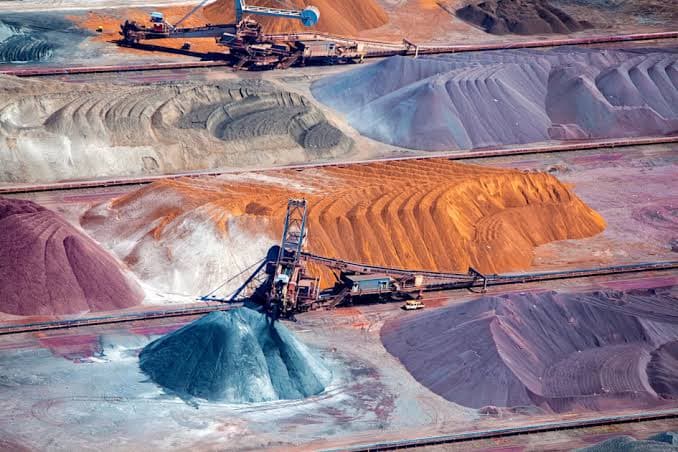
- Critical minerals (lithium, cobalt, nickel, graphite, copper, rare earth elements) are essential for electric vehicles, renewable energy storage, semiconductors, and defense manufacturing.
- Their strategic importance has escalated in the context of energy transition and industrial security, similar to historical dependencies on oil.
2. Global Supply and Market Concentration:
- By 2024, the top three refining countries held an 86% market share in copper, lithium, nickel, cobalt, and rare earth elements, up from approximately 82% in 2020.
- China dominates the refining sector, accounting for 90% of rare earths and graphite, 75% of cobalt, and 70% of lithium chemicals.
3. Demand Projections and Supply Shortages:
- The copper supply pipeline suggests a potential 30% deficit by 2035.
- Demand for lithium is projected to surpass supply by the 2030s, driven by the expansion of clean energy technologies like wind power.
4. Geopolitical Dynamics:
- China's export controls on rare earths have raised concerns among major economies, prompting responses such as:
- The EU's Critical Raw Materials Act, aiming for 2030 targets of 10% domestic extraction, 40% processing, and 25% recycling.
- The U.S. diversifying supply chains through international partnerships.
5. India’s Mineral Resources and Challenges:
- India has significant mineral reserves: cobalt (44.9 million tonnes), copper (163.9 million tonnes), graphite (211.6 million tonnes), and nickel (189 million tonnes).
- Despite reserves, India imports lithium, cobalt, and nickel. Processing capabilities are limited, and the country faces challenges in high-purity production and recycling.
6. Policy and Strategic Initiatives:
- India's National Critical Mineral Mission aims for:
- 1,200 domestic exploration projects by 2030-31.
- Production of at least 15 critical minerals.
- Acquisition of 50 overseas mining assets.
- Khanij Bidesh India Limited (KABIL) has secured land in Argentina for lithium exploration, while new budget proposals focus on developing rare earth corridors in various states.
7. International Cooperation:
- The India-U.S. critical minerals and rare earths framework, signed in May 2026, strengthens bilateral ties and collaboration on critical minerals.
8. Recommendations for Future Strategy:
- India must prioritize the development of processing and refining capabilities.
- Infrastructure investment, private sector engagement, and better geological data are essential.
- Development of strategic stockpiles, applied R&D partnerships, and enhancing domestic capabilities are vital for reducing dependency and ensuring security.
9. Comprehensive Strategic Framework Needed:
- A coordinated institutional approach integrating recycling and setting measurable milestones is required for effective mineral resource management.
- Establishing mineral-specific risk thresholds will help mitigate strategic vulnerabilities.
Key Constitutional References:
- While specific constitutional articles are not mentioned, strategic policies align with India’s overarching goals to enhance energy security, promote sustainable development, and reduce dependency on external resources.
Economic Indicators:
- The rise in demand for critical minerals correlates with India's ambitious clean energy and industrial ambitions, requiring systemic change in both domestic production and global supply chain alignment.
This summary highlights the strategic importance of critical minerals for India’s future and outlines actionable steps for enhancing security and capability in this essential sector.
Key Terms & Concepts
| Lithium | Foundational for electric vehicles |
| Cobalt | Key for energy transition |
| Nickel | Essential for battery production |
| Graphite | Used in batteries and electronics |
| Rare Earth Elements | Vital for tech and defense |
| Indonesia | Major producer of nickel |
| China | Leading refiner of minerals |
| European Union (EU) Critical Raw Materials Act | Policy for mineral extraction and recycling |
| National Critical Mineral Mission | Supports exploration and production |
| Khanij Bidesh India Limited (KABIL) | Secures overseas mining assets |
| 15,703 hectares | Area secured for lithium exploration |
| 2030-31 | Target year for exploration projects |