iAspirants
Current AffairsPrelims PYQsUPSC CSE SyllabusUPSC CSE StrategyBlogsPricing
Login
iAspirants

Your AI-powered companion for UPSC preparation.

Quick Links

  • Home
  • About Us
  • Current Affairs
  • Prelims PYQs
  • UPSC CSE Syllabus
  • UPSC CSE Strategy
  • Blogs

Company

  • Pricing
  • FAQs
  • Contact Us
  • Login

Legal

  • Privacy Policy
  • Terms & Conditions
  • Return Policy

© 2025 iAspirants, Inc. All rights reserved.

  1. Blogs
  2. Environment and Ecology

Darbhanga's Water Crisis and Legal Action

Published on: 29-Aug-2026

Share this post

Darbhanga's Water Crisis and Legal Action

Article Summary

Summary of Key Facts and Developments in Darbhanga, Bihar

Historical Context

  • Pond Count Decline: Darbhanga, once known as the ‘city of ponds’ with over 350 ponds until 1969, now has fewer than 100 remaining.
  • Groundwater Crisis: The depleting groundwater levels have led to difficulties for residents in accessing water, particularly during summer months.

Current Situation

  • Encroachment Issues: The remaining ponds are reportedly being filled and built over for urban development (houses, hotels, hospitals, coaching institutes).
  • Citizen Group: Talab Bachao Abhiyan (TBA), a citizen group formed in 2012, is actively campaigning to protect these water bodies.

Government Initiatives

  • Beautification Plan: The Bihar Urban Infrastructure Development Corporation (BUIDCO) has a ₹70.34-crore plan for rejuvenating three historically interconnected ponds (Harahi, Dighi, Gangasagar) over 1.8 km.
  • Supreme Court Involvement: TBA petitioned the Supreme Court for restoration instead of beautification. The Court has temporarily halted the beautification plan and emphasized that ponds cannot be encroached upon.

Judicial Actions

  • Supreme Court Ruling: On July 28, the Supreme Court received an undertaking from the Bihar government to stop soil dumping in the three ponds. The next hearing is scheduled for September 7.
  • National Green Tribunal (NGT) Compliance: TBA alleges that the beautification plan violates the Wetlands (Conservation and Management) Rules, 2017, and directives from the NGT.

Environmental Impact

  • Ecological Importance of Ponds: Ponds serve as natural water storage, aiding groundwater recharge and flood moderation. Filling them reduces their ecological function, leading to increased reliance on borewells.
  • Expert Opinion: Ashok Kumar Ghosh, former chairman of the State Pollution Control Board, emphasizes that filled ponds disrupt natural recharge systems.

Community Activism

  • TBA Activities: TBA has organized multiple protests, rallies, and campaigns to raise awareness and push for legal action against encroachments.
  • Safety Concerns: Activists have faced threats; one member reported a “murderous attack” for opposing encroachments.

Government Response

  • Reallocation of Funds: The State Urban Development and Housing Department has stated that funds for the beautification plan will be redirected if necessary to ensure they are not wasted.

Future Directions

  • Digital Inventory of Wetlands: Supreme Court and NGT have mandated the creation of a comprehensive digital inventory of ponds and wetlands in Bihar, which will aid in conservation efforts.

This summary highlights the critical issues surrounding water resource management, environmental conservation, and community activism in Darbhanga, Bihar. The ongoing judicial proceedings and government responses reflect the importance of protecting ecological systems while addressing urban development needs.

Key Terms & Concepts

DarbhangaLocation facing water crisis
Talab Bachao Abhiyan (TBA)Citizen group advocating for ponds
BUIDCOResponsible for pond beautification plan
₹70.34 croreAllocated budget for rejuvenation
Wetlands (Conservation and Management) Rules, 2017Regulation for wetland protection
Supreme CourtJudicial body overseeing case
National Green Tribunal (NGT)Authority on environmental issues
March 14Date of writ petition filing
September 7Next hearing date set
150 membersSize of TBA organization
Lalit Narayan Mithila UniversityAffiliation of a TBA member
groundwater rechargeKey ecological process affected

Mind Map for UPSC Civil Services Revision

Turn UPSC Civil Services Current Affairs Into Exam-Ready Notes

Reading Environment and Ecology current affairs is half the work. Revise them with ready-made notes and test what actually stuck.

  • Daily UPSC Civil Services current affairs analysis
  • Revision notes, mind maps & MCQs
  • Prelims mock tests with instant results

Related UPSC Civil Services Current Affairs Articles

Climate Crisis in Himalayan Regions
Environment and Ecology29-Aug-2026

Climate Crisis in Himalayan Regions

Climate Change and Natural Disasters in the Himalayan Region: Exam-Focused Notes

  1. End-Glacial Lake Outburst Floods (EGLOFs):

    • EGLOFs are a significant cause of natural disasters in the Himalayan regions, contributing to extensive destruction and humanitarian crises.
January 10, 2024
Date of alleged attack
January 13, 2024Date of police complaint
  • Environmental Concerns:

    • Rising temperatures and melting glaciers are increasing vulnerability in the Himalayas.
    • Erratic rainfall patterns and environmental degradation exacerbate the situation.
  • Need for Stronger Climate Policies:

    • Emphasis on developing stronger climate policies is critical for sustainable development.
    • Protection of forests and rivers is essential to mitigate disaster risks.
    • Prioritizing disaster-preparedness measures is crucial for protecting vulnerable communities.
  • Regional Coordination:

    • Countries sharing the Himalayan ecosystem—India, China, Pakistan, Nepal, and Bhutan—need to collaborate to ensure safety and disaster management across borders.
    • India and China, in particular, are urged to prioritize environmental protection and humanitarian efforts over political differences.
  • Immediate Response and Long-term Strategy:

    • The immediate focus should be on rescue, relief, and rehabilitation of affected communities.
    • Transitioning from disaster response to disaster prevention strategies is vital for long-term safety.
  • Scientific Investigation:

    • Multiple factors contributing to disasters include avalanches, earthquakes, dam releases, intense rainfall, and glacial outbursts.
    • Determining the precise causes necessitates rigorous scientific investigation, although political and reporting challenges may arise.
  • Ecological Disruption:

    • The recent disasters highlight that ecological disruption can significantly intensify natural hazards, necessitating a reevaluation of environmental management practices.
  • Humanitarian Impact:

    • The fragility of mountain ecosystems underscores the urgent need for effective disaster risk reduction measures to avert future humanitarian catastrophes.
  • International Cooperation:

    • Collective action and cooperation among neighboring countries are essential for effective disaster management and environmental protection in the Himalayan region.
  • These notes encapsulate the critical aspects of climate change impacts on the Himalayan region, emphasizing the need for coordinated efforts, sound policies, and scientific investigations to address vulnerabilities and enhance disaster resilience.

    Flash Floods Devastate Nepal and India
    Environment and Ecology28-Aug-2026

    Flash Floods Devastate Nepal and India

    Summary of Recent Flash Flood Disaster in Nepal

    Incident Overview:

    • Date of Incident: August 28, 2026.
    • Flash floods in Nepal resulted from an ice-rock avalanche in Tibet, leading to significant casualties.
    • Casualties: At least 389 fatalities recorded, with over 300 Indians missing.
    • Extensive damage noted along the Bhote Koshi and Trishuli corridors, impacting settlements and infrastructure.

    Causes and Analysis:

    • Initial suspicion of an earthquake ruled out; evidence points towards glacier collapse and debris blockages.
    • Contribution of Western Disturbance and monsoon conditions exacerbated the impact of the flood.
    • Comparisons made with the October 2023 South Lhonak Lake disaster in Sikkim, where GLOF (Glacial Lake Outburst Flood) occurred due to glacier failure.

    Infrastructure Damage:

    • Damage to transport:
      • 35 motorable bridges, 45 suspension bridges, and approximately 40 kilometers of roads affected.
    • Damage to hydropower and monitoring infrastructure.

    Scientific Insights:

    • The Indian Himalayas consist of ~7,500 glacial lakes and ~15,000 glaciers, with many being monitored via remote sensing.
    • Although satellites provide valuable data, accurate forecasting of glacier collapse remains challenging.
    • Potential panic due to warnings may hinder effective evacuation of residents.

    Climate Change Context:

    • Natural disasters like these are increasing due to global warming.
    • Emphasis on the importance of disaster planning integrated with development programs.
    • Noting the necessity for stricter building regulations and discouraging settlements in vulnerable areas.

    Recommendations Going Forward:

    • Government action needed to enforce construction codes in disaster-prone regions.
    • Investment in better glacier health tracking for long-term disaster management strategies.
    • Addressing systemic neglect that exacerbates vulnerability to such disasters.

    This flash flood event highlights the interplay between natural disasters, climate conditions, and human vulnerabilities, emphasizing the urgent need for improved disaster preparedness and infrastructure resilience.

    Himalayan Disaster and Its Consequences
    Environment and Ecology28-Aug-2026

    Himalayan Disaster and Its Consequences

    Himalayan Disaster – Key Highlights:

    • Geographic Context: The disaster was primarily driven by two factors:

      • Mountainous Terrain: The steep slopes of the Himalayas facilitated rapid water movement downstream during flooding events.
      • Weather Phenomenon: Intense cloudbursts and glacier melt in the higher Himalayan ranges contributed to sudden and severe flooding.
    • Impact Analysis:

      • The destruction caused by the disaster is unprecedented, with projections indicating thousands of casualties and extensive damage, including hundreds of villages and small towns being wiped out.
    • Post-Disaster Recommendations:

      • Experts call for increased cooperation among Himalayan nations to establish:
        • Joint Early-Warning Networks: Implementing systems for timely warnings regarding natural disasters.
        • Collaboration on sharing critical meteorological and geological data.
    Human-Elephant Conflict Study Findings
    Environment and Ecology28-Aug-2026

    Human-Elephant Conflict Study Findings

    Summary of Human-Elephant Conflict Study Findings

    Study Overview:

    • Title: "Estimating the occurrence and detection of human-elephant conflict in India through a Bayesian occupancy modeling framework."
    • Conducted by: Columbia University, North Carolina State University, Centre for Wildlife Studies.
    • Publication: Biological Conservation.
    • Data Analyzed: 20,888 verified incidents from July 2015 to June 2023 across Bandipur and Nagarahole National Parks.

    Key Findings:

    1. Conflict and Cropland:

      • Areas with extensive cropland and high agricultural activities report higher human-elephant conflicts.
      • Cropland is identified as a consistent predictor of conflict due to the nutrient-rich forage that attracts elephants.
    2. Seasonal Patterns:

      • Conflict incidents peaked in the post-monsoon season (35%) compared to 31% during monsoon and 26% pre-monsoon.
    India's Renewable Energy Expansion Milestones
    Environment and Ecology28-Aug-2026

    India's Renewable Energy Expansion Milestones

    Renewable Energy Capacity in India: Key Highlights

    1. Installed Capacity:

      • India has surpassed 300 GW of installed non-fossil fuel power capacity as of July 31, 2026.
      • Non-fossil fuel sources now represent over 54% of India’s total electricity generation capacity.
      • The largest contributor to renewable energy is solar power, accounting for 164.59 GW.
    2. Future Targets:

      • India is on track to achieve its target of 500 GW of non-fossil fuel capacity by 2030.
      • An additional 17 GW of renewable energy capacity was added in the first four months of the financial year.
    3. Government Schemes:

      • PM Surya Ghar Scheme: Provides subsidies for rooftop solar systems. Approximately 1.9 million beneficiaries have reportedly received zero electricity bills through this initiative.
      • PM-KUSUM Scheme: A broader initiative aimed at promoting solar energy.
    India's Efforts in Snow Leopard Conservation
    Environment and Ecology27-Aug-2026

    India's Efforts in Snow Leopard Conservation

    Exam-Focused Notes on the Moscow Roundtable Conference on Snow Leopard Conservation

    Overview

    • Event: Moscow Roundtable Conference on Snow Leopard Conservation
    • Date: August 26, 2026
    • Location: A.N. Severtsov Institute of Ecology and Evolution, Russian Academy of Sciences, Moscow, Russia
    • Objective: Strengthening international cooperation in snow leopard research and conservation.

    Key Participants

    • India: Delegation from the Ministry of Environment, Forest and Climate Change.
    • Russia: Representatives from the Ministry of Natural Resources and Environment, A.N. Severtsov Institute, Moscow Zoo, and Rosprirodnadzor.
    • International Collaboration: Participation from the Interregional Association "Irbis" and the International Big Cat Alliance (IBCA).

    Scientific Contributions

    • India's Progress: The Indian Wildlife Institute (WII) shared advancements in:
      • Population Estimation: Techniques for estimating snow leopard populations.
      • Radio Telemetry: Use of radio telemetry for tracking and studying snow leopard behaviors.
      • Genetic Analysis: Application of genetic analysis to support conservation efforts.

    Importance of Scientific Tools

    • Emphasis on the role of scientific instruments in enhancing conservation efforts.
    • Collaborative approaches discussed to promote joint research and monitoring initiatives.

    International Agreements

    • The conference was held under the framework of a partnership agreement signed in December 2025 between the IBCA and the Irbis association, aimed at fostering international collaboration in conservation efforts.

    Goals of the Conference

    • To create a platform for knowledge and experience sharing among participating countries regarding snow leopard research and conservation.
    • To promote a collaborative approach for the scientific study and conservation of the species.

    Environmental Significance

    • Snow leopards are a keystone species in their ecosystem, and their conservation is vital for maintaining biodiversity in mountainous regions.

    Conclusion

    • The roundtable conference provided a significant opportunity for India and its international partners to enhance cooperation and develop strategies for the effective conservation of snow leopards, ensuring their survival for future generations.
    The Importance of Wetlands Preservation
    Environment and Ecology27-Aug-2026

    The Importance of Wetlands Preservation

    • Ecosystem Services of Wetlands: Wetlands cover nearly 6% of the Earth's surface, providing critical ecological functions including carbon storage, biodiversity support, and climate regulation. They outperform terrestrial forests in carbon sequestration per unit area.

    • Biodiversity and Climate Regulation: Wetlands contribute to both biodiversity and climate regulation, enhancing human well-being through ecosystem services.

    • Urban Wetlands Degradation: A significant decline in urban lakes and wetlands is noted, with many becoming biologically dead or highly eutrophic. This degradation undermines urban resilience to climate change and public health.

    • Urbanization Impact: Rapid and unplanned urbanization is driving the destruction of water bodies. Increased land pressure leads developers and municipal authorities to regard lakes as vacant land rather than vital ecological assets.

    • Environmental Consequences: The loss of wetlands leads to diminished natural defenses against climate change, increasing vulnerability for urban areas. This highlights the urgent need for conservation measures to protect these ecosystems.

    Real-Time Data Sharing:
  • Resilient Infrastructure: Development of infrastructure capable of withstanding extreme weather conditions.
  • Cultural Institutions in Tamil Nadu – Key Insights:

    • Eyal Isai Nataka Mandram: The apex cultural body in Tamil Nadu is currently inactive, indicating a significant gap in cultural governance.

    • Kalaimamani Awards: The state's prestigious awards recognizing excellence in arts are currently suspended.

    • Recommendations for Revitalization:

      • A call for the Tamil Nadu government to:
        • Revive the Eyal Isai Nataka Mandram: Reactivate its functions to promote the arts.
        • Reconstitute Executive/General Councils: Form new leadership to drive the objectives of the body effectively.
        • Reform Awards Process: Distinguish between classical arts and cinema to ensure fair recognition.

    This summary provides an overview of the calamities faced in the Himalayan region due to natural disasters and the recommendations for cultural institutions in Tamil Nadu, emphasizing the need for early-warning systems and the revitalization of cultural governance.

    Light Influence:

    • Increased nighttime light during the harvest season is positively correlated with conflict. This finding contradicts the expectation that artificial light deters elephants.
  • Incident Reporting:

    • An estimated 31.7% of incidents may be recorded even with active monitoring.
    • Of the reported incidents, 20,867 involved crop or property damage and 21 involved human casualties.
  • Geographical Estimates:

    • Conflicts occur in approximately 16% of mapped areas in a given season, with patterns used to predict incidents in 169 similar unmonitored areas.
  • Recommendations:

    • Mitigation Focus:

      • Suggestions to concentrate mitigation efforts near wildlife reserve boundaries during agricultural peak periods.
      • Adoption of less palatable crop varieties and adjusted harvest schedules to minimize overlap with elephant activities during peak-risk periods.
    • Evaluation of Deterrents:

      • Systematic assessment of existing deterrents: trenches, fences, night patrols, and bee fences is necessary due to varied effectiveness.
      • Emphasizes rotating deterrents by season to prevent elephants from habituating.
    • Community Preferences:

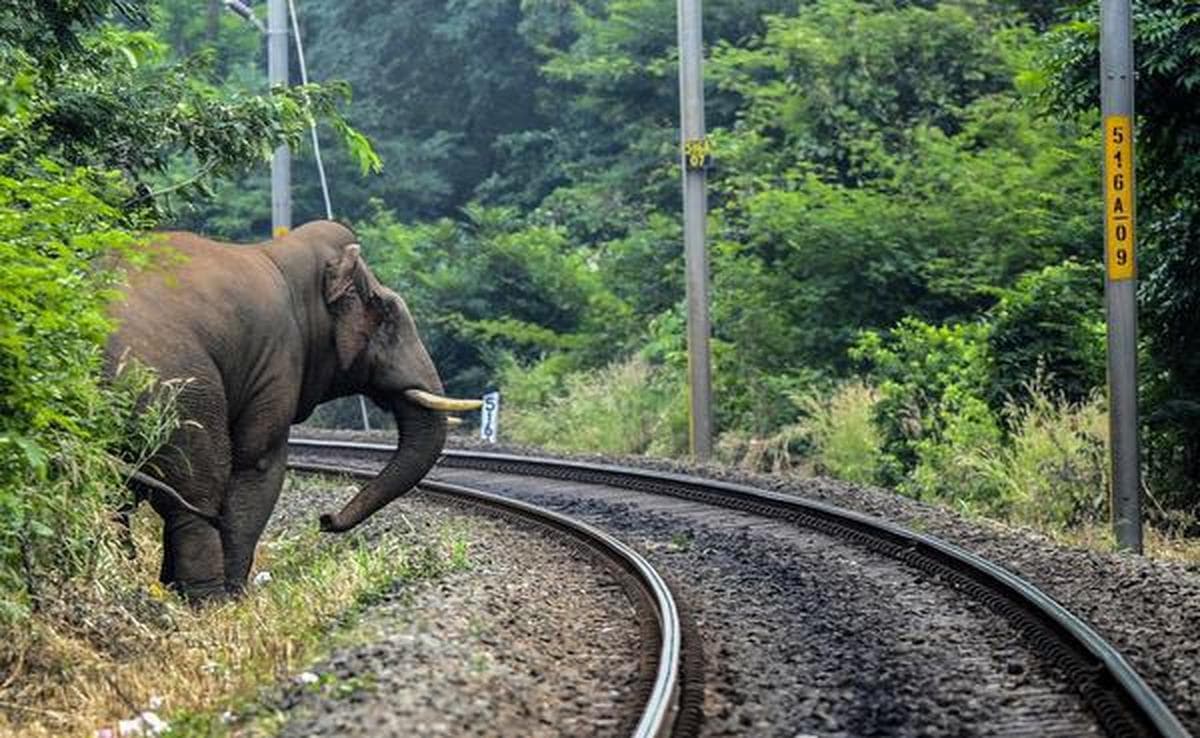
      • Communities tend to favor electrified and railway-line fences for deterrence, though such measures can be expensive and disrupt natural elephant movement.

    Economic and Environmental Insights:

    • The study highlights the intersection of agriculture (crop production) and wildlife conservation, outlining the economic implications of human-elephant conflict, particularly for farmers in the regions surrounding national parks.
    • The findings aim to inform local government interventions, potentially guiding policies related to wildlife management and agricultural practices in conflict-prone areas.

    Constitutional and Policy Context:

    • The study underscores the relevance of environmental protection measures potentially underpinned by constitutional articles such as Article 48A (protection and improvement of environment and safeguarding of forests and wildlife) and Article 51A(g) (duty to protect and improve the natural environment).

    This report serves to inform stakeholders—including wildlife management authorities, agricultural policymakers, and local communities—on effective strategies to mitigate human-elephant conflict and promote coexistence.

  • International Recognition:

    • Recognized by UN and international leaders as a 'solar superpower'.
    • IMF Managing Director notes India's potential as a significant green-energy powerhouse.
  • Policy and Support Measures:

    • The growth in renewable energy has been supported by various policy measures and citizen-focused programs.
    • Key challenges identified include grid integration, digital integration, and strengthening of transmission and distribution networks.
  • Upcoming Events:

    • Bharat Renewable Energy Summit & Expo 2026: Scheduled from November 2-5, 2026, focusing on investment in green financing, solar and wind power, green hydrogen, energy storage, and clean energy manufacturing.
    • Fifth Assembly of the International Solar Alliance and the Fourth International Conference on Green Hydrogen will occur alongside the Summit.
  • State-Level Achievements:

    • Maharashtra holds a renewable-energy capacity of 62.53 GW as of July 2026.
    • The state set a Guinness World Record for installing 45,911 solar agricultural pumps in the previous year.
  • Economic Aspects:

    • India continues to attract global investors in the renewable energy sector despite economic uncertainties.
    • Partnership with 8-10 countries expected at the upcoming summit, reflecting international investor interest.
  • This summary encapsulates India's commitment to expanding its renewable energy capabilities, addressing both current achievements and future plans, while also highlighting the support from global recognition and domestic policies.

  • Ecological Infrastructure Viewpoint: The perspective of considering natural landscapes merely as vacant space for development rather than crucial ecological infrastructure is a primary factor in the loss of wetlands.

  • Call for Conservation: Emphasis on the importance of approaching urban planning with an ecological mindset to ensure the protection of wetlands for future climate resilience and urban livability.

  • This summary encapsulates the critical facts and figures about wetlands and the urgency of their preservation in the context of urban development.