iAspirants
Darwin's Bark Spider Silk Strength
Published on:
Share this post
Article Summary
Summary Notes on Darwin's Bark Spider Research
Species Overview:
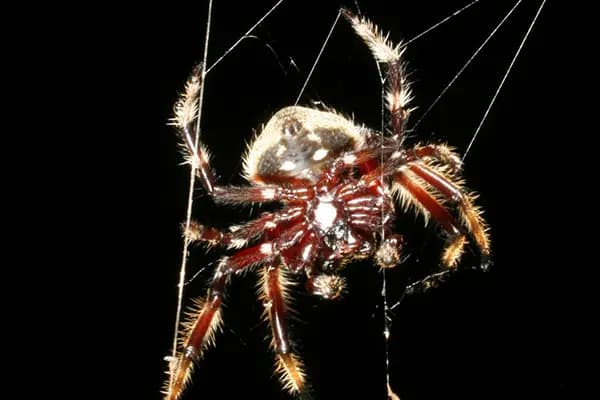
- Common Name: Darwin’s bark spider
- Scientific Name: Caerostris darwini
- Habitat: Forests of Madagascar
Key Findings:
- The silk produced by Darwin's bark spider has a tensile strength of approximately 1.6 gigapascals, making it about three times stronger than iron and the toughest biological material tested to date.
- Larger body size in spiders correlates with tougher silk production, with adult females being 3x larger than males, and in a close relative species, Caerostris kuntneri, females can be up to 5x larger.
Research Details:
- Conducted by international researchers from China, Madagascar, Slovenia, and the US, with findings published in Integrative Zoology.
- The study focused on comparing silk quality from various life stages of both male and female bark spiders raised in controlled laboratory conditions, while keeping environmental factors constant.
Silk Production Hypotheses Tested:
- All individuals produce silk of similar toughness.
- Only females produce tougher silk.
- Only large individuals, particularly large adult females, produce exceptionally tough silk.
Results:
- Only large adult females produced exceptionally tough silk, with distinct mechanical properties of stiffness and energy absorption.
- Adult males and juvenile males and females produced silk of similar lower strengths, indistinguishable in quality.
- Silk production was linked to ecological needs; adult females only produced high-performance silk when biologically necessary, such as building large webs.
Web Structure and Evolution:
- Adult females construct sparse webs with wider gaps, using less silk but capable of absorbing larger forces.
- In contrast, juvenile and male spiders spin denser webs made of weaker silk.
Molecular Insights:
- Silk properties vary at the molecular level due to differences in protein composition and arrangements.
- C. darwini features an unusually long spinning duct, enhancing silk strength.
Metabolic Considerations:
- The production of dragline silk is metabolically costly due to the synthesis of amino acids, particularly proline, which contributes to silk's elasticity.
- Large adult females prioritize quality over quantity in silk production, resulting in less silk overall but higher strength.
Ecological Advantage:
- The evolution of tough silk has enabled C. darwini to effectively construct large webs (up to 25 meters wide) over rivers and lakes, capturing fast-moving prey such as flies and beetles efficiently.
Key Implications:
- The research underscores the intricate relationship between a spider’s body size, sex, ecology, and behavior in determining silk quality, providing insights into evolutionary adaptations in spiders and potential bioengineering applications.
Additional Notes:
- The project opens avenues for further exploration into the genetic basis of silk properties and potential applications for materials science, biotechnology, and ecological research.
This research highlights how a complex interplay of biological factors yields extraordinary natural materials with potential human applications, reaffirming the significance of biodiversity in ecological studies.
Key Terms & Concepts
| Caerostris darwini | Spider species known for silk strength |
| Madagascar | Location of the spider species |
| 1.6 gigapascals | Tensile strength of silk |
| Integrative Zoology | Journal of scientific publication |
| Analamazaotra National Park | Collection site for study samples |
| dragline silk | Type of spider silk studied |
| proline | Expensive amino acid for silk |
| web architecture | Design pattern of spider webs |
| 25 m | Width of spider's webs |
| C. kuntneri | Close relative species |