iAspirants
Delivery Workers Strike for Rights
Published on:
Share this post
Article Summary
Summary of the Deliveries Workers' Strikes and Regulatory Context
Key Events:
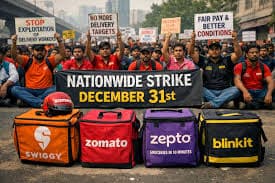
- Strikes on Christmas and New Year’s Eve: Delivery workers from companies like Swiggy, Zomato, Blinkit, and Zepto engaged in strikes to advocate against unsafe 10-minute delivery models and demand fair wages and rights.
- Participation: Over 40,000 delivery workers participated in the Christmas strike, with approximately 50-60% of orders delayed or disputed across major cities including Delhi, Karnataka, Hyderabad, and Mumbai.
Worker Demands:
- Safety and Fair Compensation: Strikers emphasized the need for a ban on the 10-minute delivery model, fair wages, and regulation of gig companies under newly established labour codes.
- Right to Organize: The Indian Federation of App-based Transport Workers (IFAT) called for recognition of workers’ rights to organize and collectively bargain.
Government Response and Legislative Context:
- Code on Social Security (2020):
- Introduced a formal welfare framework for gig and platform workers for the first time.
- Defines ‘gig workers’ and ‘platform workers’ outside of traditional employer-employee relationships.
- Provisions for registration in a national database, access to health, disability, and accident insurance, along with old-age support.
- Establishment of a Social Security Fund for gig workers funded by contributions from aggregators like Swiggy, Zomato, Amazon, and Flipkart at a rate of 1-2% of their annual turnover.
Challenges Faced by Workers:
- Low Earnings: Gig workers report uncertain incomes, low base pay, and high operational demands (e.g., covering hundreds of kilometers with little reward).
- Worker Intimidation: Reports of intimidation and harassment by companies, including blocking IDs of active workers.
- Pressure from Algorithms: Workers are pushed to complete deliveries rapidly, contributing to unsafe work conditions.
Impact of Strikes:
- Significant disruptions in delivery operations were observed, with companies employing third-party delivery services and offering increased incentives to deter worker participation in strikes.
- Strikes were strategically timed during peak delivery seasons, highlighting the demand and potential impact on consumer accessibility.
Constitutional and Legislative Framework:
- Legal Recognition: Recent laws and codes aim to provide protections for workers engaged in non-traditional employment sectors.
- Regulatory Mechanisms: Proposals for stricter regulations on platform companies to protect workers and ensure dignified working conditions.
Economic Context:
- Gig Economy Growth: A rising number of individuals rely on gig work as formal employment structures evolve.
- Current Economic Challenges: Delivery workers face financial strains due to increased fuel costs, lack of social security, and generally declining earnings despite growing demands for rapid service.
Conclusion:
The tensions between gig workers and delivery platforms underscore the urgent need for regulatory frameworks that secure fair working conditions and compensation. The strikes reflect a critical response to exploitative practices within the gig economy, demanding immediate attention from both government and industry stakeholders.
Key Terms & Concepts
| IfAT (Indian Federation of App-based Transport Workers) | Union leading delivery workers |
| Mansukh Mandaviya | Union Labour Minister |
| Swiggy | Delivery platform company |
| Zomato | Delivery platform company |
| Blinkit | Delivery platform company |
| Zepto | Delivery platform company |
| Code on Social Security, 2020 | Labour regulation framework |
| 40,000 | Number of striking workers |
| 50-60% | Order delays during strikes |
| Delhi, Karnataka, Hyderabad, Mumbai | Regions affected by strikes |
| 1-2% | Contribution to Social Security Fund |
| Social Security Fund | Fund for gig workers |