iAspirants
Detention Allegations in Student Protests
Published on:
Share this post
Article Summary
Summary of Supreme Court Petitions and Allegations Regarding Police Detention During Protests
Constitutional References:
- Article 21: Guarantees the right to life and personal liberty, alleged violations cited in petitions regarding unlawful detentions.
- Article 22(1): Specifies the right to be informed of grounds of arrest, critical in the context of detentions during protests.
Key Allegations:
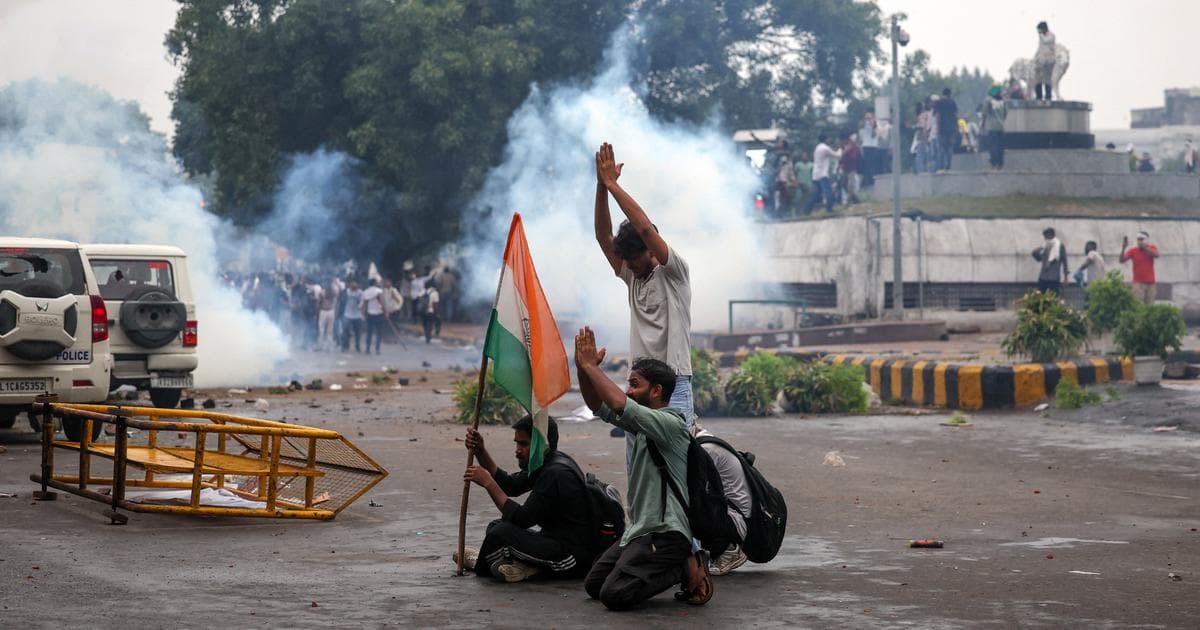
- Several petitions claim the Delhi and Bihar police unlawfully detained individuals related to protests against examination paper leaks, violating constitutional rights.
- Junaid Malik's Case: Malik alleges illegal detention after distributing food at the protest; he claims police abused power, conducted searches without warrants, and detained him without documentation, violating Article 21.
Judicial Responses:
- Supreme Court allowed police to investigate FIRs related to protests but prohibited coercive action against protesting students absent criminal records.
- Judicial scrutiny is demanded for police actions, asserting the need to uphold constitutional protections against arbitrary use of power.
Writ Petitions:
Malik’s Petition:
- Documented police misconduct including unlawful detainment and coercive tactics.
- Allegations of family harassment and intimidation to exert pressure during police investigations.
Law Student from Bihar:
- Claims arrest during protests with no justification provided as per Article 22(1).
- Remanded in custody without being informed of charges, violating legal procedures defined in Section 47 of the Bharatiya Nagarik Suraksha Sanhita, 2023.
Government Actions:
- The Bihar government announced no punitive action against protest participants before 6 p.m. on July 26, 2026. Despite this, the law student's detention continued, viewed as a violation of rights.
Legal Implications:
- Petitions underline systemic issues in the enforcement of laws and police conduct during civil protests, raising questions of legality and adherence to constitutional mandates.
- There are calls for judicial intervention to rectify ongoing unlawful detentions under the premise of protecting fundamental rights.
Overall Significance:
- The cases reflect broader issues of civil rights, police accountability, and the interplay between public dissent and law enforcement.
- Highlight the essential need for legal frameworks that respect individual freedoms, particularly in the context of civic engagement and protest movements.
Conclusion: The ongoing judicial scrutiny of the alleged violations underscores the necessity of upholding constitutional rights in the face of police actions during public protests, reinforcing the established legal standards overseeing citizen arrests and detentions.
Key Terms & Concepts
| Supreme Court | Judicial authority overseeing case |
| Article 21 | Guarantees right to life |
| Article 22(1) | Rights of arrested persons |
| Bharatiya Nagarik Suraksha Sanhita, 2023 | Legal framework for arrests |
| July 25, 2026 | Date of student arrest |
| July 26, 2026 | Date for government announcement |
| Delhi Police | Enforcement authorities involved |
| Dehradun-Mussoorie Road | Location of abandonment |
| Beur Central Jail | Location of judicial custody |
| 5,000 unknown persons | Accused in filed FIR |