iAspirants
Discovery of Dual-Sex Crab Species
Published on:
Share this post
Article Summary
Summary of Findings on Gynandromorphic Crab Species in Western Ghats
Discovery Context:
- Location: Silent Valley National Park, Western Ghats.
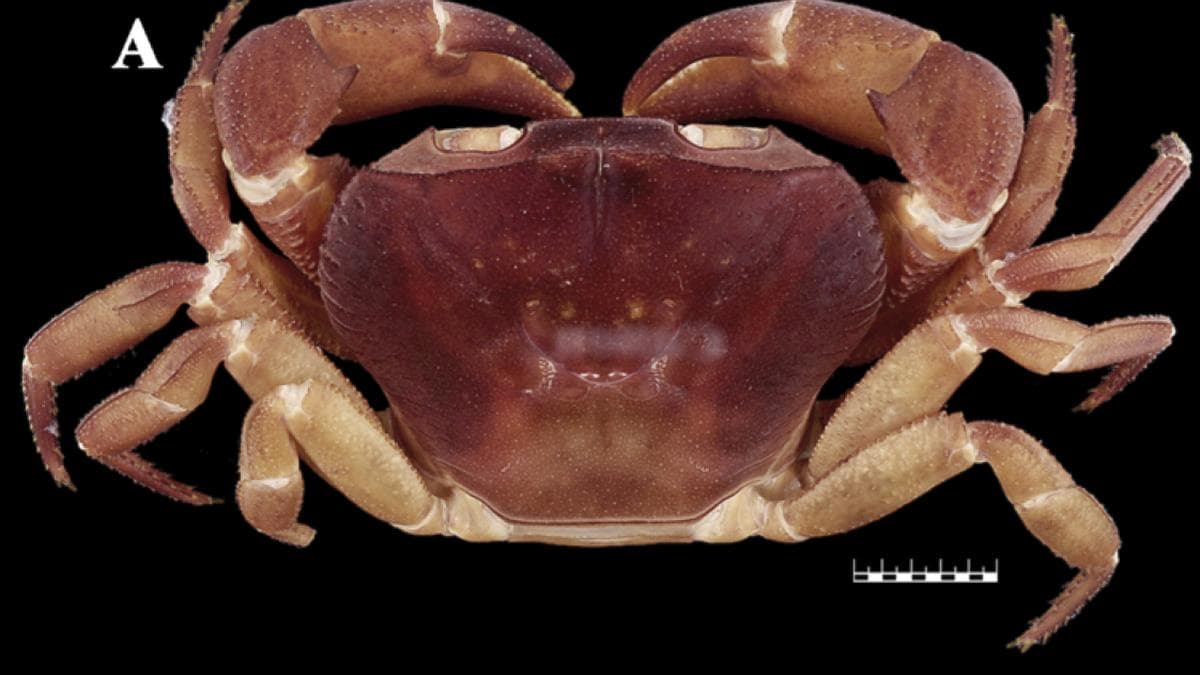
- Species: Vela carli, an endemic freshwater crab.
Key Findings:
- Discovery of three specimens exhibiting gynandromorphy (presence of both male and female biological traits).
- First recorded case of gynandromorphism in the crab family Gecarcinucidae.
Scientific Details:
- Researchers: K.S. Anoop Das and K.T. Fahis from Centre for Conservation Ecology, MES Mampad College; Sameer K. Pati and Purnima Kumari from the Zoological Survey of India.
- Published in: International journal Crustaceana.
Biological Characteristics:
- Specimens have male reproductive structures and female traits, including gonopores.
- 120 crabs examined; only three displayed dual-sex characteristics.
Hypotheses on Gynandromorphism:
- Suggested that intrinsic developmental processes are responsible rather than environmental pollutants, given the crab's pollution-free habitat.
- Potential survival advantage: Ability to procreate without the presence of male or female members.
Environmental Importance:
- Specimens collected during biodiversity surveys indicate rich ecosystems in tree holes.
- Highlights biological diversity within forest ecosystems.
Funding Source:
- Study funded by the Department of Science and Technology, Science and Engineering Research Board, currently known as the Anusandhan National Research Foundation.
Implications:
- Understanding of rare biological phenomena in crustaceans and potential implications for biodiversity conservation strategies in the region.
This research underscores the significance of maintaining the ecological integrity of habitats like the Western Ghats, known for their rich biodiversity and unique species adaptations.
Key Terms & Concepts
| Vela carli | Endemic freshwater crab species |
| Silent Valley National Park | Habitat of the discovery |
| gynandromorphy | Rare biological condition observed |
| Centre for Conservation Ecology | Research institution involved |
| Department of Science and Technology | Funding agency for the research |
| Science and Engineering Research Board | Funding organization |
| Crustaceana | International journal publication |
| three | Number of crabs showing condition |
| 120 | Total crabs examined |
| March 16, 2026 | Publication date of findings |