iAspirants
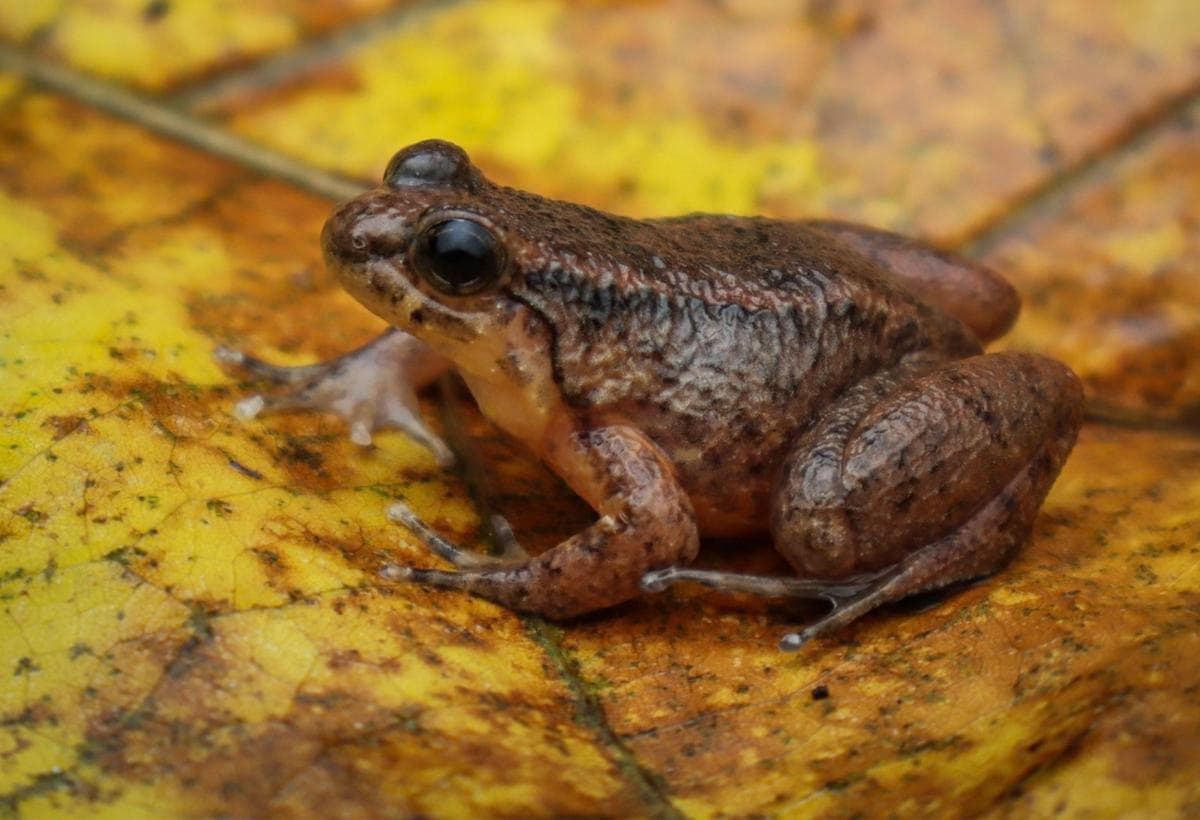
Discovery of New Bush Frog Species
Published on:
Share this post
Article Summary
Taxonomic Revision of Bush Frogs in Northeast India
- Research Source: Wildlife Institute of India (WII) based in Dehradun.
- Study Publication: Findings published in Vertebrate Zoology, an international journal.
- New Species Identified: 13 new species of bush frogs have been described.
- Significance: This study marks the highest number of vertebrate species described in a single publication from India in over a decade.
Species Breakdown:
- Arunachal Pradesh: 6 species, including:
- Eaglenest bush frog
- Arunachal bush frog
- Large bush frog
- Dibang Valley bush frog
- Pointy-nosed bush frog
- Eastern bush frog
- Meghalaya: 3 species, including:
- Narpuh bush frog (Narpuh Wildlife Sanctuary)
- Mawsynram bush frog (found in Mawsynram, known for heavy rainfall)
- Boulenger bush frog (named after amphibian expert G.A. Boulenger)
- Assam: 1 species - Barak Valley bush frog (Barail Wildlife Sanctuary).
- Manipur: 1 species - Willong-Khullen bush frog.
- Mizoram: 1 species - Lawngtlai bush frog (Lawngtlai district).
- Nagaland: 1 species - Khonoma bush frog (Khonoma village, community-protected forest).
Research Methodology:
- Integrative approach combining acoustics, genetics, and morphology.
- Utilized large sampling covering 81 localities across 8 states, including 25 protected areas.
- Revised distribution data for known species.
Conservation Impacts:
- Addressed Linnean shortfall: Ensured species are named before potential extinction.
- Addressed Wallacean shortfall: Enhanced understanding of species distribution.
- Addressed Darwinian shortfall: Provided insights into evolutionary relationships among species.
Contextual Notes:
- Prior to this study, 82 species of bush frogs were recorded in India, with only 15 from the northeastern region.
- The study emphasizes the biodiversity found in protected areas, highlighting the ecological importance of these regions for conservation efforts.
- The findings may inform future conservation strategies and policies aimed at protecting amphibian biodiversity in India.
Significance for Biodiversity:
- This research underscores the rich amphibian diversity in Northeast India and the necessity for ongoing documentation and conservation to prevent loss of species and habitats.
Key Performing Authorities:
- Researchers involved: Bitupan Boruah and Abhijit Das (WII), V. Deepak (museum collaborator from Germany and the UK).
Key Terms & Concepts
| Wildlife Institute of India | Conducted taxonomic study |
| Vertebrate Zoology | Journal published study |
| Arunachal Pradesh | Location of new species |
| Meghalaya | Location of new species |
| Assam | Location of new species |
| Mizoram | Location of new species |
| Nagaland | Location of new species |
| Manipur | Location of new species |
| Namdapha Tiger Reserve | Habitat for species |
| Eaglenest Wildlife Sanctuary | Habitat for species |
| Mehao Wildlife Sanctuary | Habitat for species |
| Narpuh Wildlife Sanctuary | Habitat for species |
| Integrated acoustics and genetics |