iAspirants
Dispute Over Keezhadi Archaeology Report
Published on:
Share this post
Article Summary
Summary of Key Points on ASI and Keezhadi Excavations
Context:
- Conflict has emerged between the Archaeological Survey of India (ASI) and K Amarnath Ramakrishna, the archaeologist who directed excavations at Keezhadi in Tamil Nadu.
Excavation Findings:
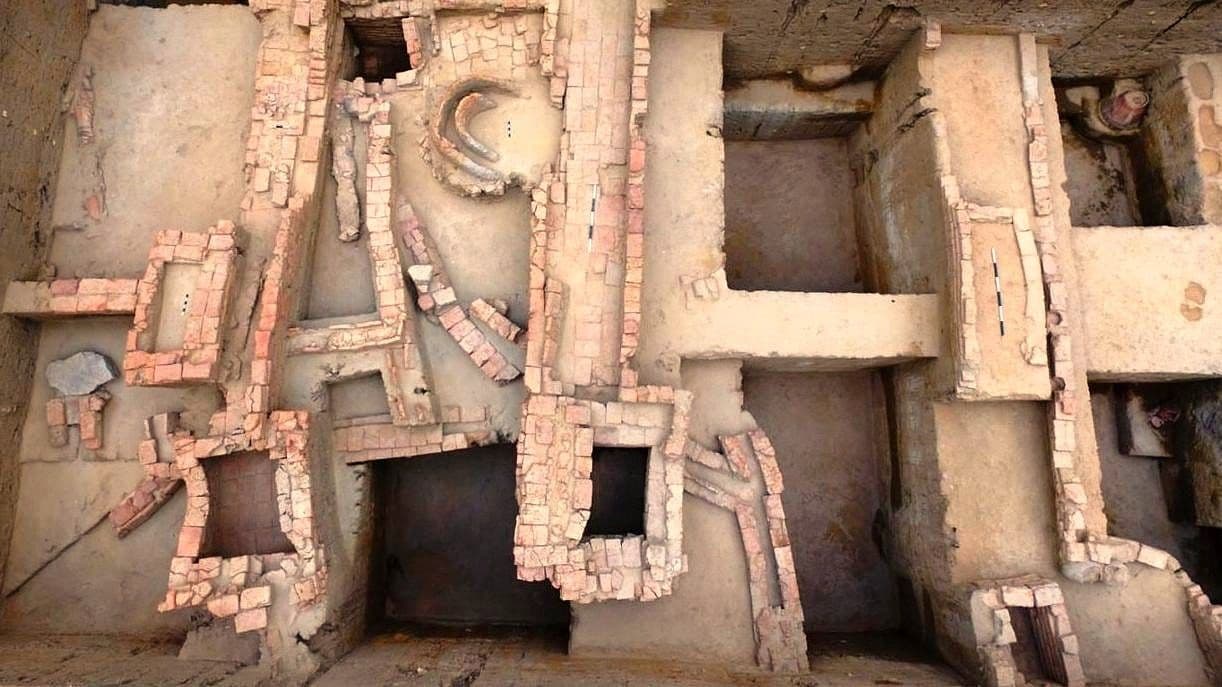
- Excavations from 2014-2016 uncovered evidence of an urban settlement from the Sangam era, including:
- Brick structures
- Drainage systems
- Terracotta artifacts
- Graffiti-inscribed pottery
- Industrial remains
- These findings challenge historical views that early urbanism in India was predominantly northern.
Internal Review Controversy:
- Ramakrishna rejected a 114-page review of his 982-page excavation report conducted by a five-member committee, which he claims lacked adherence to established academic practices.
- He criticized the committee for:
- Not including all members' signatures (one was marked "on tour").
- Conducting a conceptual reevaluation rather than standard proofreading.
- Providing generalized observations without specific critiques.
- Lack of firsthand site knowledge in their assessment.
Response from Ramakrishna:
- He insists his report is finalized and should be published promptly.
- He asserts that his methodology followed ASI’s traditional practices, reconstructing the Keezhadi chronology based on cultural deposits and stratigraphic sequences, dating from roughly the 8th century BCE to early centuries CE.
Political Context:
- Ramakrishna faced job postings and transfers amid suggestions of political motives tied to the BJP-led Central government.
- His removal from Keezhadi in 2017 led to diminished emphasis on the site's importance by ASI, while the Tamil Nadu State Department of Archaeology continued excavations and found additional artifacts.
Judicial and Legislative Framework:
- No explicit constitutional articles, judicial rulings, or legislative frameworks were mentioned in the article; however, the ongoing conflict may touch upon aspects of academic freedom and governmental oversight in archaeology.
Importance of the Keezhadi Site:
- Keezhadi has become a politically charged archaeological site, with local and national significance stemming from its implications for understanding early Indian urbanization.
Summary Insight:
- The situation reflects tensions between academic integrity and political influence within the archaeological domain, with implications for historical interpretations of India's cultural heritage.
This summary encapsulates significant facts and positions regarding the Keezhadi excavations and the associated controversies without additional narrative or commentary.
Key Terms & Concepts
| Archaeological Survey of India | Overseeing excavation evaluations |
| Keezhadi | Archaeological site of significance |
| K Amarnath Ramakrishna | Lead archaeologist |
| Sivagangai | District hosting Keezhadi |
| 2014-2016 | Period of excavations |
| 8th century BCE to early centuries CE | Chronology of excavation findings |
| Brick structures and drainage systems | Findings indicating urban settlement |
| Sangam era | Historical significance reference |
| BJP-led Central government | Political context influencing actions |
| Tamil Nadu State Department of Archaeology | Resumed digging at Keezhadi |
| 114-page review | Internal evaluation report |
| 982-page excavation report | Original report submitted |