iAspirants
Disputed Bhojshala Site Judgment Overview
Published on:
Share this post
Article Summary
Key Facts and Figures:
Incident Background:
- Van Singh Araadi, a local villager in Urdya Baida, Madhya Pradesh, was killed in 2003 during police firing amidst communal clashes. He was caught in the conflict while trying to get wheat ground.
- Shanno Bai’s family recalls her husband's involvement in the communal protests — despite attending for a mundane task, he became a martyr for the Hindu community.
Judicial Findings:
- Madhya Pradesh High Court ruled on May 15, 2026, that the Bhojshala complex is a Hindu temple dedicated to the goddess Vagdevi (Saraswati).
- This ruling overturned an ASI order from April 7, 2003, allowing Muslims to offer Friday namaz at the site while permitting Hindus access on Basant Panchami and Tuesdays.
- The court directed the ASI to manage and regulate religious access to the site and suggested Muslims could request alternative land for a mosque.
Significant Historical Context:
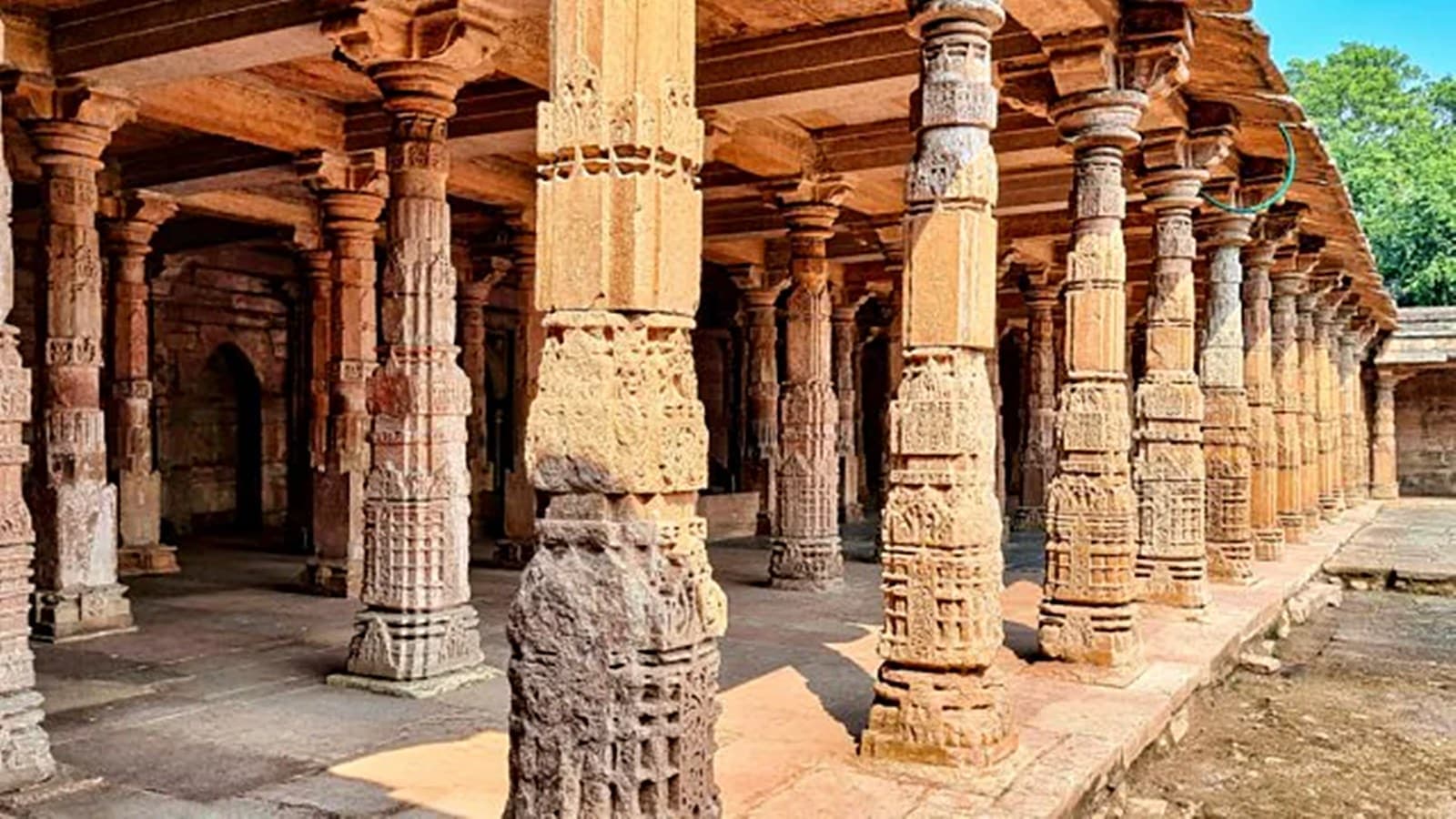
- Bhojshala is claimed by Hindus as an 11th-century Saraswati temple, while Muslims view it as a mosque from the early 14th century, built by Sufi saint Maulana Kamaluddin Chishti.
- Tensions over the site have persisted since the 1990s, leading to various interventions, including staunch police regulations.
Archaeological Survey (ASI Report):
- A comprehensive ASI survey conducted from March to July 2024 identified three architectural phases at the complex linking it to the Paramara dynasty (10th-11th century).
- The findings included over 1,610 artefacts including sculptures, coins from different historical periods, and inscriptions in various languages.
- Notably, the ASI reported artefacts from the 10th-18th century and suggested the presence of underlying structures from earlier phases.
Security Measures:
- Post-verdict, more than 1,800 security personnel were deployed in Dhar to manage potential unrest, indicating the high stakes surrounding the site.
Protests and Legal Responses:
- Members of the Muslim community challenged the High Court verdict and filed a special leave petition in the Supreme Court.
- Allegations from the Muslim side highlight perceived irregularities in the ASI’s methodology and omitted details regarding certain artefacts, potentially impacting the case's credibility.
Geopolitical Implications:
- The ruling's implications may inspire similar legal disputes in other contentious sites, as indicated by references to historic cases like the Ayodhya verdict and ongoing disputes at various mosques across India.
Government & Constitutional References:
- The High Court's decision invoked principles derived from previous rulings, emphasizing judicial consistency in cases of religiously significant properties.
- The Government of India Act, 1935, and proclamations regarding religious sites underscored the legal framework influencing this case.
Additional Context:
- The controversy reflects broader communal tensions, with both Hindu and Muslim communities asserting historical claims over the same religious site, which underscores an ongoing challenge in post-colonial India regarding religious identity and site significance.
This case serves as a potential precedent for future disputes over religiously significant sites, encapsulating the ongoing dialogue around heritage, religious rights, and legal interpretations within India's diverse sociocultural landscape.
Key Terms & Concepts
| Madhya Pradesh High Court | Declared site as Hindu temple |
| Bhojshala complex | Disputed religious site |
| Goddess Vagdevi (Saraswati) | Hindu deity associated with site |
| Archaeological Survey of India (ASI) | Conducted site survey |
| 2003 ASI order | Regulated religious access |
| Basant Panchami | Significant festival for Hindus |
| March 22 - July 15, 2024 | Survey duration by ASI |
| 2,183-page report | Basis for High Court verdict |
| 1,610 artefacts | Found during excavation |
| Indo-Sassanian to Mughal periods | Timeframe of artefacts |
| Supreme Court | Next legal authority for appeal |
| Ayodhya verdict | Influenced Bhojshala case |