iAspirants
Current AffairsPrelims PYQsUPSC CSE SyllabusUPSC CSE StrategyBlogsPricing
Login
iAspirants

Your AI-powered companion for UPSC preparation.

Quick Links

  • Home
  • About Us
  • Current Affairs
  • Prelims PYQs
  • UPSC CSE Syllabus
  • UPSC CSE Strategy
  • Blogs

Company

  • Pricing
  • FAQs
  • Contact Us
  • Login

Legal

  • Privacy Policy
  • Terms & Conditions
  • Return Policy

© 2026 iAspirants, Inc. All rights reserved.

  1. Blogs
  2. Science and Technology

DRDO-Industry Collaboration Meeting Insights

Published on: 15-Sep-2026

Source: PIB

Share this post

DRDO-Industry Collaboration Meeting Insights

Article Summary

Summary of DRDO-Industry Collaboration Meeting

Event: DRDO-Industry Collaboration Meeting "Vimarsh"
Date: September 15, 2026
Location: New Delhi
Key Participants: Defense Minister Rajnath Singh, DRDO officials, industry representatives

Key Policy Initiatives:

  1. Empowerment of MSMEs and Start-ups:

    • Launch of a comprehensive framework to reduce technical and financial barriers for MSMEs and deep-tech startups.
    • Direct funding, incubation support, and access to DRDO testing facilities.
  2. Software Source Code Sharing:

    • Introduction of a standardized framework for sharing software source code developed by DRDO with licensed industries to enhance defense capabilities.
  3. Technology Transfer Agreements:

    • 13 manufacturing partners received 9 Technology Transfer Licensing Agreements (LATOTs), promoting commercial production of advanced systems.
  4. Memorandums of Understanding (MoUs):

    • Formal exchange of MoUs with Society of Indian Defence Manufacturers (SIDM) and Laghu Udyog Bharati (LUB) to expand industry access and grassroots participation.
  5. Manufacturing Assessment Framework:

    • Contract signed with the Indian Quality Council to benchmark manufacturing maturity through the System for Advanced Manufacturing Assessment and Rating (SAMAR) Version 2.0.

Goals and Vision:

  • Vision for a Developed India:

    • Aims to create an economically strong, technologically self-reliant, socially inclusive, environmentally sustainable, and strategically secure nation by 2047.
    • Targets self-reliance in critical technologies, significant increase in indigenous materials, and a strong presence in global supply chains.
  • Focus on R&D and Innovation:

    • Emphasis on extending DRDO-industry collaboration beyond production to include research, design, testing, certification, and manufacturing.

Economic and Strategic Implications:

  • Investment in Future Technologies:

    • Encouragement of investments in AI, quantum computing, hypersonics, and directed energy technologies.
    • Recognition of MSMEs and startups as key players in achieving self-reliance and innovation in defense technologies.
  • Defense Production Reforms:

    • Notable reforms include positive indigenization lists, 'Make in India' initiative, and allocation of 25% of the defense R&D budget to the private sector.

Achievements and Progress:

  • Technology Transfer Statistics:
    • Over 2,300 technology transfer agreements granted to more than 1,100 industries.
    • Availability of approximately 50 missile-related technologies for industry to promote participation.

Future Outlook:

  • Collaboration and Ecosystem Development:
    • The event aimed at transitioning the national security framework from a transactional buyer-seller relationship to a collaborative technology ecosystem.
    • Emphasis on creating an agile, transparent, and collaborative environment for private sector participation in defense.

Conclusion:

The DRDO-Industry collaboration meeting set the stage for a renewed focus on integrating MSMEs and startups into the defense supply chain, fostering innovation, and enhancing India's position as a global defense manufacturing hub. The strategic initiatives outlined aim to build a robust defense ecosystem that supports national security and technological advancement.

Key Terms & Concepts

DRDODefense Research and Development Organization
MSMEsMicro, Small and Medium Enterprises
Start-upsInnovative Enterprises in Defense
Technology Transfer AgreementsFacilitate Production and Innovation
Society of Indian Defense Manufacturers (SIDM)Industry Collaboration Partner
System for Advanced Manufacturing Assessment and Rating (SAMAR) 2.0Benchmarking Manufacturing Maturity
Make in IndiaGovernment Initiative for Local Manufacturing
IDEXDefense Innovation Ecosystem
Defense Research and Development BudgetFunding for Private Sector
Self-Reliance by 2047Strategic National Goal
Defense Systems for Resilient IndiaPublication on Defense Innovations
Advanced Technologies

Mind Map for UPSC Civil Services Revision

Turn UPSC Civil Services Current Affairs Into Exam-Ready Notes

Reading Science and Technology current affairs is half the work. Revise them with ready-made notes and test what actually stuck.

  • Daily UPSC Civil Services current affairs analysis
  • Revision notes, mind maps & MCQs
  • Prelims mock tests with instant results

Related UPSC Civil Services Current Affairs Articles

Successful Launch of NVS-03 Satellite
Science and Technology31-Oct-2026

Successful Launch of NVS-03 Satellite

Summary of ISRO’s NVS-03 Launch and NavIC System

ISRO and Launch Details

  • Mission: GSLV-F18 successfully launched NVS-03, a next-generation navigation satellite, from Sriharikota Spaceport.
  • Lift-off: October 30, 2026, with a completion time of 18.46 minutes to enter the geosynchronous transfer orbit.
Focus Areas for Future Development
Defense Industrial InfrastructureStrengthening National Defense Production
Defense ExportsIncreasing Global Presence
AI and CybersecurityKey Innovation Areas
250+ Defense Industry StakeholdersParticipants in the Meeting
  • Mission Gaps: The NVS series has experienced significant gaps in launches: NVS-01 (May 2023), NVS-02 (January 2025), and now NVS-03 (October 2026) represents a gap of nearly 20 months.
  • Challenges: ISRO faced three failures in six missions from January 2025 to January 2026 which slowed the launch pace.
  • NavIC System Overview

    • Operational Requirement: NavIC (Navigation with Indian Constellation) needs at least four satellites for effective core service, but currently, only three of the 11 satellites are operational.
    • Current Satellites:
      • IRNSS-1B - Exceeded its 10-year lifespan.
      • IRNSS-1I - Functional until approximately 2028.
      • NVS-01 - Operational for at least another decade.
    • Recent Setbacks: NVS-02 was rendered ineffective due to a failure in its onboard engine, affecting its operational capacity.

    Future Needs for NavIC

    • To restore NavIC to minimum operational capacity, ISRO requires at least two additional satellites (NVS-04 and NVS-05).
    • For robust functionality and redundancy, a constellation of six to seven satellites is necessary for sustained performance and coverage.

    Comparison with Global Navigation Systems

    • Global Positioning System (GPS): Operated by the USA with at least 30 satellites for reliability and uninterrupted service.
    • BeiDou System: China’s alternative to GPS, consisting of approximately 35 satellites providing global navigation services.

    Key Facts and Figures

    • Launch Date of NVS-03: October 30, 2026.
    • Total Satellites Needed for NavIC Basic Functionality: At least 4.
    • Current Operational Satellites: 3.
    • Historical Launch Gaps: 19 months between NVS-01 and NVS-02, almost 20 months for NVS-02 to NVS-03.
    • Technical Lifespan of Satellites:
      • IRNSS-1B: Exceeded lifespan.
      • NVS-01: At least ten more years.

    Importance

    • The successful launch of NVS-03 is critical for enhancing India’s indigenous navigation capabilities and mitigating the risks caused by the recent operational failures observed in NavIC’s constellation.

    This summary encapsulates the necessary points regarding the recent advancements in India's satellite launch efforts and the implications for the NavIC navigation system, focusing on facts and figures essential for examination purposes.

    Israel Elections Impact on India-Israel Ties
    International Relations27-Oct-2026

    Israel Elections Impact on India-Israel Ties

    Israel Elections 2026 Overview and Implications for India-Israel Relations

    Key Facts and Figures

    • Date of Election: October 27, 2026.
    • Parliament Structure: The Knesset consists of 120 members.
    • Prime Minister Candidates:
      • Benjamin Netanyahu (Likud)
      • Gadi Eisenkot (Yashar, former army chief)
      • Naftali Bennett (former prime minister)

    Domestic Political Landscape

    • Predictions: Pre-election surveys indicate a potential hung parliament, with no party likely to secure a majority.
    • Major Issues: Candidates focus on security, particularly concerning Iran, Hamas, and the Palestinian Authority.
      • Netanyahu emphasizes a hard stance against Hamas and opposition to Palestinian statehood.
      • Eisenkot proposes more moderate rebuilding efforts and limited engagement with the Palestinian Authority.

    Implications for India

    • Core Interests:
      • Defence Cooperation: India and Israel signed a memorandum of understanding on defense cooperation in November 2025 and elevated their relationship to a “Special Strategic Partnership for Peace, Innovation, and Prosperity” during Modi's February 2026 visit.
      • Technological Collaboration: Areas of focus include artificial intelligence, cybersecurity, water management, agriculture, and space.
      • Bilateral Trade: Ongoing negotiations for a free trade agreement with regional forums like I2U2 (India, Israel, US, UAE) and the India-Middle East-Europe Economic Corridor (IMEC).

    Stability of Relations

    • Continuity Assured: Regardless of the election outcome, officials suggest India-Israel relations will remain strong.
      • Mishelle Sirota (Israeli Embassy Spokesperson): Stated that diplomatic ties will not change regardless of the election results.
    • Potential Changes:
      • A new Israeli prime minister could alter the dynamics of personal rapport with Indian Prime Minister Narendra Modi but key strategic interests are expected to persist.

    Other Considerations

    • Strategic Balance: India will need to navigate its defense partnership with Israel while considering broader interests in the Gulf and West Asia, particularly concerning energy supplies and regional trade.
    • Regional Context: The outcome of the elections could affect India's diplomatic priorities and responses to rising tensions in West Asia, particularly in relation to conflicts involving Iran and its allies.

    Summary

    The elections in Israel are pivotal for shaping the future of India-Israel relations, with anticipation of continuity in defense and technological cooperation regardless of the outcome. While Netanyahu's potential victory would likely preserve existing channels of communication between him and Modi, any change in leadership could introduce new dynamics. Ongoing bilateral trade discussions and regional initiatives further underline the strategic importance of the relationship.

    Ebola Vaccine Trials Begin in Congo
    Science and Technology24-Oct-2026

    Ebola Vaccine Trials Begin in Congo

    Ebola Vaccine Clinical Trial in the Democratic Republic of Congo (DRC)

    1. Ebola Outbreak Status:

      • The DRC is experiencing its worst Ebola outbreak, surpassing 9,700 confirmed cases and resulting in over 4,600 fatalities.
      • This outbreak has primarily been attributed to the Bundibugyo species of Ebola, which lacks an approved vaccine or treatment.
    2. Vaccine Trial Initiation:

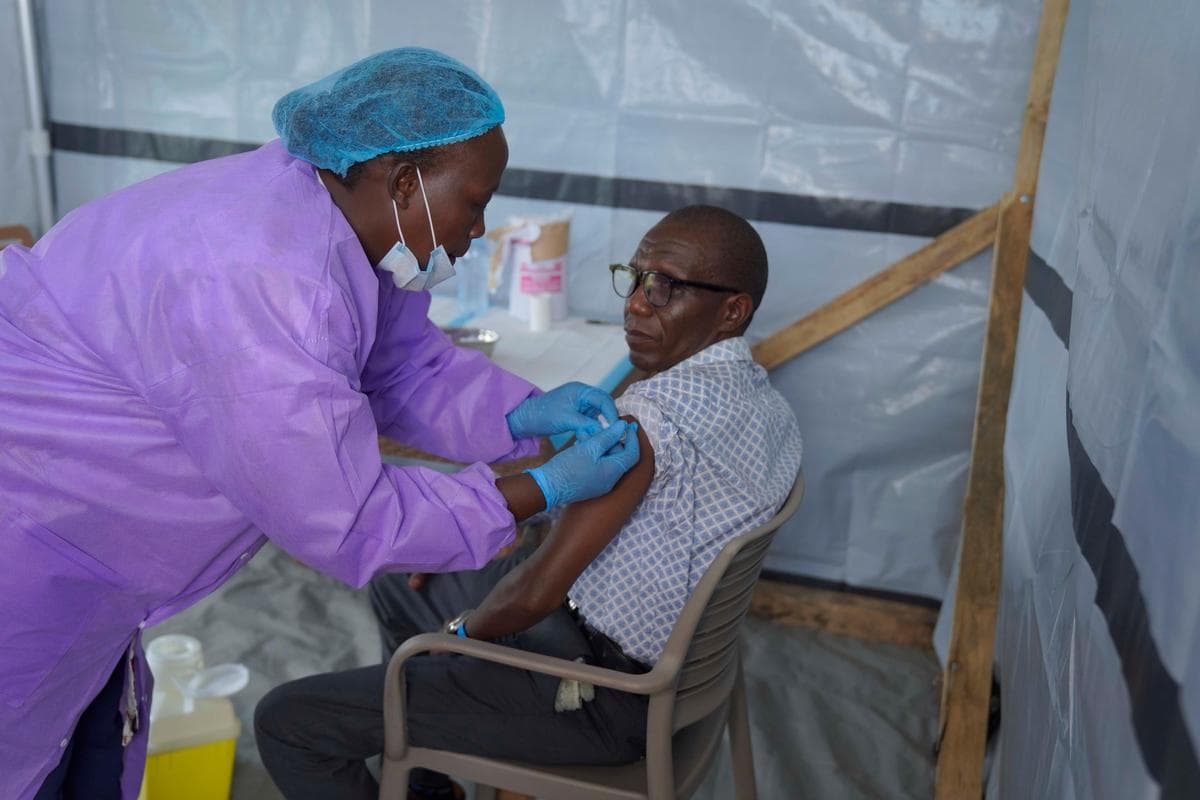
      • The World Health Organisation (WHO) announced the commencement of the first clinical trial for an Ebola vaccine targeting Bundibugyo on October 23, 2026.
      • The trial is named Tumaini, meaning "hope" in Swahili, and commenced with its first vaccination in Bunia, Ituri province, the outbreak's epicenter.
    3. Vaccine Candidates and Approach:

      • The trial will evaluate Ervebo, a vaccine approved for the Zaire strain of Ebola, to assess its cross-protection potential against Bundibugyo.
      • It employs a ring vaccination approach, immunizing individuals at high risk, including pregnant women and children aged 12 years and older.
      • The trial aims to include two Bundibugyo-specific vaccines currently in earlier-stage trials:
        • ChAdOx1 adenoviral vector jab (developed by the University of Oxford).
        • mRNA-based vaccine (developed by Moderna).
      • Funding for these efforts has been provided by the Coalition for Epidemic Preparedness Innovations (CEPI).
    4. Objectives and Outcomes:

      • The Tumaini trial will rigorously assess the safety, efficacy, and immunogenicity of the candidates.
      • If successful, it may provide critical evidence for vaccine efficacy against Bundibugyo, representing a significant advancement in outbreak response.
      • WHO and CEPI emphasize the importance of robust evidence to support community health responses and enhance preparedness for future outbreaks.
    5. Public Health Response:

      • The DRC declared its 17th outbreak of Ebola on May 15, with WHO designating it as a public health emergency of international concern shortly thereafter, indicating the high alert level for global health.
    6. Historical Context:

      • Ebola has claimed over 15,000 lives across Africa in the last 50 years, illustrating the disease's enduring threat to public health.

    Key Takeaways:

    • The Tumaini trial aims to fill a critical void in the Ebola vaccine landscape and potentially transform response strategies for both current and future outbreaks.
    • The involvement of local communities and health authorities is crucial for generating actionable evidence to enhance public health outcomes.