iAspirants
Drones Detect Virus in Humpback Whales
Published on:
Share this post
Article Summary
Summary of Findings on Cetacean Morbillivirus in Humpback Whales
Key Facts:
- Virus Identified: Cetacean morbillivirus detected in Arctic waters (northern Norway) for the first time.
- Research Publication: Results were published in BMC Veterinary Research.
- Infection Pathway: Highly infectious among marine mammals (whales, dolphins, porpoises), affecting respiratory and neurological systems, leading to mass strandings and mortality.
- Transmission: Spreads through direct contact and respiratory droplets; not always fatal, with some infected whales showing no symptoms.
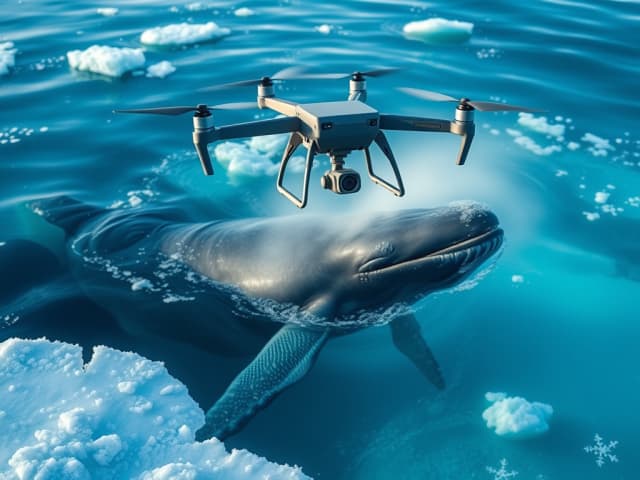
- Use of Drones: Study utilized drones for non-invasive sampling of whale blow, contrasting traditional skin biopsies.
Methodology:
- Sampling Period: Collection from 2016 to 2025.
- Sample Collection: Over 50 blow samples collected from humpback, sperm, and fin whales.
- Testing for Pathogens: In addition to cetacean morbillivirus, samples tested for H5N1 (bird flu), herpesvirus, and Brucella sp. Bacteria.
Findings:
- Geographical Context: No previous detection of cetacean morbillivirus in Arctic. Presence suggests potential long-distance migration of infected species.
- Other Pathogens: H5N1 and Brucella not found in samples from northern Norway.
Implications:
- Surveillance Gaps: Absence of reported cases may indicate poor surveillance rather than an actual absence of the virus.
- Research Contribution: Considered pioneering for non-invasive techniques in whale health monitoring and pathogen transmission studies.
- Future Research: Calls for long-term data gathering to establish disease transmission patterns in marine ecosystems.
Scientific Context:
- Drones' Role in Marine Biology: Innovations in whale study methods, with non-invasive techniques opening new research pathways.
- Global Health Initiative: Findings represent steps towards a comprehensive monitoring framework of pathogens in wild cetacean populations to better predict health risks for both marine mammals and humans that interact with them.
Significance:
- The study enhances understanding of disease ecology in marine environments, emphasizing the importance of innovative research methods and increased surveillance across habitats.
This summary encapsulates the findings on cetacean morbillivirus in humpback whales, highlighting its significance in marine biology and implications for future studies.
Key Terms & Concepts
| cetacean morbillivirus | disease affecting marine mammals |
| BMC Veterinary Research | journal publishing study findings |
| H5N1 | bird flu virus tested in samples |
| brucella | bacterium tested for human infection |
| Nord University | institution where study led |
| University of La Laguna | institution commenting on research |
| 2016-2025 | period of sample collection |
| Northern Norway, Iceland, Cape Verde | locations of whale sample collection |
| noninvasive methods | approach to studying whales |
| marine ecosystems | habitat under study |