iAspirants
Election Commission Reviews Voter Mapping
Published on:
Share this post

Article Summary
Election Commission of India: Special Intensive Revision (SIR) Overview
Purpose and Process of SIR:
- The Special Intensive Revision (SIR) aims to update and standardize electoral rolls in India.
- The mapping exercise involves:
- Standardizing voter addresses.
- Correcting discrepancies through house-to-house visits by Booth-Level Officers (BLO).
- Approximately 60%-70% of voters are expected to be covered prior to the SIR process.
Constitutional and Legal Context:
- The Election Commission of India (ECI) operates under Article 324 of the Constitution, granting it the authority to oversee free and fair elections.
- The recent SIR in Bihar involved meticulous verification of voter identities, requiring fresh enumeration forms primarily aimed at enhancing electoral integrity.
Recent Developments:
- The ECI reviewed progress during a two-day conference with Chief Electoral Officers from all States.
- Future SIR phases are anticipated to align with upcoming Assembly elections in states such as Assam, Kerala, Puducherry, Tamil Nadu, and West Bengal (2026).
Challenges Noted:
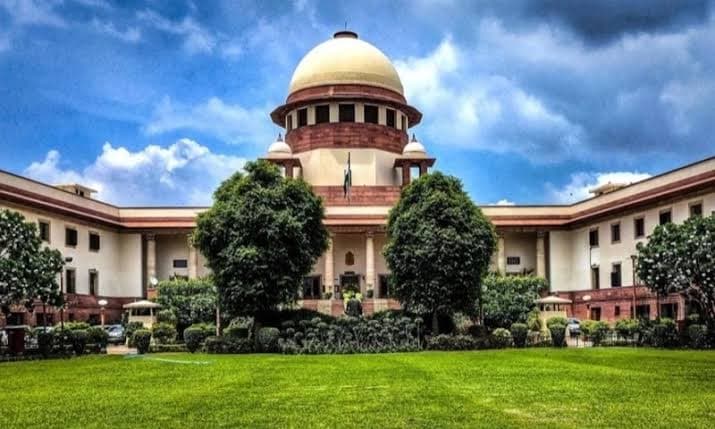
- The SIR process faced a judicial challenge in the Supreme Court, which upheld the ECI's authority but mandated the inclusion of Aadhaar as an acceptable proof of identity.
Bihar SIR Implementation:
- In Bihar, over 6.8 million names were purged from electoral rolls, attributed to factors such as:
- Death of voters.
- Duplicate entries.
- Migration.
- Specific eligibility requirements were established, particularly for individuals born after July 1, 1987, who needed to provide documentation for citizenship verification.
Document Requirements:
- The ECI is likely to adopt a consistent list of identity documents for the nationwide SIR as seen in Bihar, with Aadhaar included as a key proof of identity.
Upcoming Processes:
- The ECI plans to roll out the SIR across India following evaluations and recommendations from the current meeting.
- The SIR is expected to prioritize states that are preparing for local body elections, ensuring the electoral machinery is operational without interference.
Key Facts and Figures
- Participants: Chief Election Commissioner Gyanesh Kumar, Election Commissioners Sukhbir Singh Sandhu and Vivek Joshi.
- Deleted Names: Over 68 lakh names were removed from Bihar's electoral rolls.
- Eligibility Verification: Submissions of birth and citizenship documentation have been mandated for potential voters.
- Judicial Ruling: The Supreme Court’s ruling reflects an interplay between judicial oversight and electoral administration mandates.
This SIR is a critical move towards reinforcing the democratic fabric of India, ensuring that electoral processes are robust, transparent, and reflective of the current electorate.
Key Terms & Concepts
| Election Commission of India | Regulating electoral processes |
| Gyanesh Kumar | Chief Election Commissioner |
| Sukhbir Singh Sandhu | Election Commissioner |
| Vivek Joshi | Election Commissioner |
| Special Intensive Revision (SIR) | Voter list standardization process |
| Assam, Kerala, Puducherry, Tamil Nadu, West Bengal | States with elections in 2026 |
| Aadhaar | Proof of identity document |
| 68 lakh | Number of names deleted in Bihar |
| Supreme Court | Judicial body reviewing SIR |
| June 24, 2025 | Announcement date for SIR |
| September 10, 2025 | SIR preparedness conference date |
| 2002-2004 | Period of last SIR |
| July 1, 1987 |