iAspirants
Emerging Trends in Cancer Research
Published on:
Share this post
Article Summary
Cancer Overview and Indian Context
- Cancer Statistics in India (2026): Estimation of 1.87 million new cases, equating to 1 in 9 Indians at lifetime risk of developing cancer.
- Economic Impact: Direct and indirect medical costs estimated at ₹3,400 crores, excluding income loss, debt, and caregiver burden.
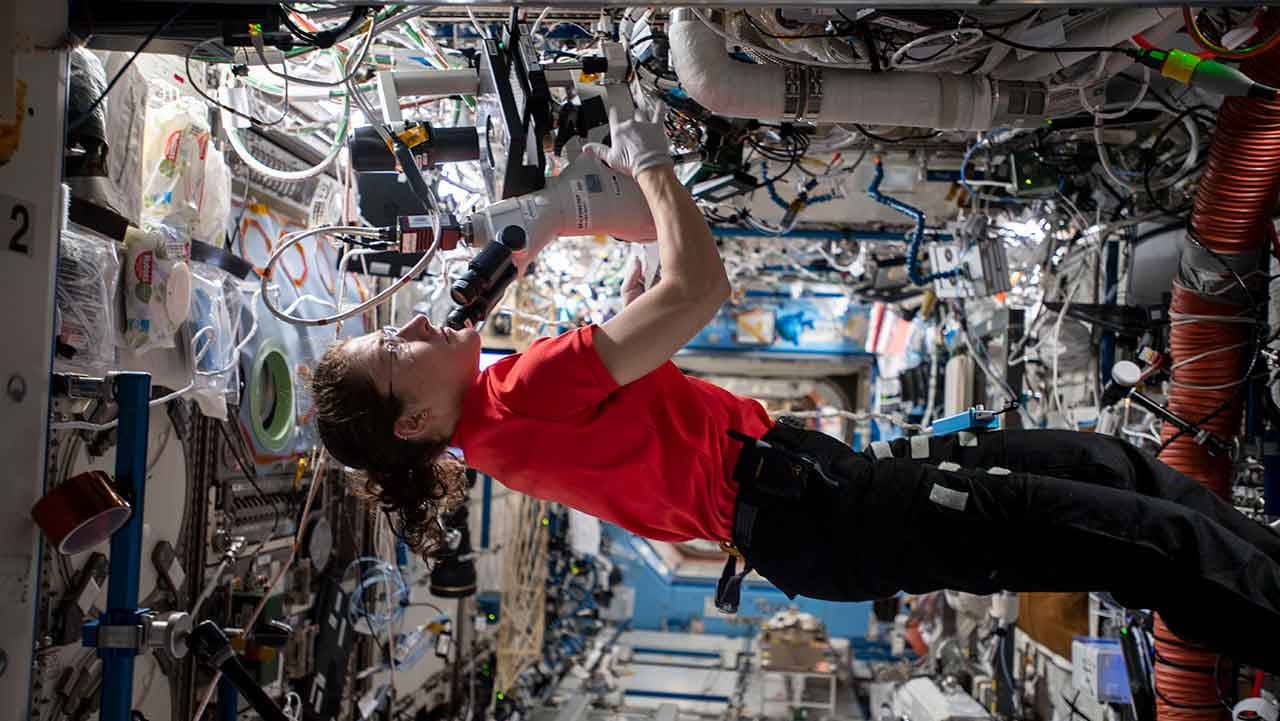
Space Oncology
- Emerging Field: Investigates impacts of microgravity and cosmic radiation on cancer progression and treatment.
- Research Benefits: Space environments assist in tumor modeling, drug discovery, and have led to technological advances like 3D cell culture systems.
Biological Responses
- Microgravity Effects: Changes in cancer cell behavior; alterations include cytoskeletal reorganization and modified extracellular interactions which impact therapy responses and metastatic behavior.
- Drug Development Conduit: Microgravity aids in creating more stable drug formulations, reducing reliance on animal testing.
International Research and Findings
- International Space Station (ISS): Studies have examined various cancers (breast, lung, thyroid, etc.) under microgravity, revealing unique cellular behaviors.
- Frontline Discoveries: Effects include changes in cell adhesion, gene expression, and drug response characteristics of cancer cells.
Regulatory Developments
- FDA Approvals:
- Pembrolizumab: Immunotherapy drug for cancer, sourced from ISS research; targeting the ADAR1 gene with uniform protein crystals.
- Rebecsinib: First space-tested cancer drug to enter clinical trials, gaining FDA Investigational New Drug status.
UK Advancements
- Dual-Regulation Initiatives: U.K. regulators streamlined processes for space pharmacology, encouraging commercial investments in space-based therapies.
Indian Space Research Organisation (ISRO)
- Position: 3rd largest global space-tech power with a focus on reducing launch costs for broader accessibility to space oncology.
- Market Potential: Microgravity pharmaceutical manufacturing projected to grow from $1.5 billion in 2025 to $9.8 billion by 2034.
Future Implications
- Commercial Space Production: Shift from research to commercial viability in space pharmaceutical manufacturing with ventures being established in India.
- Holistic Approach: Opportunities for the development of self-injectable cancer therapies emerging from space-based research initiatives.
Significant Research Outputs
- Publications: Over 700 peer-reviewed papers, 40 chapters, and 12 monographs on space oncology, indicating a growing body of knowledge and ongoing research.
Conclusion
- Space oncology represents a viable path for innovative cancer therapies and research, reflecting a convergence of healthcare and space exploration aimed at addressing a global health challenge.
Key Terms & Concepts
| 1.87 million | Projected new cancer cases in 2026 |
| ₹3,400 crores | Annual economic cost for cancer |
| Space oncology | Field studying cancer in space |
| International Space Station (ISS) | Platform for space oncology research |
| FDA | Approved novel immunotherapy drug |
| pembrolizumab | FDA approved immunotherapy drug |
| rebecsinib | First space-tested cancer drug |
| ISRO | Indian Space Research Organisation |
| $1.5 billion | Projected market value for microgravity manufacturing in 2025 |
| $9.8 billion | Projected market value by 2034 |
| 40 chapters | Published research contributions |
| 700 peer reviewed papers | Documents on space oncology |