iAspirants
Enhancing Early Childhood Development in India
Published on:
Share this post
Article Summary
Early Childhood Development in India: Key Insights and Initiatives
Context and Importance:
- Focus on early childhood survival, with under-five mortality decreasing from 43 per 1,000 live births in 2012 to 32 in 2020 (UNICEF, World Bank).
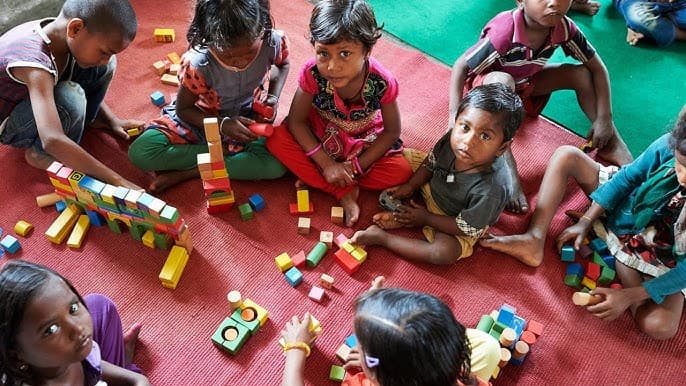
- Approximately 8 crore children (ages 0-6) served by the Anganwadi system, which provides nutritional and health services, growth monitoring, and parenting support.
Scientific Foundations:
- Early development is influenced by a dynamic interaction of nutrition, health, and early learning.
- Brain development is energy-intensive; significant growth occurs in the first year (149% grey matter increase, 240% cerebellum increase).
- Evidence from studies (e.g., Jamaica and Vellore) shows that nutritional supplements alone are less effective; psychosocial stimulation is crucial for cognitive gains.
Cognitive Development Findings:
- Vellore study showed that children stunted in early life improved cognitive outcomes if they received nutritional recovery and psychosocial stimulation.
- Children attending structured preschool for 18-24 months achieve an average of 7 IQ points higher than non-attendees.
Government Initiatives and Policies:
- Anganwadi systems are being transformed to cover holistic early childhood development.
- Introduction of frameworks:
- Aadharshila: Enhances play-based preschool education.
- Navchetana: Focuses on home-based early stimulation for caregivers.
Community Mobilization and Campaigns:
- Poshan Pakhwada campaign (April 2026) emphasizes the role of parents and communities in brain development and reducing screen exposure.
- Initiatives signal a shift to viewing early childhood development as a community effort, not just programmatic.
Broader Societal Benefits:
- Reliable childcare promotes women’s employment and economic contribution.
- Training of women as childcare workers fosters community development and enhances family wellbeing.
Vision for Future:
- The campaign promotes an integrated approach to early childhood development, highlighting that physical, interactive learning, and enriching environments at home and in communities are as vital as nutritional support.
Conclusion:
- A vision of "Viksit Bharat" emphasizes that enhancing the cognitive and developmental environment of children is crucial for the nation’s future, extending beyond basic nutritional needs.
This summary encapsulates the significance of enhancing early childhood development through structured education and community involvement, reflecting a comprehensive understanding for stakeholders and policymakers to consider.
Key Terms & Concepts
| UNICEF | Global child welfare organization |
| World Bank | Global financial institution |
| Anganwadi system | Essential early childhood development program |
| Aadharshila | Framework for preschool education |
| Navchetana | Program for home stimulation |
| Poshan Pakhwada | Campaign for early childhood stimulation |
| 250 children | Size of Vellore cohort study |
| 149% | Increase in grey matter volume |
| 240% | Increase in cerebellum volume |
| April 2026 | Date of Poshan Pakhwada initiative |
| IQ gains | Cognitive improvement through preschool |
| Vellore | Location of significant research studies |
| Jamaica |