iAspirants
Exclusion of Citizens from Electoral Rolls
Published on:
Source: Indian Express
Share this post

Article Summary
Summary of Electoral Roll Exclusion Issue in India
Constitutional References:
- Article 326: Establishes the right to vote for citizens aged 18 and above, subject to qualifications established by law.
- Article 14: Guarantees equality before the law to all persons, questioning the arbitrary nature of excluding 13 crore citizens.
- Representation of the People Act, 1950:
- Part III: Details the eligibility and procedure for registering to vote.
- Section 16: Outlines grounds of disqualification including citizenship status.
- Section 21: Governs revision of electoral rolls and conditions for deletions (e.g., for deceased individuals or those who have moved).
- Section 22: Requires that individuals be given the right to be heard regarding the correction or deletion of their names from the electoral rolls.
Judicial Context:
- The Supreme Court of India's endorsement of the recent electoral roll revisions has raised concerns about the legality and constitutionality of excluding millions from the rolls as it could undermine democratic principles.
Government Actions:
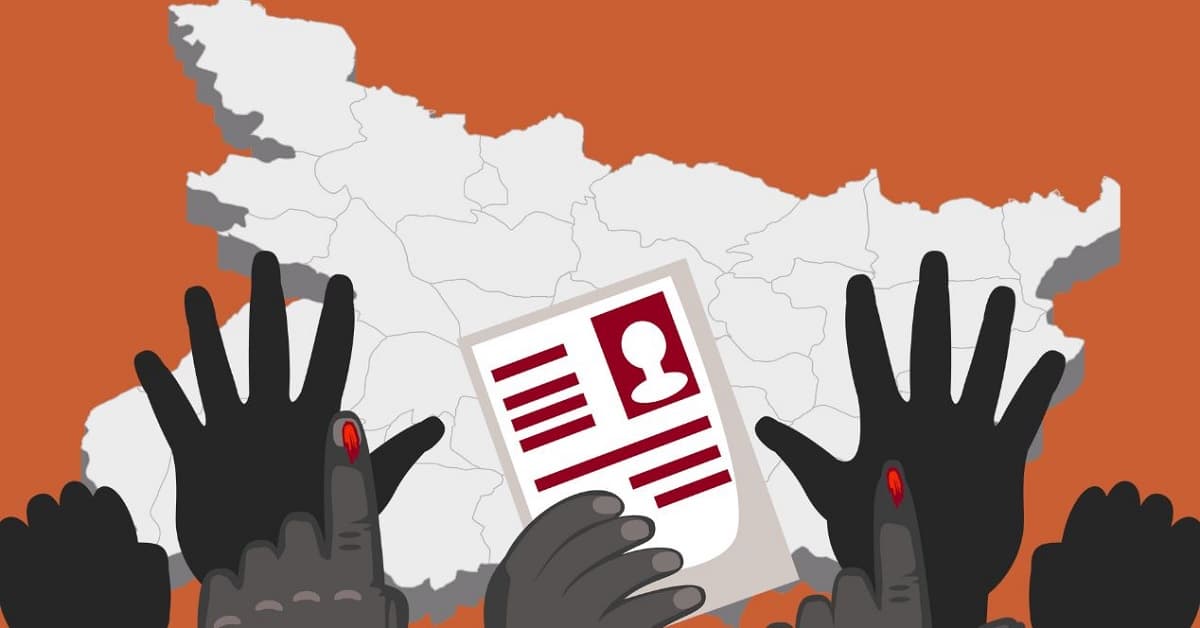
- The Election Commission of India (ECI) has embarked on a "Special Intensive Revision" of electoral rolls, which has resulted in the exclusion of 13 crore citizens.
- Notably, 48 lakh electors from Delhi and 2 crore from Maharashtra have been removed from the electoral rolls.
- Concerns raised about the legality of this process suggest that the ECI has not provided adequate justification for such significant exclusions.
Statistical Analysis:
- The exclusion affects an estimated 13 crore individuals, raising issues about their ability to access fundamental rights and benefits relating to identification and entitlements, such as passports and ration cards.
Impact on Democracy:
- Historical context from the Constituent Assembly debates highlights the importance of inclusivity and fairness in electoral processes. Prominent figures emphasized that democratic elections must remain free from governmental prejudice and arbitrary practices.
- The recent decisions are seen as contributing to a shrinking democracy, with potentially severe implications for the electoral outcomes in ongoing elections, such as those for Bihar and West Bengal assemblies.
Rights and Safeguards:
- The exclusion process has reportedly ignored vital statutory safeguards, raising questions about who will advocate for the rights of those excluded.
- Deletion of names from electoral rolls has shifted the burden to individuals to reclaim their voter status, leading to uncertainty and potential deprivation of rights.
Conclusion:
- The current scenario underlines significant discrepancies in the execution of electoral policies and the adherence to constitutional mandates, calling into question the overall integrity of the electoral process in India.
Key Terms & Concepts
| Election Commission of India | Responsible for electoral rolls |
| Supreme Court | Endorsed exclusion decision |
| Article 326 | Covers voting rights |
| Representation of the People Act, 1950 | Governs voter qualifications |
| Section 16 | Disqualifies registration criteria |
| Section 21 | Revision based on Census |
| Section 22 | Correction of roll entries |
| 13 crore citizens | Excluded from electoral rolls |
| May 27 decision | Supreme Court's ruling date |
| Bihar and West Bengal assemblies | Recent elections held |
| 2011 Census | Last available data |