iAspirants
Exhibition of Nataraja Bronze Idols
Published on:
Share this post
Article Summary
Cultural Significance of Nataraja Idols in Thanjavur
Overview
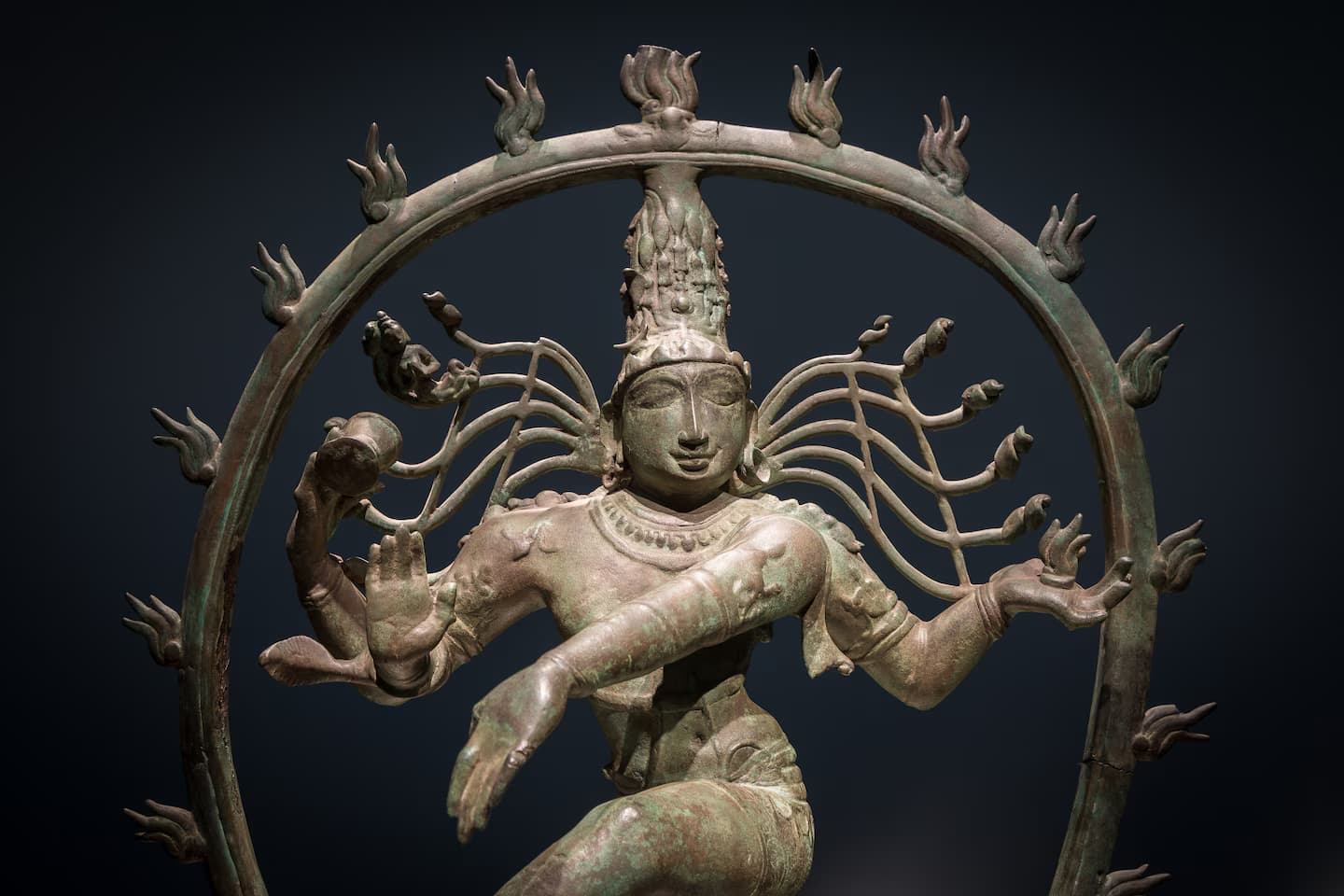
- The Nataraja (Shiva as the Lord of Dance) is a central motif in South Indian bronze sculpture, symbolizing cosmic activity.
- The Thanjavur Palace complex houses an important collection of bronze idols, showcasing the diversity in form and style from the 11th to the 19th centuries.
Collection Details
- The Nataraja Hall displays 31 bronze idols, which include depictions of Sivakami (Uma), highlighting artistic variations.
- The establishment of a dedicated museum in 2024 was facilitated by District Collector Deepak Jacob with funding from the Corporate Social Responsibility (CSR) efforts of Saint-Gobain Glass.
Artistic Features
- Idols exhibit distinctive characteristics:
- No two idols are identical; variations capture different iconographic traditions.
- Nataraja is portrayed wearing contrasting earrings (male on the right, female on the left), symbolizing the union of masculine and feminine.
- Hand gestures convey specific meanings: the damukku represents creation, the abhaya mudra offers protection, and the flame signifies destruction.
Historical and Technical Insights
- The creation of the idols utilizes the lost-wax casting technique, ensuring each piece is unique.
- Statistically, earlier idols primarily contained over 93% copper, declining to around 85% post-14th century, marking a shift in materials used in sculptures.
Expert Commentary
- Historian R. Nagaswamy states that the term "bronze" may be misleading due to the varying metal compositions used historically for idols.
- The significance of sacred metals (gold, silver, copper) in religious practices is noted in inscriptions from King Rajaraja I at the Brihadisvara Temple.
Notable Idols
- Featured idols highlight diverse artistic expressions, such as a representation from Tiruvidaimarudur and a 19th-century Nataraja.
- Recognition of sculptural uniqueness with intricate drapery that resembles modern clothing styles.
Preservation and Challenges
- Many idols have faced damage over time and have been repurposed for display after being deemed unsuitable for worship.
- Restoration efforts and the establishment of the museum reflect the importance of preserving Chola-period craftsmanship.
Overall, the Nataraja collection in Thanjavur not only exemplifies advanced sculptural techniques of the Chola dynasty but also serves as a crucial representation of cultural heritage, spirituality, and artistic evolution in India.
Key Terms & Concepts
| Nataraja | Hindu deity represented in bronze |
| Thanjavur Palace | Museum housing bronze idols |
| Corporate Social Responsibility (CSR) | Support for museum funding |
| lost-wax casting technique | Method for creating bronze idols |
| Panchaloha | Metal alloy used in idols |
| Kumar sirippu | Descriptor of Nataraja's jewelry |
| Brihadisvara Temple | Historic temple with idol inscriptions |
| Rajaraja I | King associated with inscriptions |
| Thevaram | Hymns referring to temple and deity |
| Sivakami | Consort of Nataraja depicted in idols |
| 2014 | Year museum was established |
| 11th to 19th centuries | Time period of idol creation |