iAspirants
Exploring Ancient Graffiti in Pompeii
Published on:
Share this post
Article Summary
Summary of Findings Related to Pompeii and Tamil Brahmi Inscriptions
Historical Context of Pompeii:
- Pompeii was buried by a volcanic eruption in 79 CE, preserving a unique snapshot of ancient Roman society.
- The site serves as an educational backdrop, especially in Latin studies, reflecting everyday life in ancient Rome.
Graffiti as Historical Evidence:
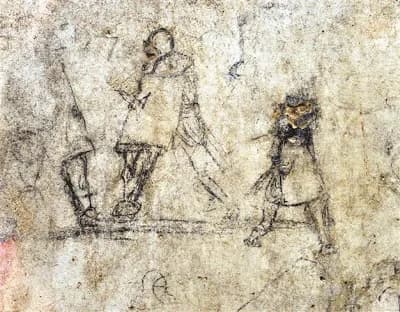
- Graffiti in Pompeii covers a wide range of expressions from mundane to explicit, illustrating cultural and social dynamics.
- Example phrases such as “Caecilius in horto est” (Caecilius is in the garden) represent the daily lives and the language of the time.
Tamil Brahmi Inscriptions:
- Recent archaeological discoveries in Egypt's Valley of the Kings include 20 Tamil Brahmi inscriptions alongside 10 Sanskrit and Prakrit inscriptions.
- One notable inscription reads “Kopan varata kantan” (Kopan came and saw), showcasing the presence of ancient Tamils in the region.
Cultural Exchange and Travel:
- The inscriptions suggest that between the first and third centuries CE, there was significant interaction between Tamil speakers and the Egyptian sites, indicative of trade and tourism.
- The inscriptions offer insights into the travel habits of visitors to Egypt during antiquity, marking a period of cultural exchange.
Implications for Historical Research:
- The findings contribute to the understanding of the linguistic diversity of the ancient world and evidence of travel from India to Egypt.
- They highlight the ancient practice of leaving one's mark in significant locations, drawing parallels to contemporary behaviors.
Interdisciplinary Significance:
- The findings can enhance the study of ancient languages, trade routes, and cultural interactions, valuable for historians, archaeologists, and linguists.
- Encourages further exploration into the impacts of ancient societies on modern understanding of cultural artifacts and expressions.
This summary encapsulates important archaeological and historical insights connected to ancient societies and offers concrete data for educational and research purposes.
Key Terms & Concepts
| Pompeii | Ancient Roman societal snapshot |
| 79 CE | Year of volcanic eruption |
| Tamils | Cultural identity linked to inscriptions |
| Egypt's Valley of the Kings | Location of significant tombs |
| Tutankhamun | Notable pharaoh buried there |
| Tamil Brahmi inscriptions | Cultural evidence of interactions |
| First to Third centuries CE | Period of Roman tourism |
| 10 Sanskrit and Prakrit inscriptions | Evidence of linguistic diversity |