iAspirants
Exploring Nimishamba Temple's History
Published on:
Share this post
Article Summary
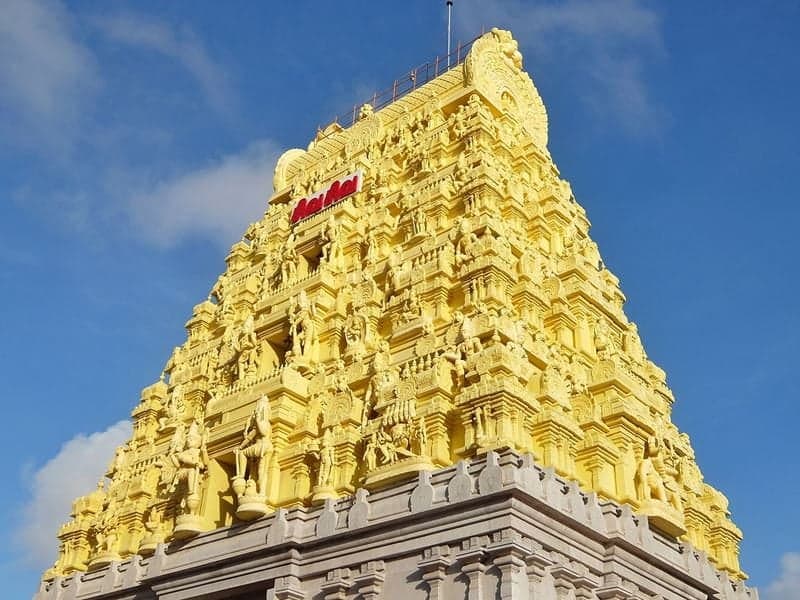
Nimishamba Temple: Located in George Town, Chennai, dedicated to the goddess Nimishamba, known to grant wishes swiftly. Believed to be over 300 years old, its precise origins are unclear.
Cultural Significance:
- The temple is associated with the Razu/Raju clans, Telugu speakers with a history of martial ancestry.
- Traditionally connected with agricultural practices and crafts, particularly in the Vijayanagar period.
Historical Context:
- Edgar Thurston's "Castes and Tribes of Southern India" (1855) mentions the Nimishamba cult, highlighting its tie to various regions such as Andhra and the community of Nakashvandulu or Chitrakara, known for expertise in arts like filigree and scroll painting.
Temple Architecture:
- Located in a space congested with shops, suggesting a blend of commercial and spiritual life.
- Governed by local traders and comes under Hindu Religious and Charitable Endowments (HR&CE) department.
Shrine Types in George Town:
- Dubash-built Temples: Larger temples built by influential dubash traders.
- Community Temples: E.g., Draupadi amman shrines and Ranganathaswami temple.
- Artisanal Temples: Reflecting the skills of local artisans.
Artistic Heritage:
- The Nakashvandulu community has roots in intricate textile artwork, including kalamkari, showcasing an integration of cultural and artistic practices into the temple’s background.
Economic Impact:
- In the 17th century, Madras was a hub for painted textiles, significantly exporting to Europe. This resulted in a migration of painters to the area.
- Following opposition from the English textile industry, imports were restricted, influencing local art survival.
Research Gaps:
- Lack of definitive historical records regarding the exact date and circumstances of the temple's construction.
- Various local legends exist regarding the temple’s origins, complicating the historical narrative.
Cultural Events:
- Festivals, notably Dasami – observed on the tenth day after the new moon, attract significant crowds, underscoring its ongoing relevance in the community.
This summary with key focus areas provides a concise overview for examination on cultural history, architecture, and societal impact surrounding the Nimishamba Temple.
Key Terms & Concepts
| Nimishamba Temple | Cultural and religious site |
| Ganjam | Location of another shrine |
| Karvetinagar | Original region of clans |
| Vijayanagar | Historical period reference |
| Edgar Thurston | Historical reference on cults |
| Nakashvandulu | Community associated with temple |
| East India Company | Historical economic influence |
| January 2, 1705 | Significant historical date |
| Kalamkari | Art technique used by community |
| Chitrakara | Artistic community reference |
| Dasami | Cultural celebration reference |