iAspirants
Current AffairsPrelims PYQsUPSC CSE SyllabusUPSC CSE StrategyBlogsPricing
Login
iAspirants

Your AI-powered companion for UPSC preparation.

Quick Links

  • Home
  • About Us
  • Current Affairs
  • Prelims PYQs
  • UPSC CSE Syllabus
  • UPSC CSE Strategy
  • Blogs

Company

  • Pricing
  • FAQs
  • Contact Us
  • Login

Legal

  • Privacy Policy
  • Terms & Conditions
  • Return Policy

© 2025 iAspirants, Inc. All rights reserved.

  1. Blogs
  2. International Relations

Fires on Tankers in Strait of Hormuz

Published on: 18-Oct-2026

Source: The Hindu

Share this post

Fires on Tankers in Strait of Hormuz

Article Summary

Key Notes on Iran's Control and Incidents in the Strait of Hormuz

Geopolitical Context

  • The Strait of Hormuz is a crucial maritime channel for global oil trade, through which approximately 20% of the world’s oil consumption is transported.
  • Since late February 2026, following the outbreak of conflict, Iran has asserted control over the Strait, demanding vessels seek authorization to transit.

Recent Incidents

  • October 15-17, 2026: A series of incidents involving oil tankers in the Strait of Hormuz were reported.
  • Two tankers were set ablaze after allegedly striking naval mines, as claimed by Iran's Revolutionary Guards.
    • Both vessels were reportedly carrying over two million barrels of crude oil and were accused of attempting to navigate illegally through the strait.

Military Activity

  • On October 17, Iranian military forces declared that a supertanker attempting to cross the strait, allegedly with U.S. backing and by deactivating tracking systems, struck a mine, resulting in an explosion and fire.
  • The Revolutionary Guards issued threats, stating that any vessel disabling navigation systems would be treated as “hostile”.

Escalation of Conflict

  • Between October 15 and October 16, two additional incidents involving tankers in the Gulf of Oman were reported, indicating a heightened frequency of maritime attacks in the region.
  • On October 17, a record six vessels were attacked in or near the Strait of Hormuz, marking the highest daily number of assaults since the conflict began.

International Response

  • In reaction to Iran's blockade, the United States has implemented a naval counter-blockade aimed at Iranian oil exports, signaling escalated geopolitical tensions in the region.

Maritime Safety Monitoring

  • Reports from maritime monitoring agencies, including Vanguard, the International Maritime Organization (IMO), and the UK Maritime Trade Operations (UKMTO), have confirmed the ongoing threats posed to vessels in this strategically significant corridor.

Concluding Observations

The current incidents reflect the ongoing volatility and security concerns in the Strait of Hormuz, emphasizing the critical international stakes involved in maintaining freedom of navigation in one of the world’s most pivotal maritime chokepoints.

Key Terms & Concepts

Strait of HormuzKey shipping route
Iran's Revolutionary GuardsMilitary control declaration
October 17, 2026Date of incidents
Gulf of OmanLocation of attacks
VanguardSecurity data provider
International Maritime Organization (IMO)Maritime monitoring agency
UKMTOMaritime monitoring agency
Admiral Ali OzmaeiNaval commander warning
U.S. supportAllegations against tankers
Two million barrels of crude oilOil shipment amount
30 kilometers (20 miles)Width of Hormuz Strait

Mind Map for UPSC Civil Services Revision

Turn UPSC Civil Services Current Affairs Into Exam-Ready Notes

Reading International Relations current affairs is half the work. Revise them with ready-made notes and test what actually stuck.

  • Daily UPSC Civil Services current affairs analysis
  • Revision notes, mind maps & MCQs
  • Prelims mock tests with instant results

Related UPSC Civil Services Current Affairs Articles

India's Ambition for UNSC Seat
International Relations16-Oct-2026

India's Ambition for UNSC Seat

India's Bid for Non-Permanent Seat on UNSC: Objectives and Challenges

  1. General Context:

    • India aims to secure a non-permanent seat on the United Nations Security Council (UNSC) for the 2028-29 term.
    • Voting in the United Nations General Assembly (UNGA) is scheduled for June 2027.
  • India needs a minimum of 129 affirmative votes from the 193-member assembly to win the seat.
  • Historical Background:

    • India has previously served on the UNSC for eight terms: 1950-51, 1967-68, 1972-73, 1977-78, 1984-85, 1991-92, 2011-12, and 2021-22.
    • Last tenure (2021-22) was affected by the COVID-19 pandemic, limiting India's ability to achieve its objectives.
  • Strategic Factors:

    • Terrorism and UN Reform: India aims to complete pending objectives on terrorism and demand for UN reforms during its upcoming term.
    • Permanent Membership Ambitions: India continues to push for permanent membership but aims to increase its non-permanent tenure frequency as a strategy.
  • Competitive Landscape:

    • Tajikistan has announced candidacy for the same Asia-Pacific seat, necessitating strategic negotiations.
    • India's historical competition includes past losses to Pakistan and Japan during election bids in 1975 and 1996, respectively.
    • Consensus within regional blocs plays a significant role in determining candidate strengths, often favoring smaller nations.
  • Voting Dynamics:

    • Global North Support: India enjoys backing from countries such as the USA, Canada, Australia, and members of the EU.
    • Strategic Partnerships: India is likely to secure votes from Southeast Asian nations (ASEAN), Caribbean nations (CARICOM), and Pacific Island countries (PIC).
    • Global South Sentiment: Current trends among Global South countries show criticism of larger powers, presenting challenges for India’s candidacy due to its ties with Israel and the US.
  • Potential Strategies:

    • Negotiation with Tajikistan: Possible strategies include convincing Tajikistan to withdraw its candidacy, a move successfully executed in past cases with Kazakhstan and Afghanistan.
    • India's Withdrawal Consideration: A tactical withdrawal could position India favorably for future elections, acknowledging Tajikistan’s bid as a growing power in UNSC politics.
    • Cost-Benefit Analysis: India must analyze its position in the global context, given the perception of the UNSC's relevance amid issues like the Ukraine conflict, pandemic responses, and other global crises.
  • Conclusion:

    • India's pursuit for a non-permanent UNSC seat involves complex diplomatic maneuvering against the backdrop of shifting geopolitical allegiances.
    • Success will depend on building broader support, especially amid a critical Global South landscape that prioritizes equity among nations in UNSC representation.
  • This analysis demonstrates India's strategic positioning and the multifaceted approach required to navigate the challenges of UNSC elections in the evolving global climate.

    Military Assistance and Recent Violence
    International Relations16-Oct-2026

    Military Assistance and Recent Violence

    Key Facts and Data:

    1. Military Assistance to Pakistan:

      • Prime Minister Rajiv Gandhi expressed concerns regarding the military assistance Pakistan received from the US, totaling $4.6 billion for sophisticated military hardware.
      • Stated the need for India to match this assistance to prevent a military imbalance in the Subcontinent.
    2. Conflict in Sri Lanka:

      • Reported fatalities in Sri Lanka included 40 Tamil militants and 15 government soldiers during recent fighting.
      • Approximately 20 individuals were seriously injured.
      • Independent sources indicated potential civilian casualties, but government officials denied this, asserting that military actions were confined to regions between Mannar and Vavuniya.
    3. Circus Tent Collapse Incident:

      • A tragic accident involving the Venus Circus led to the death of 3 individuals and injuries to 12 others, including 2 children and 4 women.
      • Nearly 200 people were initially trapped inside the tent during a dust storm before the performance was halted.
    4. Security Incident Involving Hasina Wajed:

      • Armed individuals attempted to storm the residence of Hasina Wajed, the president of the Awami League party in Bangladesh, intending to kill her and destroy her house.
      • The attack occurred during the day while she was present at her home.

    Judicial and Legislative Context:

    • While no specific judicial rulings or legislative references were mentioned in the text, the reference to armed attacks and military engagement may invoke discussions around constitutional rights concerning self-defense and security provisions under the respective national laws.

    International Relations:

    • The strategic military assistance from the US to Pakistan may significantly impact Indo-US and Indo-Pak diplomatic relations, necessitating reevaluations of defense and foreign policies.

    Economic and Social Context:

    • The military assistance figure of $4.6 billion emphasizes the geopolitical economic dynamics in the South Asian region, particularly concerning defense spending and military preparedness.
    • Ongoing conflict in Sri Lanka highlights the complex socio-political landscape affecting civilian life and security in the region.

    Safety and Crisis Management:

    • The circus incident underlines the importance of safety measures and emergency protocols during public events, especially regarding structural integrity during adverse weather conditions.

    Cultural and Political Significance:

    • The attempted attack on a prominent political figure like Hasina Wajed reflects the volatility in Bangladesh's political environment and raises concerns regarding political violence and security for politicians.

    Conclusion: The news covered reflects critical issues pertaining to military balance between India and Pakistan, ongoing internal conflicts in Sri Lanka, safety crises during events, and the risks faced by political leaders in Bangladesh. These elements contribute to understanding the dynamics in South Asia, touching upon national security, political stability, and economic strategies in the region.

    Houthi Attacks on Saudi Oil Facilities
    International Relations15-Oct-2026

    Houthi Attacks on Saudi Oil Facilities

    Summary of Key Events and Data

    Regional Conflict and Military Actions

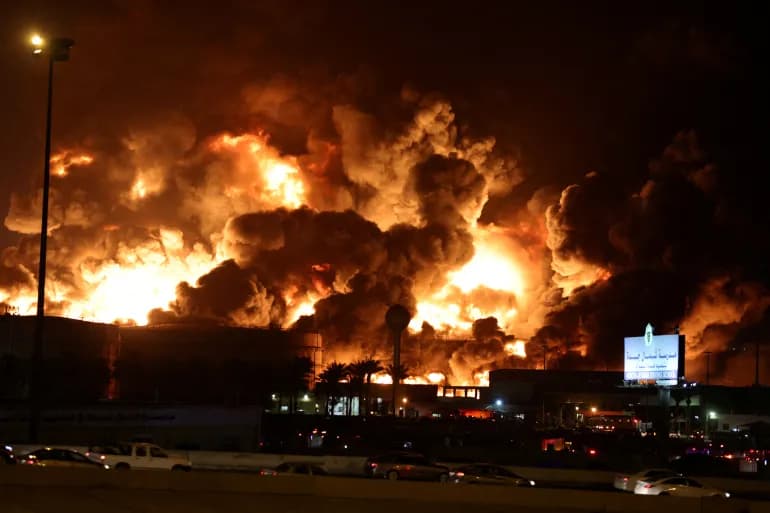
    1. Attack on Aramco: Houthi rebels conducted a missile strike on Aramco's headquarters in Dhahran, Saudi Arabia, damaging the building's top three floors but resulting in no casualties. This represents a significant capability for the Houthis to target critical infrastructure effectively.

    2. Military Response:

      • The Saudi-led coalition intercepted multiple threats including two Houthi drones and several missiles aimed at Riyadh and other locations.
      • Alerts were triggered around Riyadh, and damage from subsequent intercepted strikes resulted in one injury reported in Riyadh.
    3. Civilian Impact:

      • At least 18 people have reportedly died from attacks on King Khalid International Airport in Riyadh, and over 300 have been injured due to recent escalations.
      • In Yemen, the ongoing conflict is exacerbating humanitarian crises with a reported inability to deliver aid to 600,000 residents in Taiz.

    Humanitarian Crisis

    1. Food and Fuel Shortages: Reports indicate significant shortages of food and fuel in areas like Taiz, impacting daily life and leading to school closures.
    2. International Assistance: The International Committee of the Red Cross noted an unprecedented increase in casualties in Yemen, linking it to ongoing military activities.

    Diplomatic Efforts

    1. Potential Mediations: High-level diplomatic engagements are ongoing, with Oman, Russia, and China attempting to mediate peace talks between the Houthis and Saudi Arabia to potentially end hostilities.

    2. Houthi Stance: Houthi officials expressed willingness to engage in negotiations for a comprehensive ceasefire to end the ongoing blockade and violence from both sides.

    Military Capabilities

    1. Houthi Arsenal: The Houthis are reported to have a missile range exceeding 1,000 miles (1,600 kilometers), complicating Saudi defenses. The effectiveness of Saudi interception systems is called into question given their dwindling inventory of interceptors.

    2. Coalition Strikes on Houthi Targets: Recent Saudi military actions included airstrikes on oil facilities held by the Houthis, indicating a shift in strategy targeting essential resources.

    Economic and Aviation Impact

    1. Flight Cancellations: Over 3,000 flights have been canceled or deemed non-operational across Saudi airports in the past week due to the conflict, severely impacting aviation operations.

    Historical Context

    1. Resurgence of Civil War: The renewed fighting marks a notable intensification in Yemen’s civil war after a period of relative calm, indicating a deterioration of the situation, with civilians expressing fears regarding safety and stability.

    By collating these data and events, a clearer picture emerges of the significant military, humanitarian, and diplomatic dynamics at play in the Saudi-Houthi conflict, as well as its implications for regional stability.